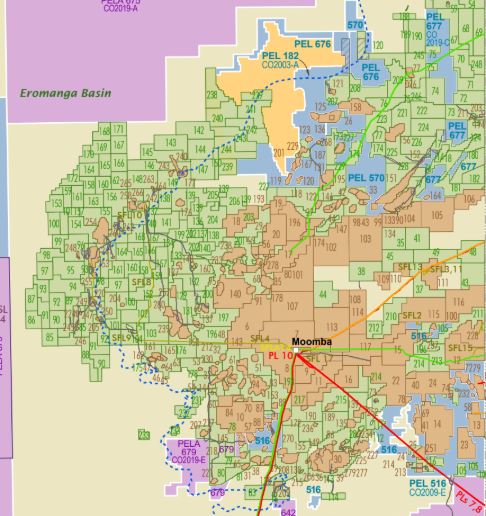
Our AEP 2026 peer-reviewed paper - Understanding exploration success and failure in the Cooper and Eromanga Basins, South Australia - presents an integrated analysis of open-file well, production, and licensing data to understand the drivers of exploration success and failure. Some 800 exploration wells (Figure 1) have resulted in production of approximately 260 million barrels of oil and 8 trillion cubic feet of raw gas, confirming the basins’ status as a significant onshore petroleum province.
Tech Talk


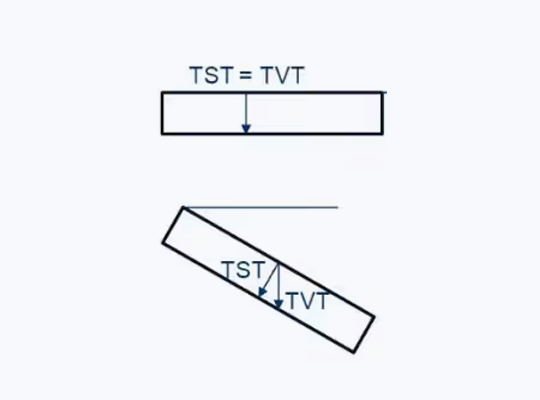
True Stratigraphic Thickness – Where and Why It Matters
Prepared for PESA by Lawrence Grant-Woolley, Senior Geologist at Todd Energy
Lawrence Grant-Woolley is a development geologist with more than 27 years petroleum geology experience working offshore and onshore with clastic and carbonate reservoirs. Currently working as a Senior Geologist at Todd Energy, his career has spanned the globe with time spent working in Aberdeen, Oman, Jakarta and Adelaide. This article was inspired by a recent presentation given at a TNav Technology Summit in Brisbane.
In recent years I have worked steeply dipping complex structured fields. Review of existing models and correlations reinforced the need for True Stratigraphic Thickness (TST).

Bookings Open – Barry Goldstein Medal Lecture Tour
Our worthy winner of the 2025 Barry Goldstein Medal, Dr Bruce Ainsworth, begins his lecture tour shortly generously sponsored by Santos. Over 5 weeks, he will visit each state branch and give his presentation "Honouring the Humble Clinoform: Towards a Reservoir Modelling Best Practice". Bruce is an excellent geologist and engaging presenter so attendees are in for a treat. Bookings for these events are now live on the website.
The Barry Goldstein Medal was created by PESA to recognise the value of innovation, collaboration and communication in Energy Geoscience as we pursue a clean sustainable energy future.

GSWA Record 2025/6
A Summary of GSWA Stratigraphic drilling in sedimentary basins, Western Australia
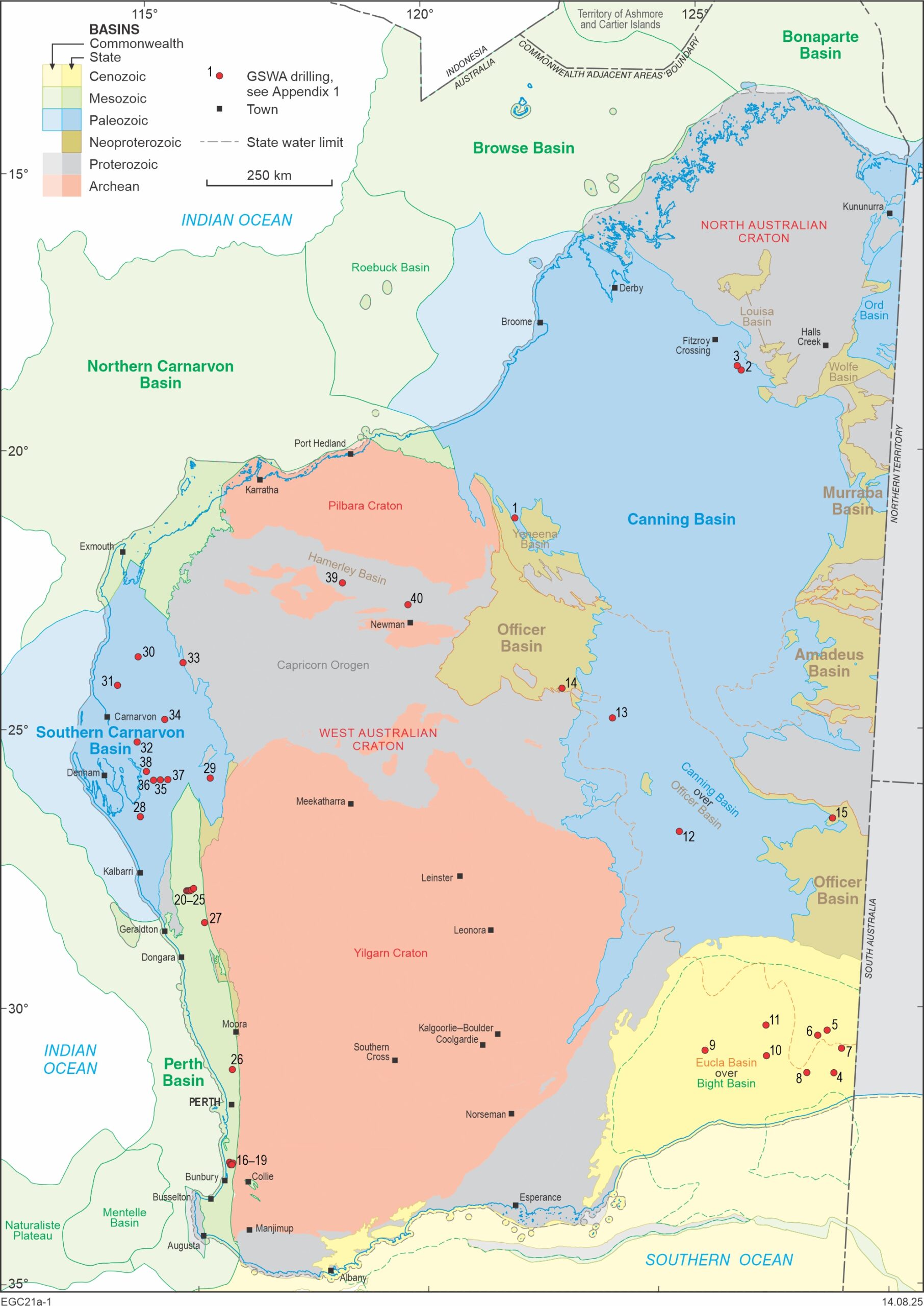
The Geological Survey of Western Australia (GSWA) routinely acquires new pre-competitive geoscience data to encourage exploration within Western Australia. Drilling in underexplored regions by this organisation aims to update stratigraphic and age relationships, and the prospectivity for many commodities. In Neoproterozoic–Phanerozoic sedimentary basins such drilling can reveal the existence of reservoir, seal and hydrocarbon source rocks, and can provide geothermal data to aid prospectivity assessments for petroleum (oil, hydrocarbon gas, helium, and hydrogen), coal, geothermal energy and CO2 sequestration.

The Renaissance Tour: A revival of frontier basins with data-driven exploration
by Karyna Rodriguez, Neil Hodgson & Lauren Found
Presented at the Petroleum Exploration Society of Australia (WA Branch) Lunch Series, June 2025
Full article available here
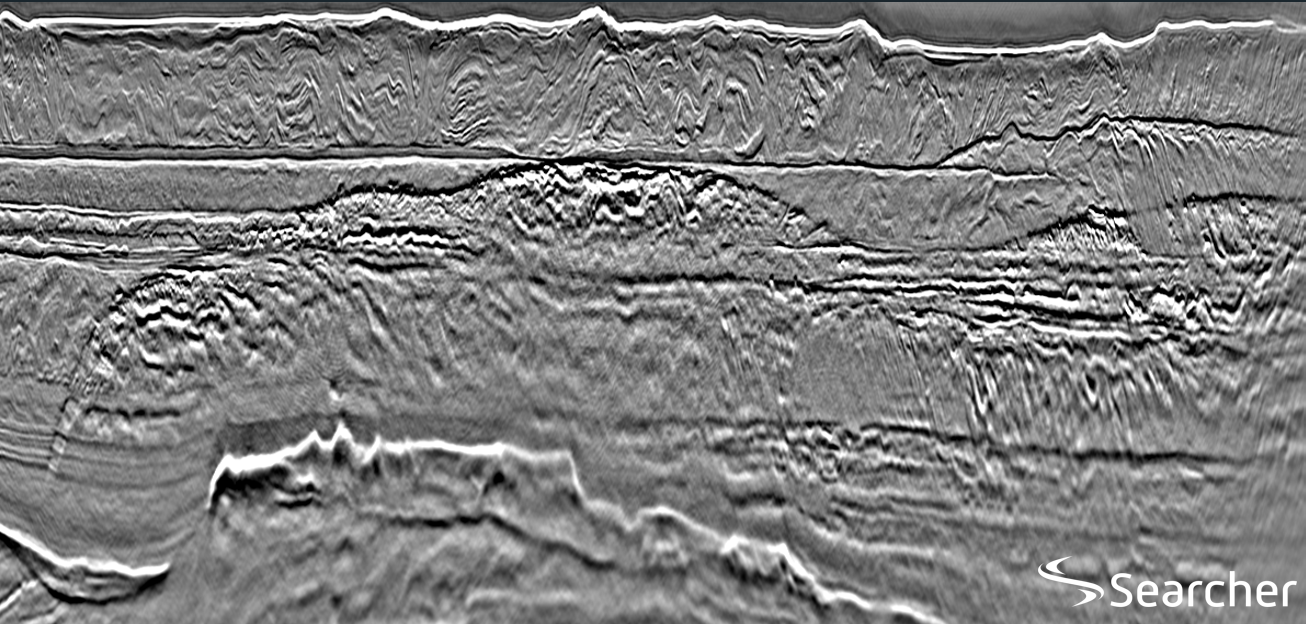
As the energy exploration landscape evolves, so too does the thinking around the basins being investigated. Advancing seismic acquisition and processing technologies in the last decade have allowed for explorers to take a fresh look on frontier and previously discarded basins, with the shifts in thinking and interpretation yielding billions of barrels of results.
In this world tour, four deep-water basins are investigated, including the Papuan Basin of Papua New Guinea (PNG), the Scotian Basin of Canada, the Namibian-South African Orange Basin and its Brazilian conjugate margin in the Pelotas Basin.

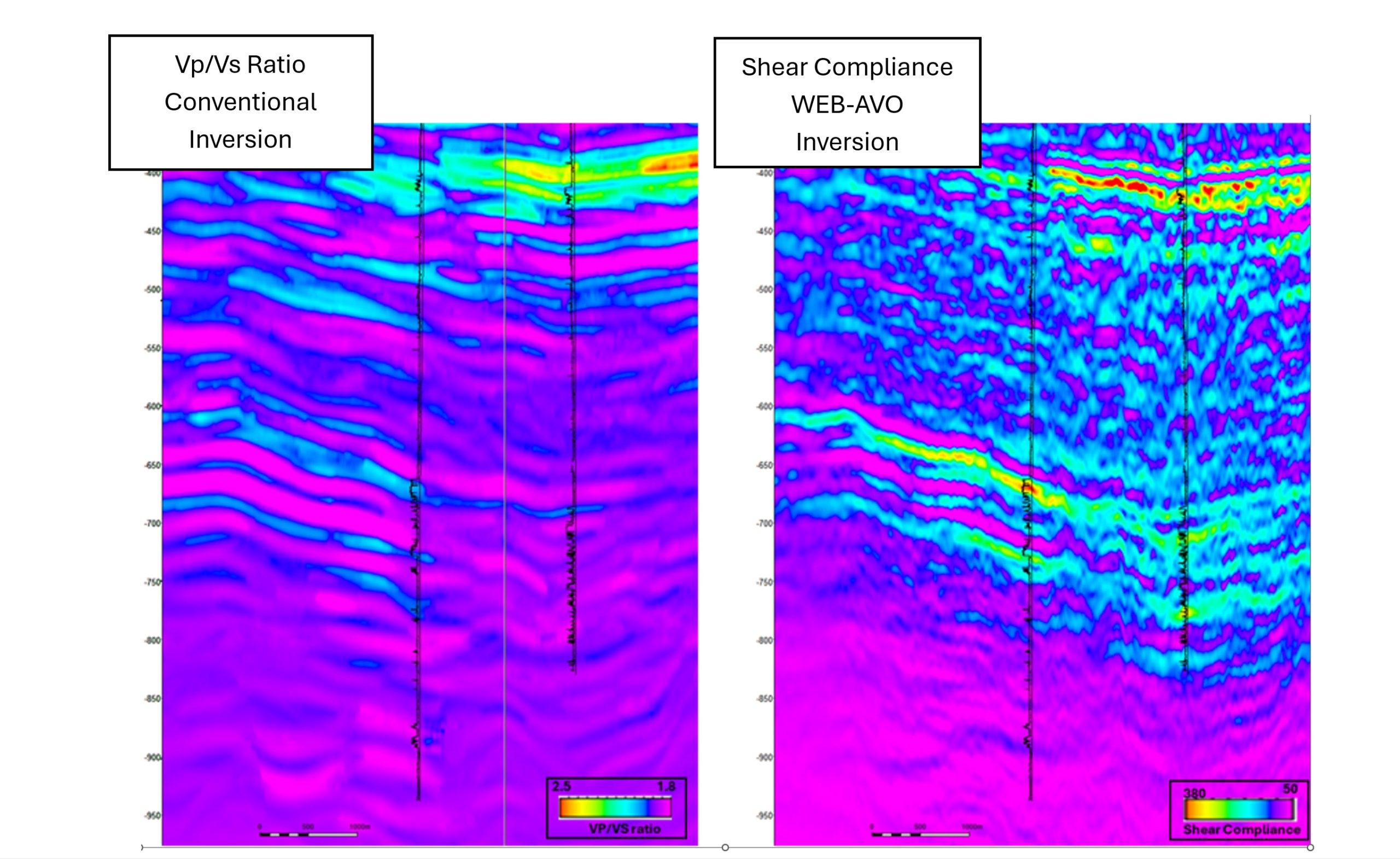
eFWI Using WEB-AVO at Delft Inversion
By John Coffin
This year we have seen plenty of publicity and interest in elastic full waveform inversion, or eFWI and the potential benefits and advantages it can provide. At Delft Inversion we have been using eFWI for over 12 years focussing on quantitative interpretation and seismic reservoir characterisation. This article explains how and why we do this.
The eFWI technology developed at Delft Inversion is called WEB-AVO which stands for Wave Equation Based AVO inversion. So, what does this mean? We solve the integral representation of the wave equation.

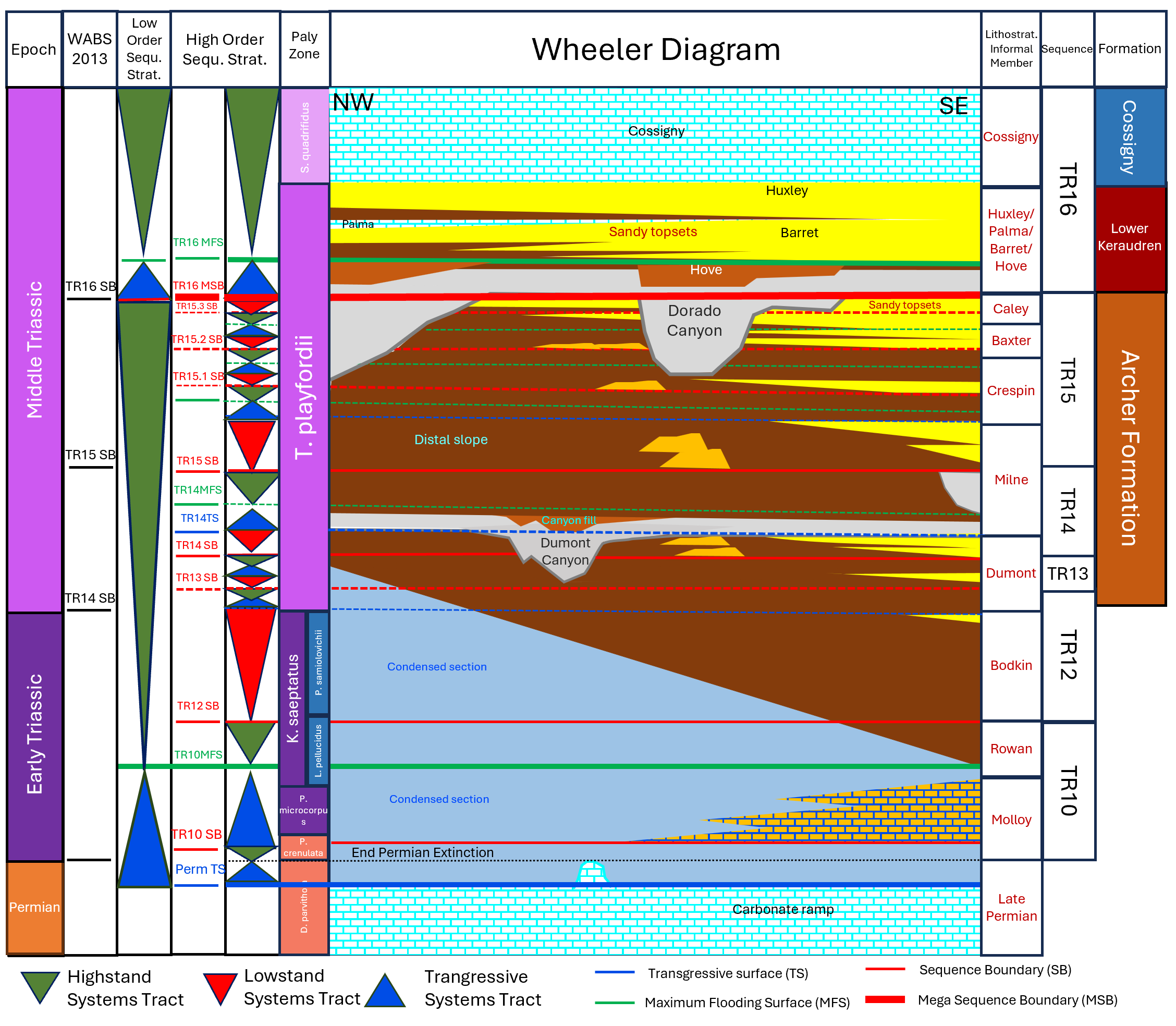
New perspectives on the sequence stratigraphy of the Early-Middle Triassic of the Bedout Sub-basin
Roisin McGee A* , George Mills A and Simon Sturrock B
- Author Affiliations - A Carnarvon Energy, Perth, WA, Australia. B Strat Trap, Perth, WA, Australia.
* Correspondence to: rmcgee@cvn.com.au
Australian Energy Producers Journal 65, EP24163 https://doi.org/10.1071/EP24163
Accepted: 29 March 2025 Published: 22 May 2025
© 2025 The Author(s) (or their employer(s)). Published by CSIRO Publishing on behalf of Australian Energy Producers. This is an open access article distributed under the Creative Commons Attribution-NonCommercial-NoDerivatives 4.0 International License (CC BY-NC-ND)
The Bedout Sub-basin, part of the Roebuck Basin on Western Australia’s North West Shelf, has drawn interest since hydrocarbon discoveries at Roc, Dorado and Pavo. Despite these successes, the region remains underexplored.

Unlocking Subsurface Insights: The Power of Spectral Decomposition in Geoscience
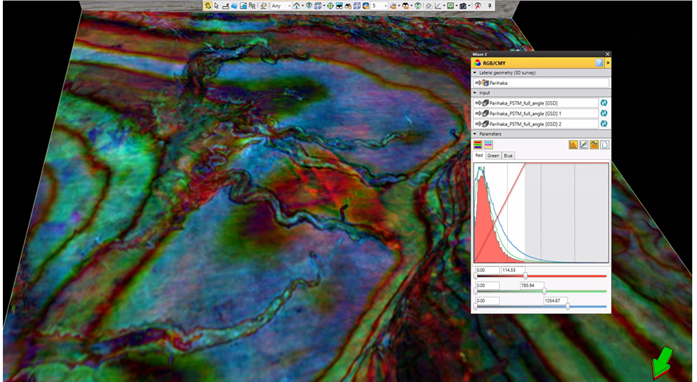
Spectral decomposition is a method that transforms seismic data into the frequency domain, revealing geological features that may not be visible in conventional seismic interpretation. This technique is widely used in hydrocarbon exploration, reservoir characterization, and geohazard identification.
It enhances thin bed detection, allowing geoscientists to resolve thin reservoirs and stratigraphic layers beyond conventional seismic resolution. The method can also serve as a direct hydrocarbon indicator, detecting frequency anomalies associated with hydrocarbons. Lastly, it supports lithology and facies mapping by differentiating rock types based on their spectral response, making it a valuable tool in subsurface exploration and reservoir studies.
The Mixer in Petrel allows users to compare and evaluate multiple seismic frequency volumes simultaneously using RGB/CMY blending.

Geological Survey of Western Australia’s Canning Basin and Perth Basin Deep Crustal Seismic Studies
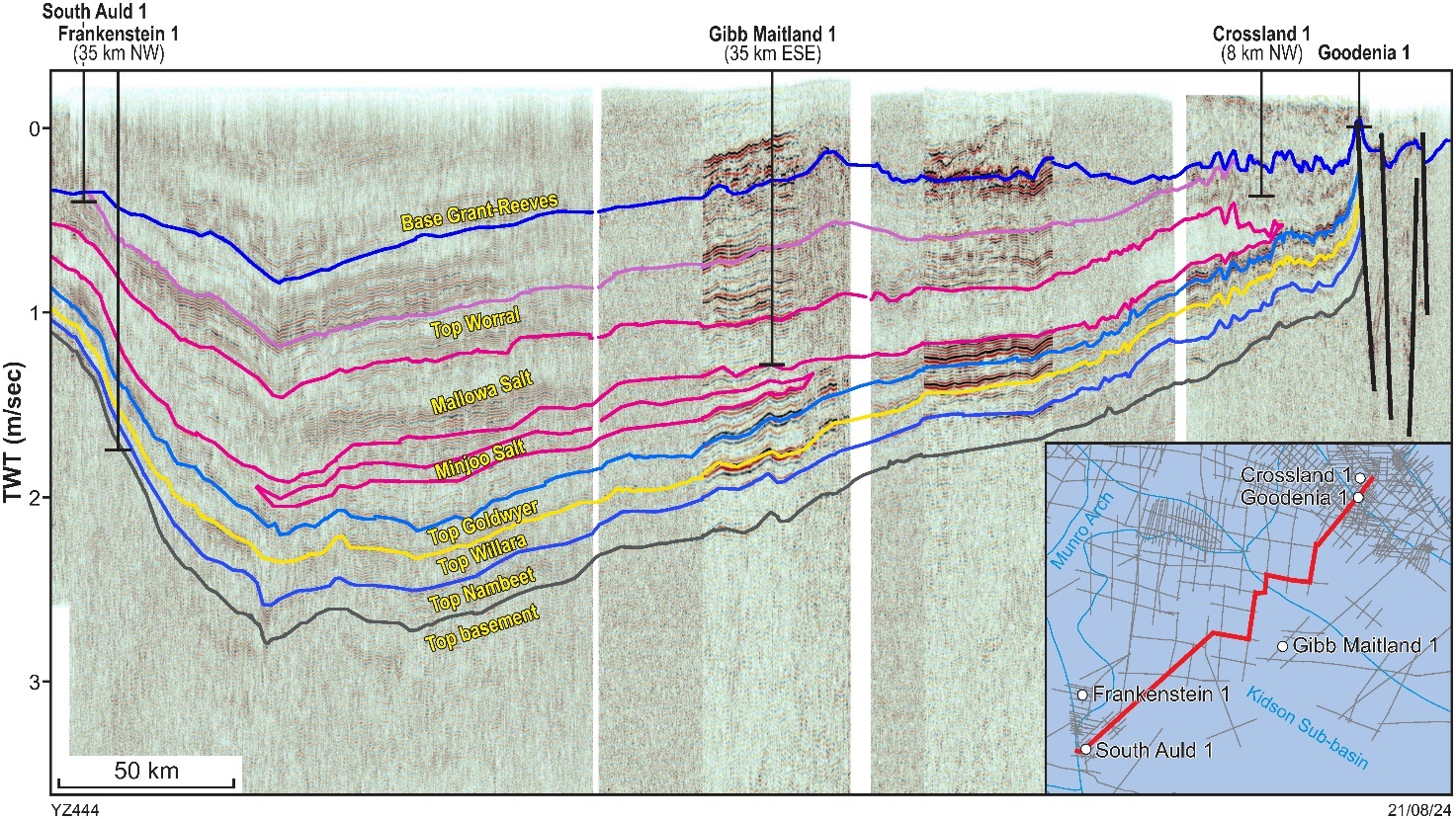
The Geological Survey of Western Australia (GSWA) will be soon releasing a report on seismic mapping of the southern Canning Basin authored by Y. Zhan and a plate showing seismic interpretation of the Perth Basin section of three new deep-crustal seismic lines which were acquired by GSWA in 2023-24 interpreted by C. Thomas.
The southeastern Canning Basin represents one of the least explored sedimentary regions in onshore Australia, largely due to its remoteness and challenging access conditions.

Natural Hydrogen in Western Australia
Leon Normore, Geological Survey of Western Australia
Abstract
The nascent field of natural hydrogen investigations is expanding rapidly worldwide. Recent studies in Australia have documented hydrogen in natural gas samples in both sedimentary basins and cratonic settings, and discussed multiple abiogenic sources for natural Hydrogen (Boreham et al., 2021a,b).