
Italian oil company Eni said it expects production to increase by 3.5% per year over the next four years and has plans to invest US$1.1 billion per year on exploration activities in its quest to discover two billion barrels of new resources. This was revealed by Eni CEO Claudio Descalzi in the company’s 2018-2021 Strategic Plan, which builds on the transformation started by the company back in 2014. Descalzi said over the past four years, in a very low price environment, Eni had increased its hydrocarbon production and restructured its mid-downstream businesses to drive positive structural result.
Feature Articles

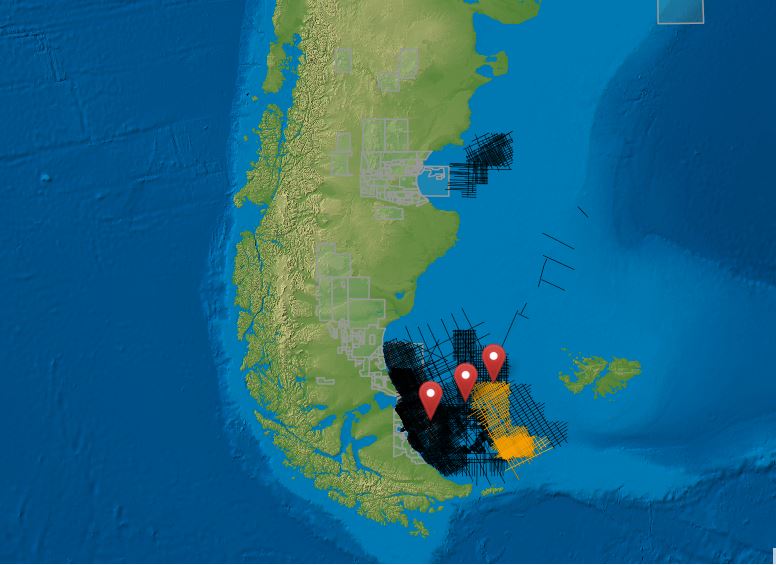
Searcher expands its Offshore Argentina Seismic and Well Database
Searcher Seismic announced it has expanded the Offshore Argentina Seismic and Well Databasewhich is being carried out in anticipation of the 2018 Argentina Offshore Bidding Round 1. Since late 2016, Searcher Seismic has been collating, organising, reimaging, interpreting and evaluating a vast amount of offshore data from the Argentina continental shelf areas. The original data required considerable adjustments, editing and QC enhancement, which allows the industry to easily utilise the rectified data sets for further analysis. Searcher now holds 11,171 km of Pre-STM broadband reprocessed data and over 100,000 km Post-STM processed open file 2D and 1,865 km² 3D.
Northern Territory lifts hydraulic fracking moratorium
The Northern Territory government has lifted a near two-year moratorium on hydraulic fracturing in the Australian state, barely three weeks after a scientific report gave the technology the all clear and said it could be performed safely if regulated responsibly. Northern Territory Chief Minister, Michael Gunner, made the surprise announcement, saying that he had taken his cue from the recent review, led by Justice Rachel Pepper from the Land and Environmental Court of New South Wales, that hydraulic fracturing could be done safely. Pepper’s reported listed 135 recommendations to mitigate risks associated with onshore shale drilling.
New Zealand bans new oil and gas exploration permits
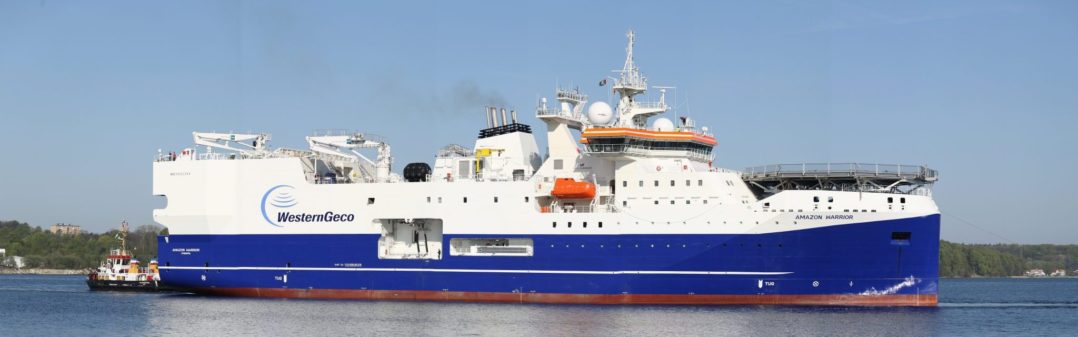
New Zealand's ruling Labour Party has banned all new oil and gas exploration permits in the country. This was announced by New Zealand Prime Minister, Jacinda Ardern, who said that the changes would be phased in and that all existing permits would be honoured. The decision was welcomed by environmental activist group Greenpeace, which has campaigned for seven years to end offshore oil and gas exploration in the country – most recently with campaigns against the Amazon Warrior seismic vessel in its exploration program for Statoil, Chevron and OMV off the Wairarapa Coast.
Australia’s pipe dream would be the third longest
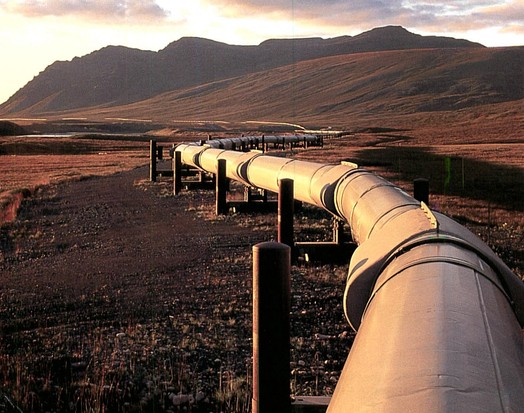
Former Western Australian premier Colin Barnett’s “pipe dream” of constructing a 2400km gas artery traversing from west to east Australia would, if realised, produce one of the longest pipelines on the planet.
But not the longest, according to GlobalData, which said recently that analysis of planned and announced trunk/transmission oil and gas pipelines in Europe, the Middle East and Africa, had revealed the Trans Saharan Gas project pipeline to be the biggest of them all with a length of 4,400km.
GlobalData did not consider the Keystone Pipeline from Canada to the Gulf of Mexico, which would span 3,450km if it is constructed.
Abu Dhabi is open for bidding with six oil and gas blocks
The Abu Dhabi National Oil Company (ADNOC) has released six oil and gas blocks for bidding as part of Abu Dhabi's first ever block competitive exploration and production bid round. In a media release ADNOC said the licensing strategy represents a major advance in how Abu Dhabi unlocks new opportunities and maximizes value from its hydrocarbon resources. “It is also consistent with ADNOC's approach to expanding its strategic partnerships across all areas of its business.
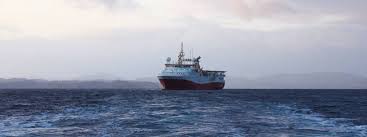
Shearwater GeoServices returns to Atlantic Margin for TGS
Shearwater GeoServices has been awarded a new contract by the Multi-Client geophysical company TGS for the second consecutive year. The contract is for a seismic survey on the Atlantic Margin in the Norwegian Sea which is expected to take approximately three months and is scheduled to be completed by the end of September, 2018. The 2018 survey will cover 5,135 km2 and will be performed by one of Shearwater's vessels which will utilize FlexiSource and a wide tow spread. In 2017 Shearwater acquired 29,500 km2 of FlexiSource data for TGS, including 17,700 km2 for the TGS Atlantic Margin project.

Spectrum starts 2D Sergipe Basin survey off Brazil
Spectrum has begun a 6,000-kilometer 2D program over the Pernambuco-Paraiba basins along the Eastern Margins of Brazil. The multi-client specialist said in a market update that the survey, carried out in partnership with BGP Marine, covers an area north of the prolific Sergipe Basin that would be included in Round 16 scheduled for 2019. The survey is being acquired with a 12,000-meter cable to record data necessary to understand basin architecture as well as to image prospective zones similar to the large oil discoveries in the Sergipe Basin.
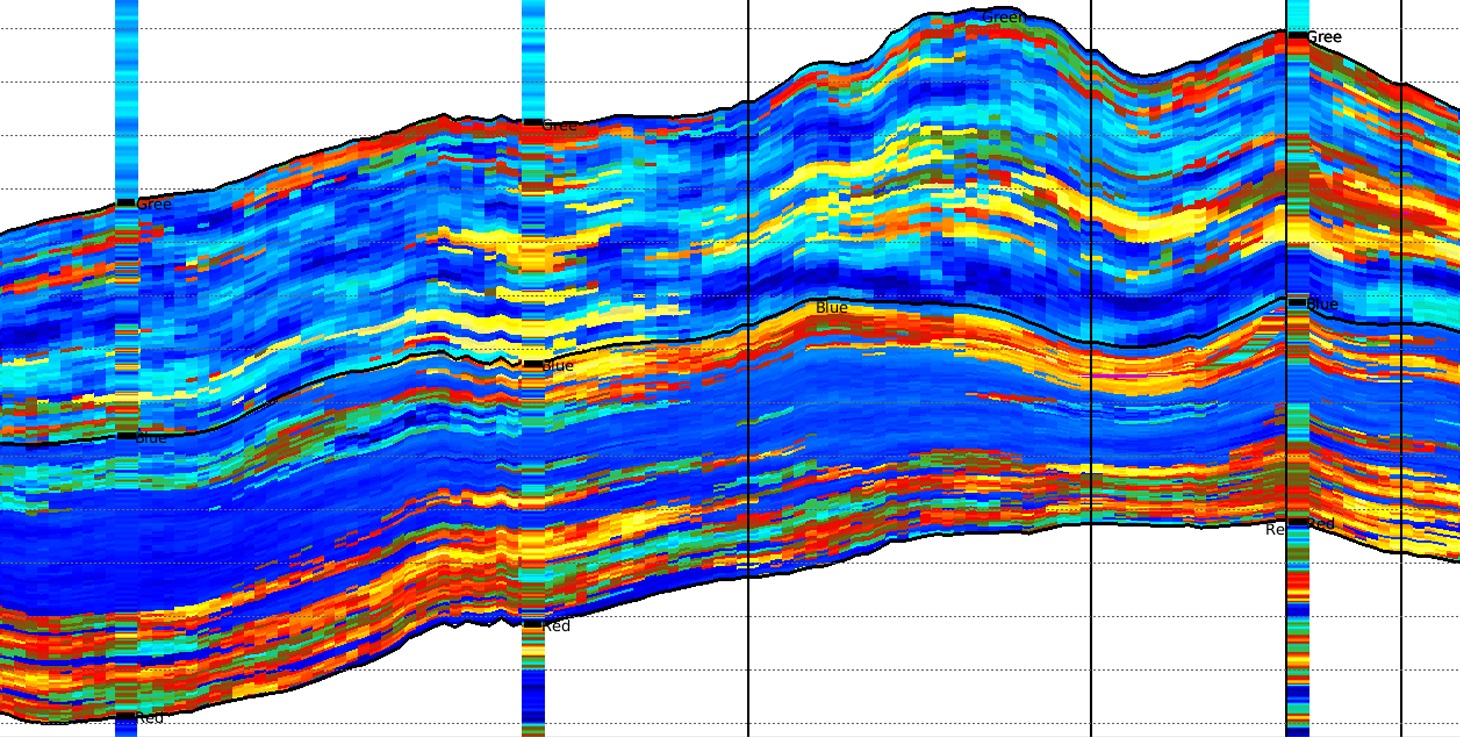
CGG GeoSoftware Donates Seismic Reservoir Characterization Software to Delft University
CGG GeoSoftware has donated its Jason and HampsonRussell seismic reservoir characterization software suites to Delft University of Technology (TU Delft) in the Netherlands. The donation of a full HampsonRussell suite and the renewal of an enhanced Jason package will enable students at the Department of Geoscience & Engineering to expand their theoretical and practical knowledge of quantitative reservoir characterization and inversion techniques.
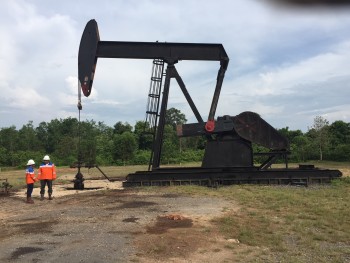
Bass Oil lifts daily oil output by 20% in South Sumatra
In a market update Melbourne-based Bass Oil said it had made significant improvements to its oil producing Tangai-Sukananti KSO, in Indonesia’s prolific South Sumatra Basin. This had lifted the company’s 2018 daily field output from 550 barrels of oil per day (bopd) earlier this year, to a current 650 bopd, “with further gains of between 150 to 250 bopd expected over coming weeks”. “The significant production uplift is a direct result of the successful completion of field optimisation work pursued by Bass over the past six months.