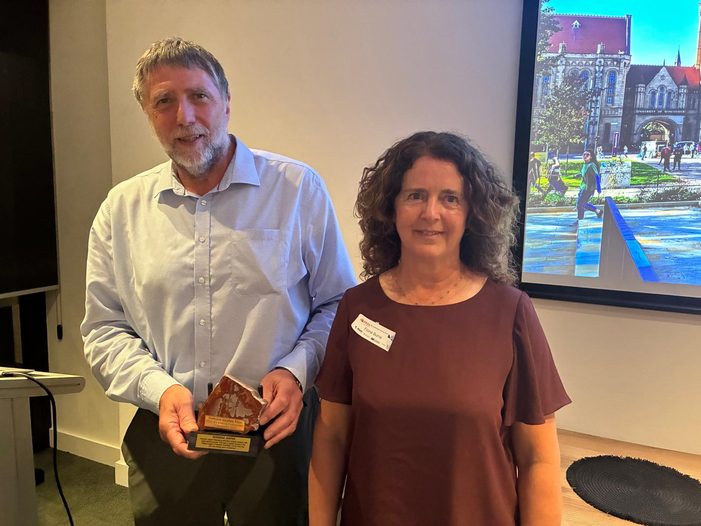
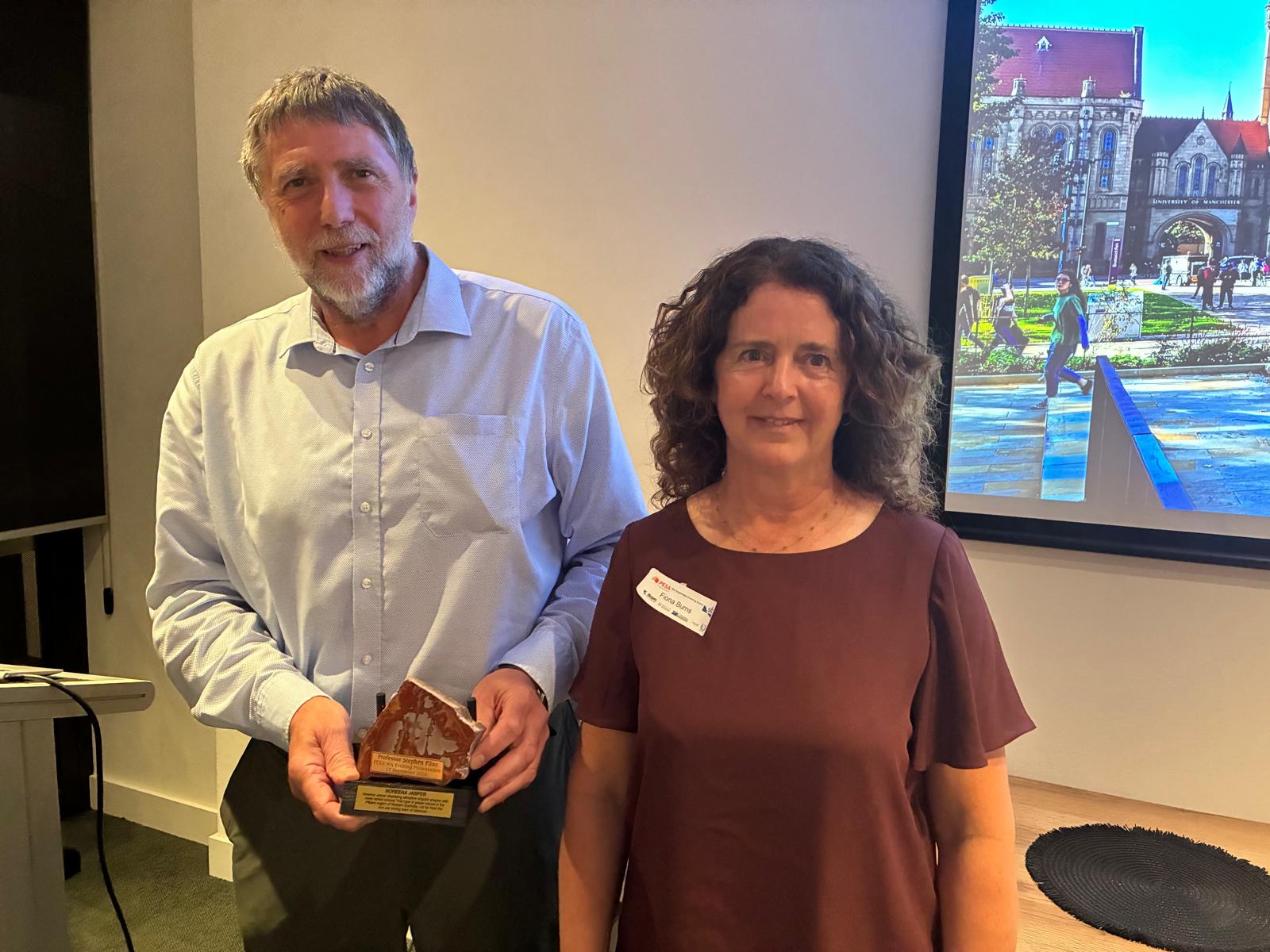
A strong audience of around 40 attendees gathered in Perth for the recent Perth PESA evening talk presented by Prof. Stephen Flint, who shared insights from more than 25 years of research on deep-water slope and basin-floor sedimentary systems.
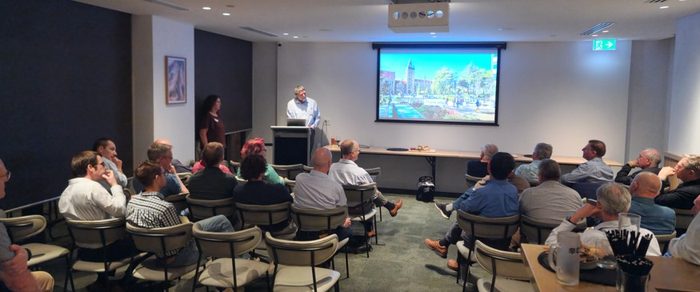
Prof. Flint outlined the key findings from the SLOPE and LOBE industry consortium projects, which have combined extensive field observations from exceptional outcrops in the Permian Karoo Basin of South Africa. This work has led to the development of the widely recognised Karoo Model, a comprehensive framework describing the hierarchical architecture of basin-floor lobes, intra-slope lobes, and slope valleys and canyons.
The presentation demonstrated how the model can be used to predict down-system depositional trends and reservoir architecture, highlighting the role of evolving slope morphology in controlling the transition from attached to detached terminal lobes. These insights have important implications for reservoir characterization, stratigraphic trapping, and carbon capture, utilisation and storage (CCUS) projects.
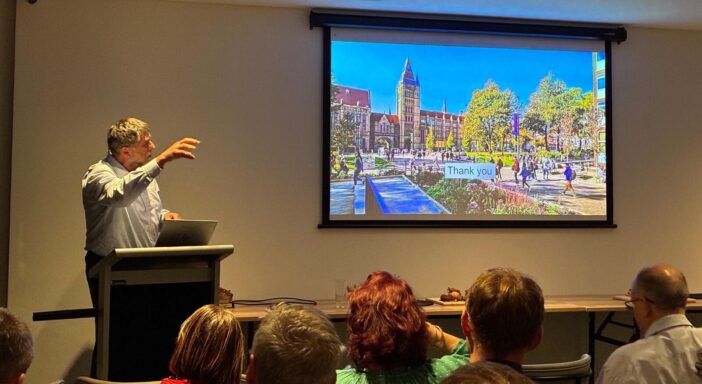
Prof. Flint also discussed the application of the Karoo Model to the Cretaceous Rosario Formation of Baja California, where studies of coarse-grained slope systems have revealed striking similarities to the Karoo examples. The Rosario dataset provides valuable information on up-dip system pinch-outs and canyon-head geometries, offering further perspectives on the evolution of deep-water depositional systems.
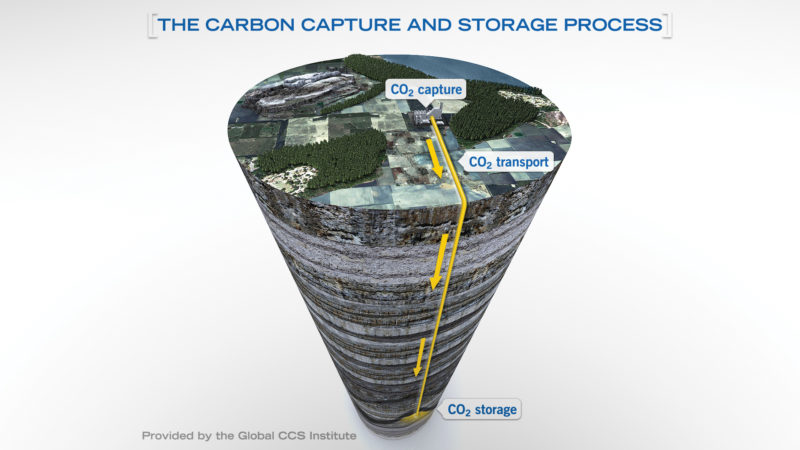
The talk concluded with an overview of the new LOBESTORE project, which investigates the distribution of minerals likely to react during and after CO₂ injection, contributing to a better understanding of subsurface storage behaviour in future CCUS developments.
An informative and engaging evening was enjoyed by all, with participants gaining valuable insights into the architecture and evolution of deep-water depositional systems and their significance for both hydrocarbon exploration and emerging energy-transition applications.