
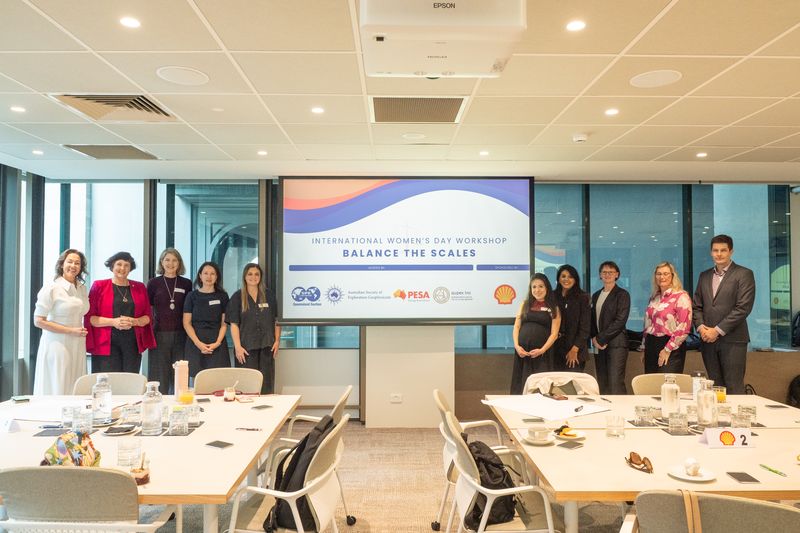
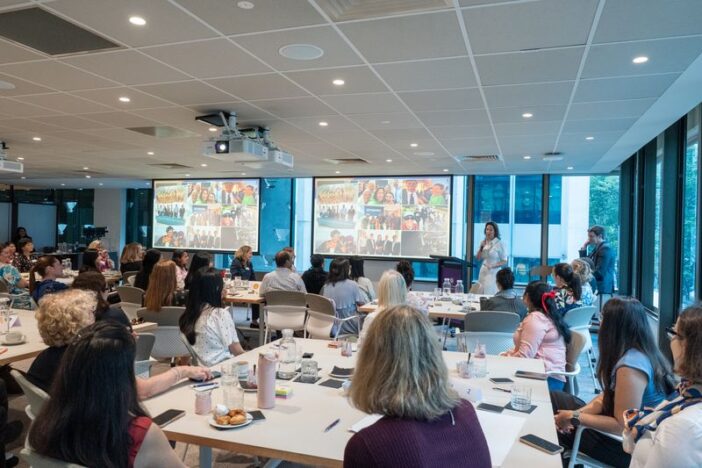
Brisbane March 2nd– a full room of industry professionals from graduates to seasoned leaders a delicious breakfast spread and flowing caffeine – the International Women’s Day Workshop and Networking Breakfast, hosted by SPE, QUPEX, PESA and ASEG, was officially sold out, already a great indication of the support and eagerness to drive change.
Setting the Tone: Equity Is Everyone’s Business
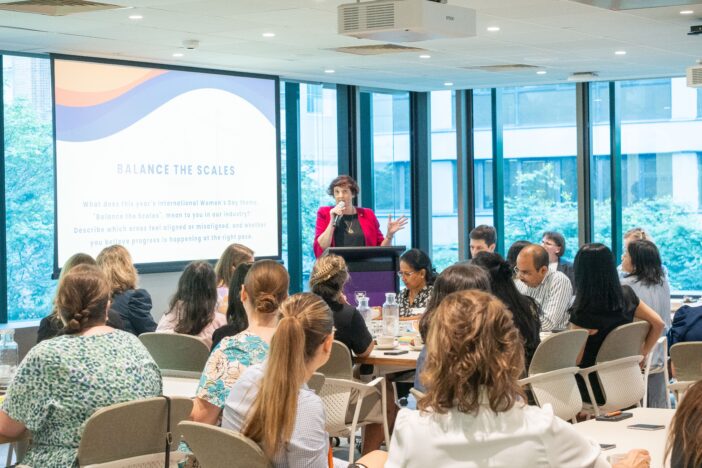
The morning opened with the Hon Fiona Simpson, Minister for Women and Women’s Economic Security. Her message was simple and powerful: raising women up raises everyone. Equity is not a women’s issue- it is a societal issue with shared responsibility. That this conversation belongs to everyone in the room. Not just the women. Not just the leaders. Everyone.
It set the tone for what followed.
The Reality Check: 2221
Facilitator Anita Parbhakar-Fox grounded us in the data. At our current trajectory, gender equity in our industry won’t be reached until the year 2221.
2221. That statistic landed heavily – reflecting in the live audience polls filled with sadness and anger at the harsh awakening.
She spoke candidly about the early challenges of entering a male-dominated field — the subtle and overt pressures, the resilience required, and the weight of being “the only one.” She also spoke about the power of becoming a visible role model, even if you initially didn’t intend to be one.
Stories of Resilience: Power, Silence and Authenticity
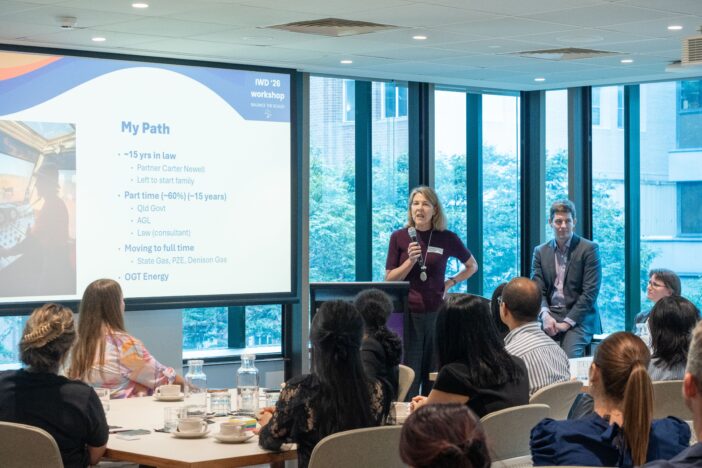
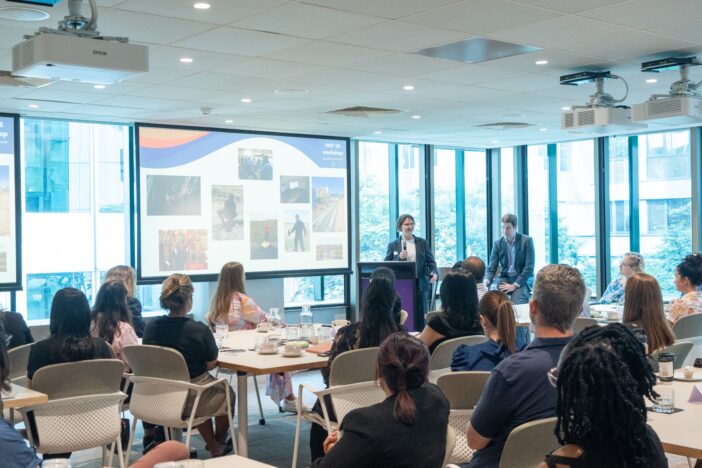
Six remarkable leaders — Sarah Alexander, Lucy Snelling, Lisa France, Tara Price, Diana Vagg, and Emma Tavener — shared deeply personal reflections on the IWD theme of “Balance the Scales.”
Their honesty was disarming.
The challenges of speaking up when you are alone. The isolation and silence. The power imbalances. The expectations to fit in and adapt to the male-dominated culture, be more resilient, thick-skinned, but also more feminine, don’t be aggressive, don’t be too much, speak up, but don’t complain, blend in, shrink yourself.
But you cannot be your true self when you are trying to shrink into someone else’s culture. And when authenticity is suppressed, we lose individuals diverse skills, critical thinking, and innovation.
We often say, “See something, say something”, but in reality, that is incredibly hard when you are in the minority, and your career depends on your surrounding cohort. If our systems rely on the least powerful voices to take the greatest risks, they are not balanced systems. Silence is isolating and suppresses the safety of speaking up. Silence does not equal satisfaction.
That resonated deeply with me with field work.
Fitting into the dominant mono-culture of macho field life felt safer than challenging it. In field environments especially, being “one of the boys” is prized over individual skill sets, comfort and overall cultural change. Survive or leave.
Breaking down that culture is good for everyone — not just women. It benefits all of those who don’t fit into the stereotypical, dominant, loud environment, and gives a voice to everyone.
We then dug deeper. The speakers led breakout tables to discuss 3 main topics: Current realities in our industry, what’s working well and worth celebrating and opportunities for tangible lasting improvement.
And the theme was clear: honest conversation and action.
1. Current Realities in Our Industry
Entry-level equality doesn’t equal long-term equity. Many organisations aim for 50:50 graduate intakes, but those numbers don’t translate through mid-career and beyond. High resignation rates, particularly during family-forming years, expose structural inflexibility and lack of support, and challenges of returning to the workforce.
Fieldwork rosters (who is looking after the kids?), rigid schedules (school pick up again?), and limited re-entry support (what else did you do during those years?) create attrition points. We have seen great improvement in maternity, and beginnings of paternity leave, but broader support systems are less visible. Supporting dads, partners, and grandparents through flexible policies ultimately supports women’s sustained participation in the workforce.
There was also a frank discussion around diversity hiring. It can feel uncomfortable, for organisations and individuals who fear being perceived as “the token female/minority” rather than valued for their skills. University cohorts are not always 50:50, and proportional hiring can feel disproportionate, however increased representation can change culture. While a single woman is expected to assimilate, increased numbers create collective influence. Even as simple as having suitable facilities. Culture does not shift when diversity is tokenistic and it feels uncomfortable at the start. New and different feel unsteady, and we have to look that in the eyes, and sit with it before the snowball effect of change can commence.
2. What’s Working Well — and Worth Celebrating
Despite the challenges, there is progress.
Conversations like this are happening — and selling out.
Female leadership styles are increasingly recognised as strengths: collaborative decision-making, calm crisis management, organisational clarity, more balanced discussions.
Male allyship networks are growing.
Flex work and paternity leave is slowly increasing.
Increased mentoring frameworks, leadership coaching opportunities, and structured support systems.
The increase in visible role models and their openness, honesty and support.
Importantly, we celebrated authenticity. The leaders on stage did not present polished perfection. They shared missteps, doubts, and resilience. That visibility matters.
3. Opportunities for Tangible, Lasting Improvement
The breakout groups was where energy turned into action. Small tables meant every voice was heard.
Some themes emerged clearly:
Design systems that don’t depend on personal risk- Change should not rely on the minority being the bravest person in the room.
Create truly supportive workplaces- Flexible work, meaningful parental leave (for all genders), childcare subsidies, re-entry pathways, and appropriate facilities on site are not “extras”
Invest in mentoring and career progression guidance. Mid-career is where we lose talent so structured support here is critical.
Train leaders to manage dominant voices. Meetings should not reward volume. Facilitation skills that quiet the loudest contributors and create space for others are essential. Leadership and diversity training to ensure equal contributions, are heard, recognised and actioned.
Start earlier – Girls often don’t consider engineering or geoscience as viable careers because they’ve never seen themselves reflected there. Early STEM exposure and visible female role models matter long before university.
The change may feel uncomfortable at first — increased costs, shifting dynamics, challenged norms. But discomfort is often the precursor to progress.
A Personal Takeaway
I left the breakfast with notes, new perspectives, motivation and a publicly announced new nickname as Moonboot Molly, which I am working to dropping just as quickly.
Balancing the scales is not about numbers alone. It’s about redesigning systems so that power is shared, silence is not mistaken for safety, and authenticity is not a liability.
It is about creating environments where no one has to shrink to belong.
And if the energy in that fully booked room was anything to go by, the scales may take time to balance, but they are already starting to move. The conversations in that room proved industry is ready to keep moving the scales.
A big thanks to Shell for sponsoring the event, and Santos, Origin and Halliburton for purchasing tables and supporting change within our industry, as well as SPE, QUPEX, PESA Qld and ASEG for organising and hosting the event.
Related Articles



08/11/2021