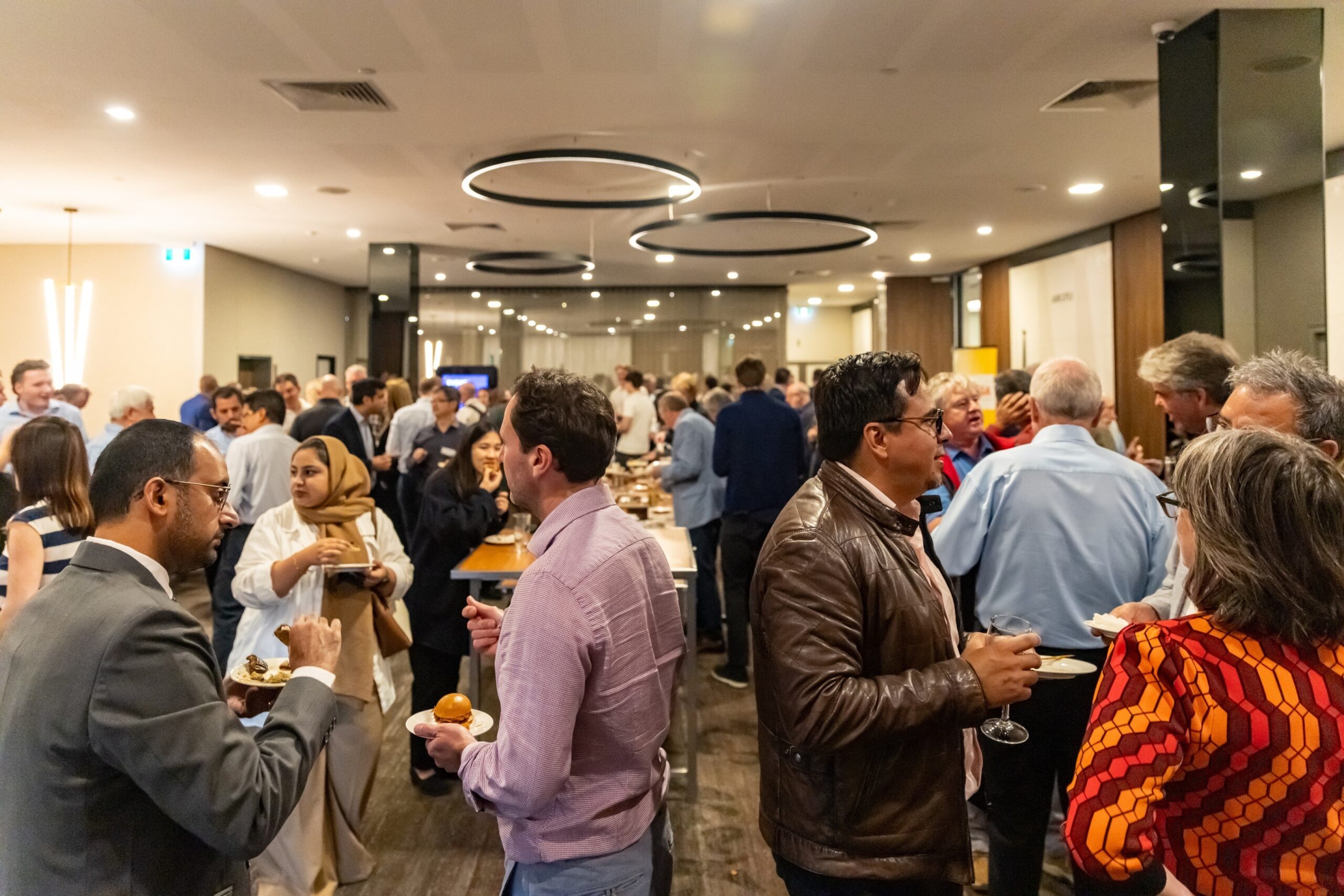
Summary by Dr Fiona Burns
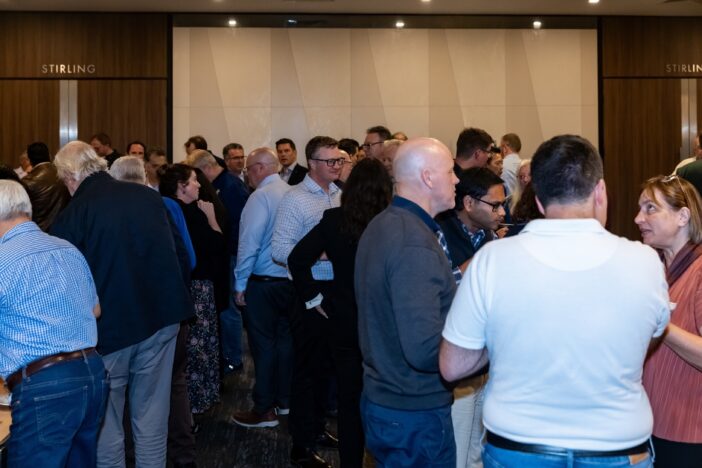
On Thursday evening, 15th May PESA and SPE held a joint evening event at the Parmelia
Hotel. The key focus of the presentations were projects and insights from across Australia
on the topic of CCS, with three separate speakers invited.
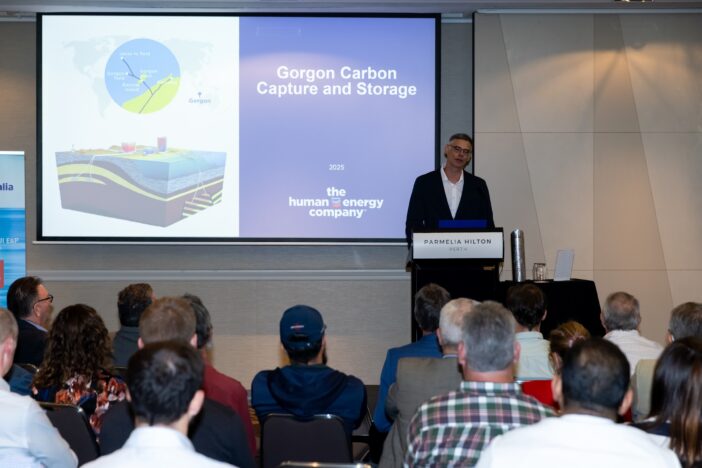
Robert Root’s talk (Chevron Australia) was entitled “Gorgon Carbon Capture and Storage –
Insights and Lessons Learned”. Rob provided a highly informative overview of Gorgon CCS
including performance to date, system optimization, and key lessons for other CCS projects.
The Gorgon Liquified Natural Gas (LNG) plant is supplied by gas from two foundation fields:
Jansz which has low reservoir CO2, and Gorgon which is relatively high in reservoir CO2
(~14%). The design of Gorgon Project included systems to extract CO 2 from the reservoir
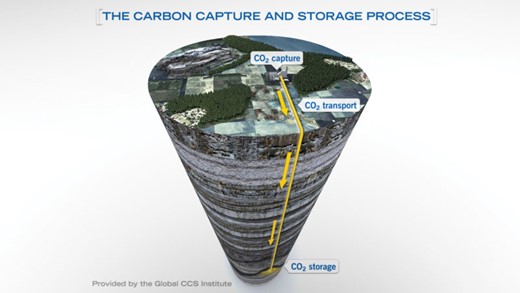
gas stream feeding the LNG plant and inject it into the Dupuy Formation below Barrow
Island (BWI) for permanent storage. Since 2019 CO 2 has been injected into the Dupuy at
globally significant rates with over 10 million tonnes injected, however the system has been
limited by the capacity to manage reservoir pressure through producing water from the
Dupuy Formation and injection into the overlying Barrow Group. Activities are currently
underway to increase pressure management capacity including side-tracking and re-
completing existing wells, drilling additional wells, and installation of surface filtration
facilities.
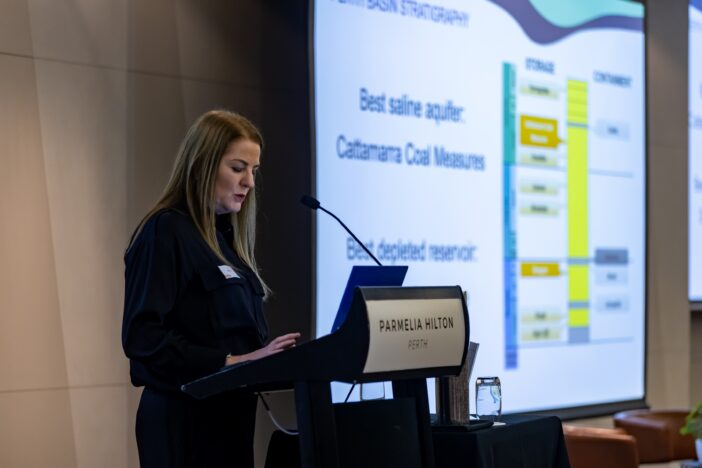
Julia Cass (DEMIRS) talk was entitled “CO₂mpartmentalising Climate Change: Perth
Basin’s Role”. Julia discussed reservoir quality controls in the Perth Basin that have been
evaluated to rank carbon storage targets for a CO₂ Storage Atlas being prepared by the
Geological Survey of Western Australia. The key attributes for the most prospective targets
include thick intervals with high net-to-gross passing cut-off criteria of shale volume below
30% and porosity greater than 10% at depths suitable for supercritical CO₂ storage.
Reservoir heterogeneity is preferred as it permits greater lateral plume migration by
enhancing residual gas trapping thereby boosting storage efficiency. These attributes
alongside seal effectiveness determine the most suitable storage intervals. The Cattamarra
Coal Measures emerged as the highest-ranked storage interval of the evaluated targets. It
is characterised by thick, high net-to-gross sections with coarse-grained channel sands
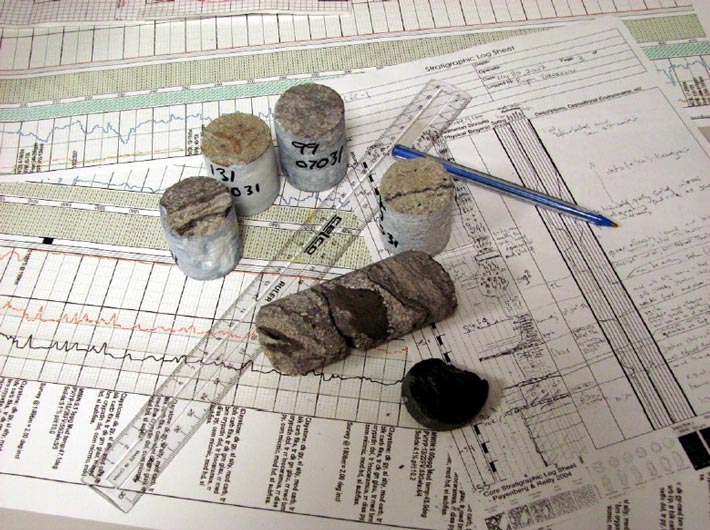
providing excellent injection potential. Burial and temperature control diagenesis which
naturally degrades porosity and permeability with depth ultimately defining the lower limit of
intervals prospective for storage. A combination of temperature modelling, petrophysical
analysis and depth mapping has been utilized to delineate the Cattamarra Coal Measures
reservoir target and assess the overlying regional seal of the Cadda Formation.
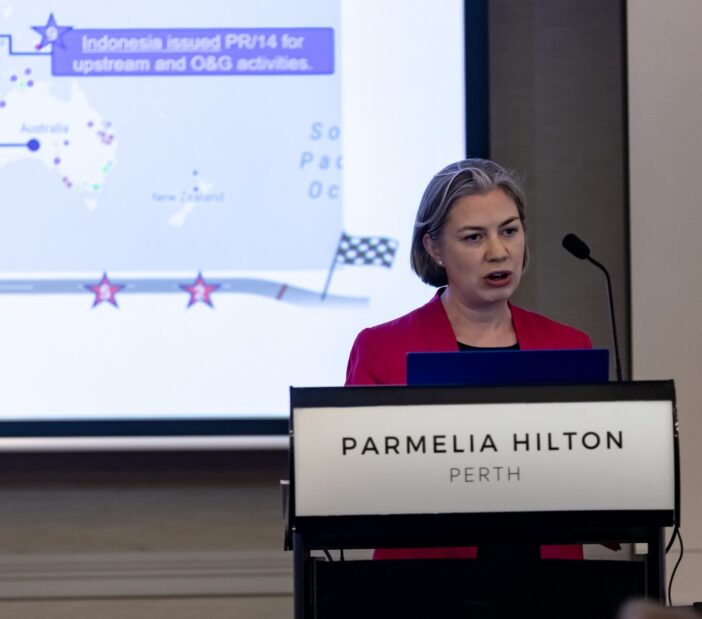
Anne Forbes’s talk (Wood Mackensie) was entitled “Global CCUS overview: Pivotal
progress and persistent challenges” discussed the highs and lows in the CCUS space
across 2024. The 48 Mtpa of sanctioned project capacity was much lower than expected,
although new project capacity announcements remained at a healthy rate. Asia Pacific led in
licencing, with 90% of new awards occurring in APAC. And in Australia, Moomba CCS, the
world’s lowest cost CCS project to date, commenced operation. Looking forward, Anne
stated that we can expect a record number of FIDs, industry first start-ups, and the first
commercial scale CO 2 ship to set sail in 2025. But at a global level we expect the rate of
licensing to slow as existing work commitments are actioned.
Approximately 130 people were in attendance.