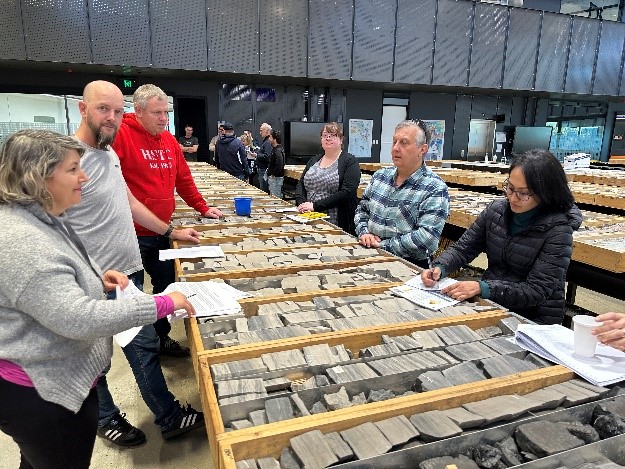
The Petroleum Exploration Society of Australia (SA/NT) branch hosted Henry Posamentier on the 3 and 4 November 2025 when he presented both a 2-day workshop and a luncheon meeting. His workshop and luncheon presentation delivered a masterclass on seismic stratigraphy and seismic geomorphology and was based on Henry’s over 50 years of global experience and pioneering work in developing the contemporary approach to sequence stratigraphic analyses, integrating sedimentology, stratigraphy, and depositional systems analysis.
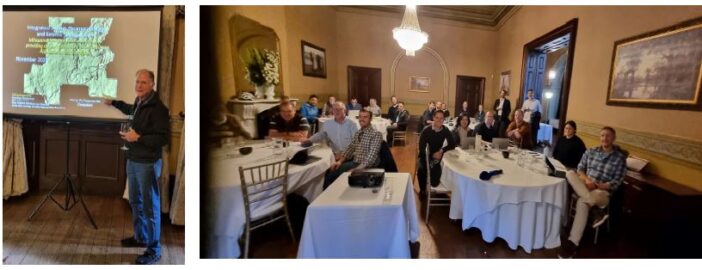
The workshop attracted 26 registered attendees and the lunch presentation even more with an additional 24 registered. By far the best attended events this year, and speaking clearly to the very high regard Henry is held in.
Henry generously shared his knowledge, leaning into his back catalogue of experience, taking us from continental to shallow marine and deep water and back again, all the while introducing real-world examples for us to build our own atlas. He iterated heartily on the following in his workflows: integrate your data, look for patterns, be efficient and fast (i.e. know your software) and leverage and understand context. Use what works for you and use the workflow/s that best demonstrates what you’re trying to communicate. Sprinkled with pearls of wisdom like “pick what’s easiest and smooth the heck out of it”, is Henry’s method for finding a flattening surface and getting rid of artefacts, and then “add all of it to your atlas or catalogue” so you have a library of patterns to reference are simple yet powerful ways to make us better geoscientists.
In short two days wells spent. Thanks too to Santos for bringing Henry to Adelaide and to our PESA volunteers for bringing it all together.
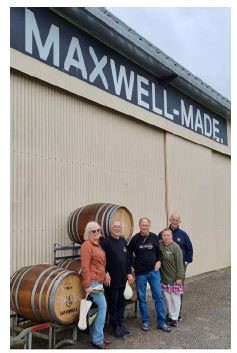
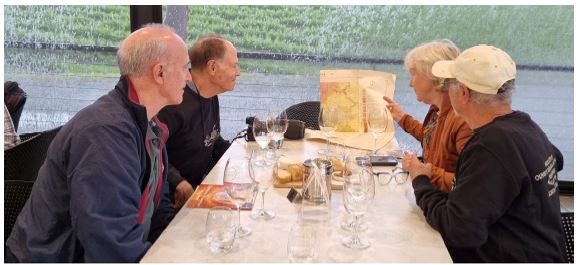
John Kaldi, PESA SA/NT Branch President, hosted a field trip to McLaren Vale with Henry Posamentier the day before Henry’s course in Adelaide. The group, which included Elinor Alexander, PESA Federal Chair, and Rhodri Johns, PESA SA/NT Branch committee member, investigated the Eocene Blanche Point Formation limestone exposed at the Maxwell Wines estate in McLaren Vale, the terroir for some of the company’s award-winning wines.
Related Articles

15/08/2024
26/07/2021