PESA WA October Technical Evening Talk —
By Matt Fittall
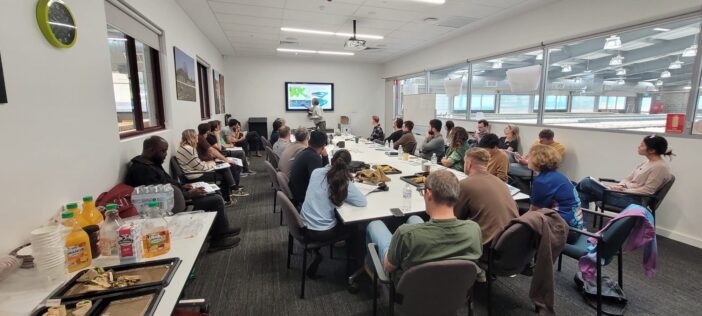
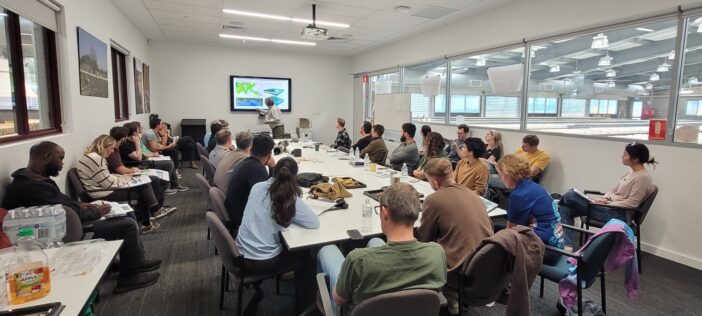
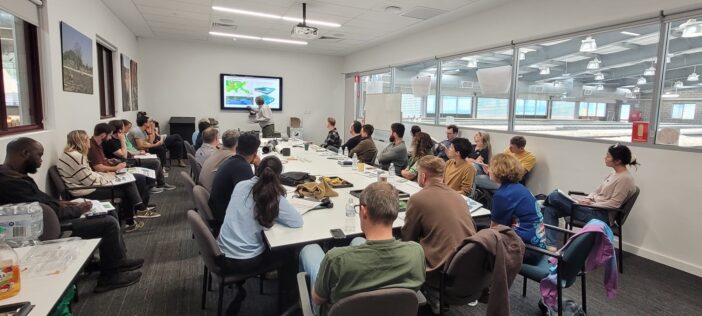
A core group of PESA geoscientists gathered at The Globe on the evening of October 2nd to learn about the impact of new numerical modelling of deposition in wave influenced deltas in the interpretation of deltaic sequences and their facies distributions. Dr Willis and his co-workers showed how this work challenges the paradigm of a prograding equilibrium shoreface profile and a gradual upward- coarsening facies progression with a sharp-based shoreface succession generated by a relative sea-level fall.
In his presentation Brian Willis demonstrated that differences in sediment-transport directions, sorting under river- and wave-driven littoral currents along the coast and sediment supply to the coast relative to rates of longshore drift can result in sharp based shoreface deposits that are not related to relative sea level change. Also “top-truncated” shoreface successions might record wide deviation in net direction of regional sediment supply, shallow-water wave transport, and shoreline progradation rather than significant regional transgressive ravinement.
The character of vertical facies in your wave dominated delta, expressed by facies changes in well logs and core may be the product of sediment transport direction, sediment supply and longshore drift rather than relative sea level change. Dr Willis presentation challenges our thinking regarding deltaic facies models and their interpretation.
PESA Core Workshop
By Fiona Burns
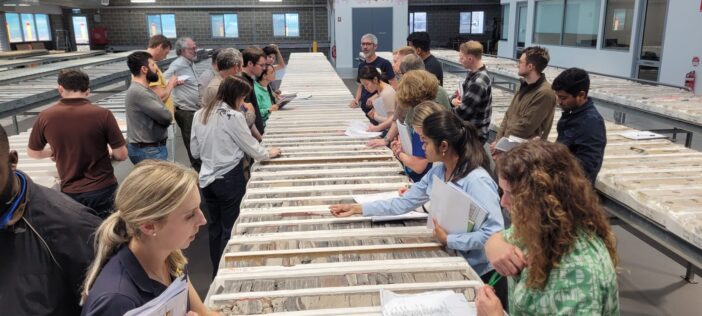
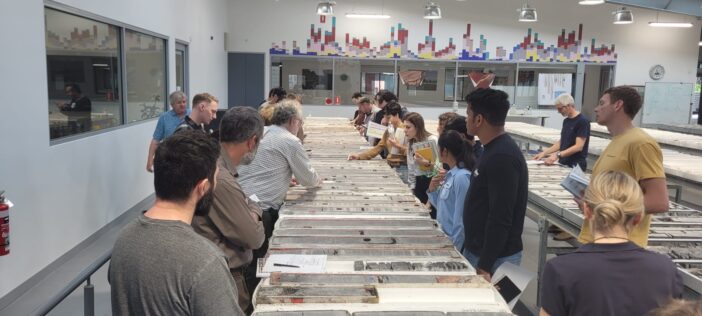
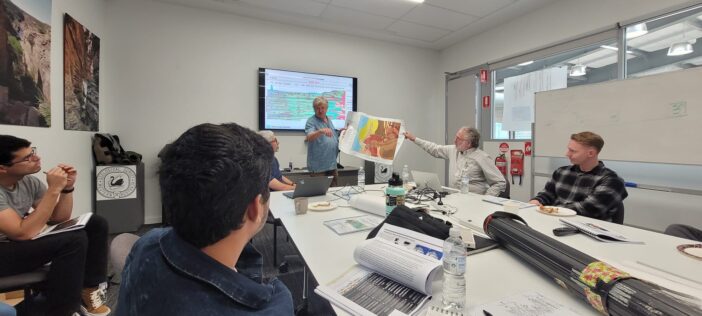
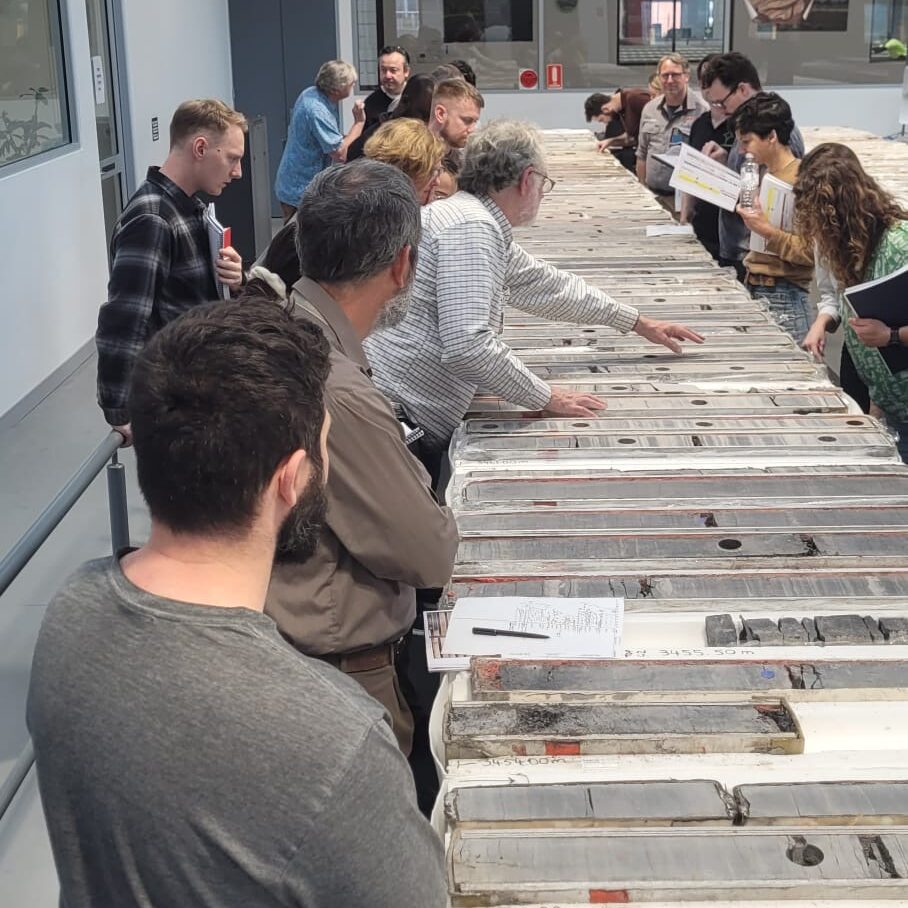
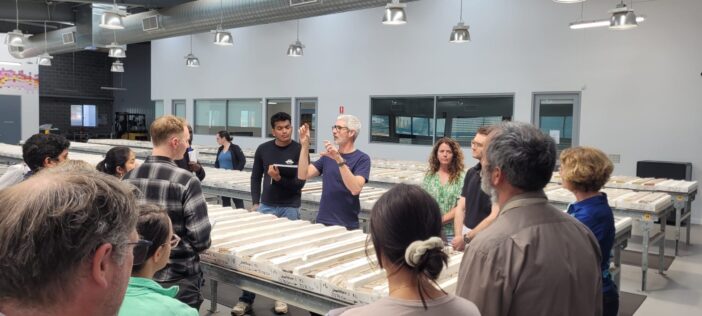
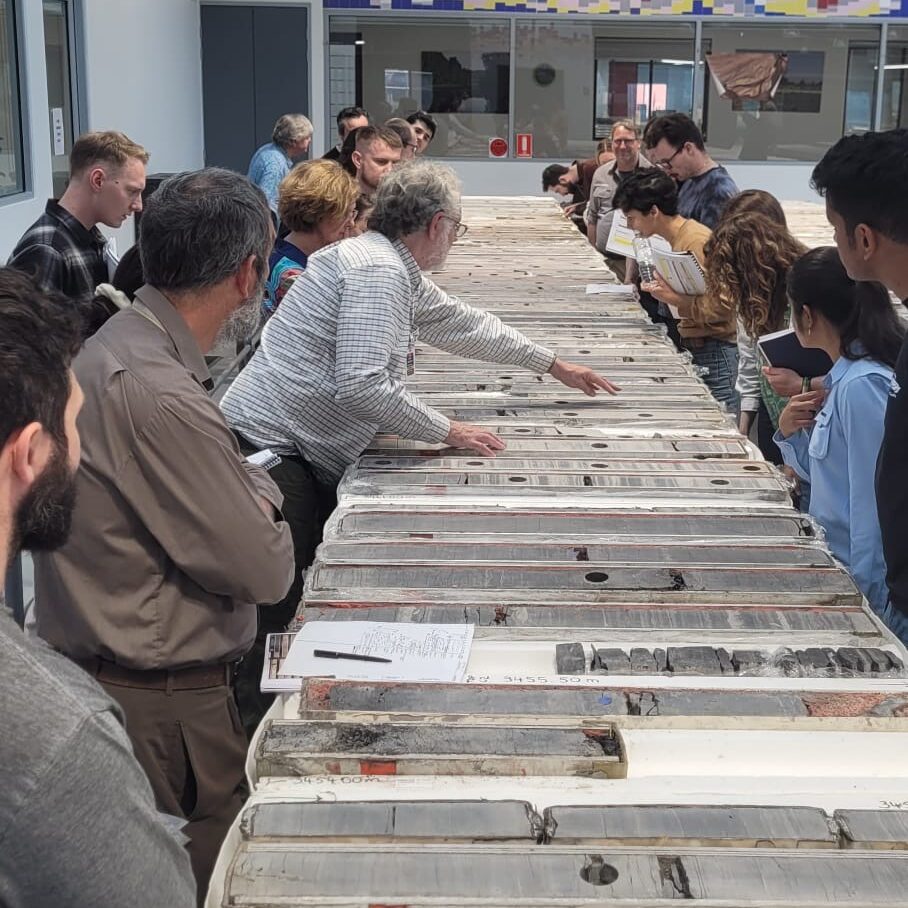
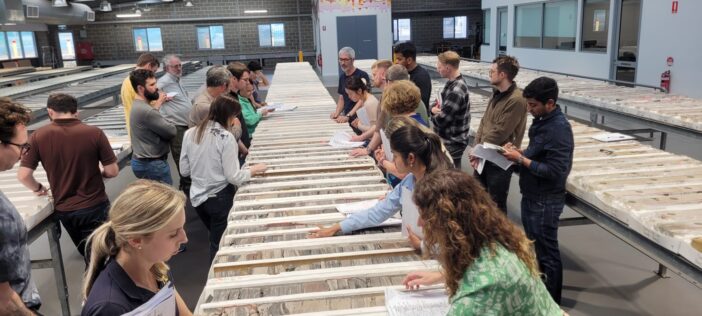
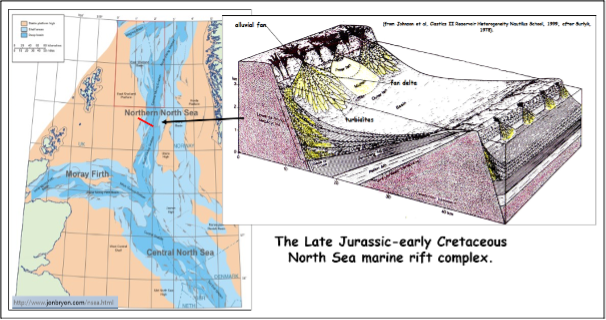
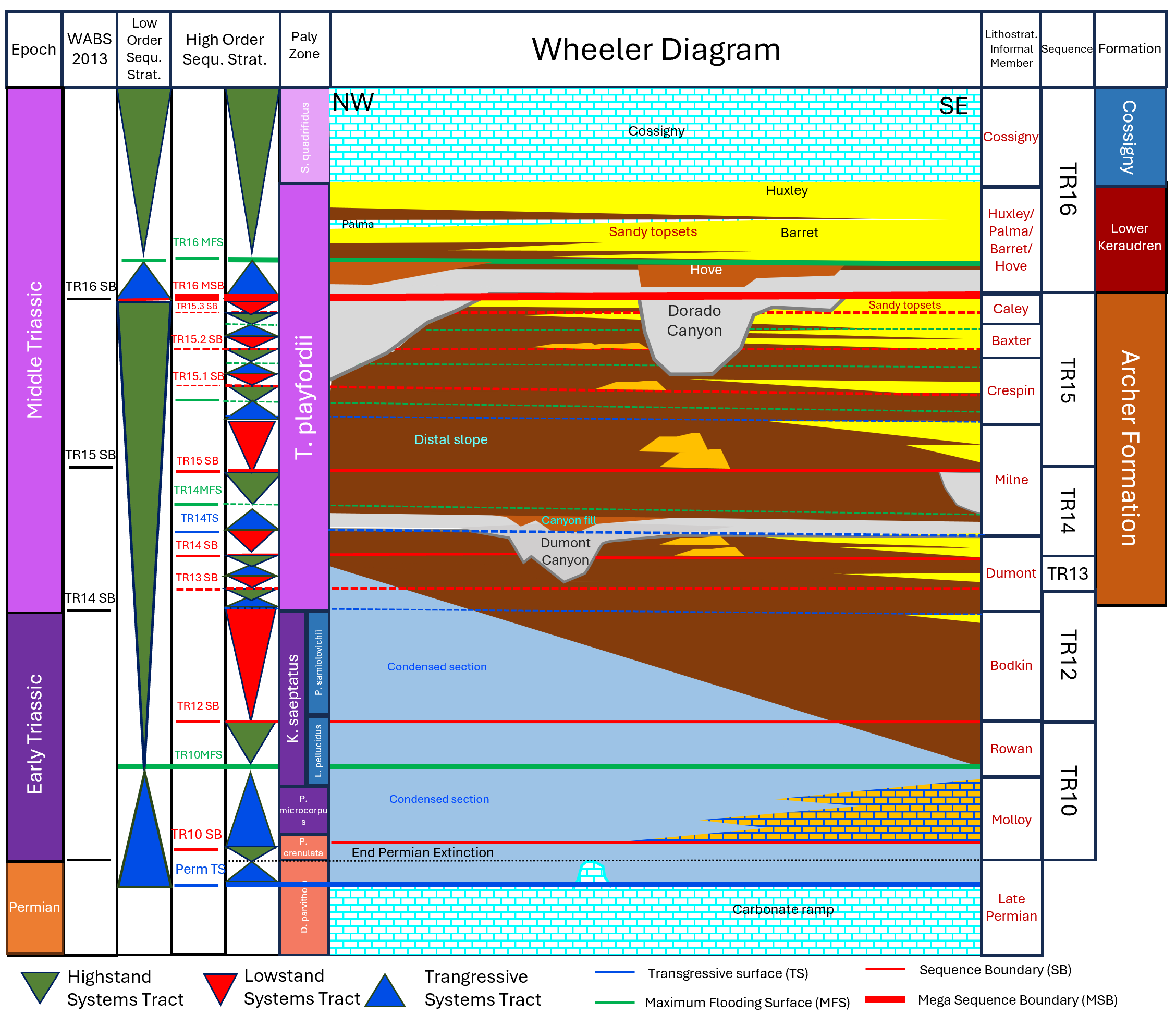
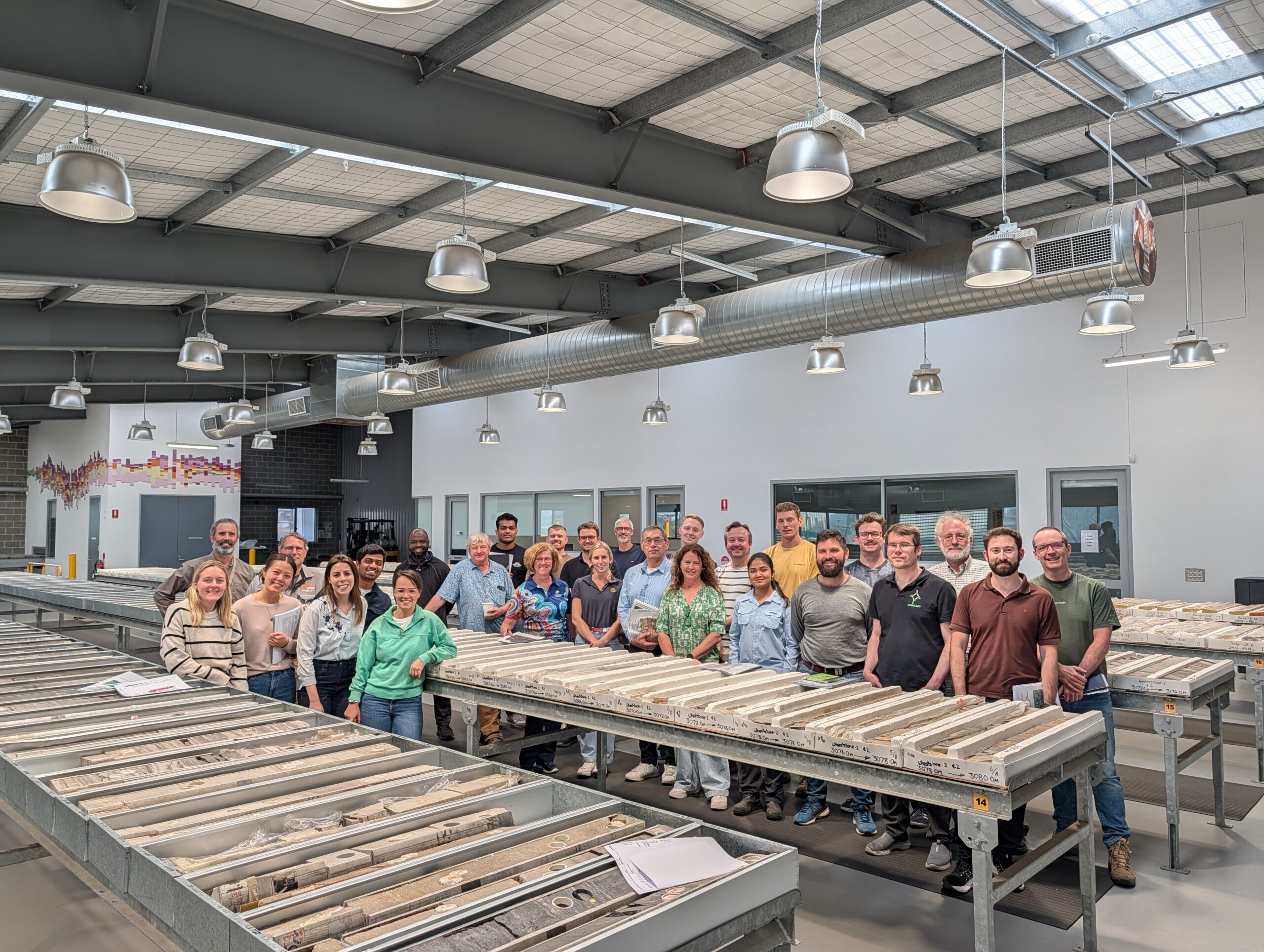
The following day (3rd Oct) Brian Willis, Simon Lang and Tobi Payenberg teamed up to deliver a Mungaroo and Brigadier core workshop to 26 highly enthusiastic PESA WA members. We had the opportunity to observe the low-gradient fluvial-deltaic facies of the Mungaroo and Brigadier systems. Brief presentations were provided that introduced conceptual models and provided a seismic-scale view of this system. Deposits of the major river in more proximal areas of the system were studied in core from Clio and Saty fields. Lower delta plain and river-dominated bay delta deposits from the Chandon field as well as wave-reworked shoreline deposits from Wheatstone field were also on display. Together, these cores provide a sampling of the facies mosaic deposited by these low-gradient systems. By the end of the workshop, participants had gained a better understanding of facies models for low-gradient fluvial-deltaic systems. Low-gradient fluvial-deltaic facies are essential components of most shallow marine clastic wedges, particularly during the early highstand when deltaic systems prograde on top of transgressive shelf deposits. The course note were excellent and there were many active discussions throughout the day.