Summary by Dr Fiona Burns
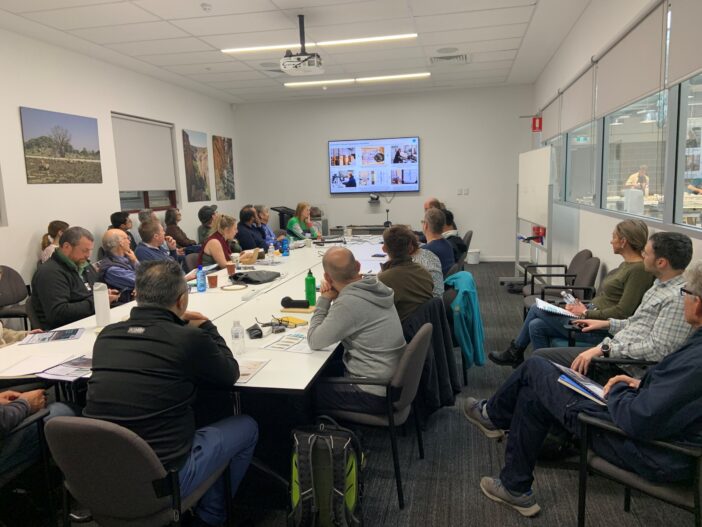
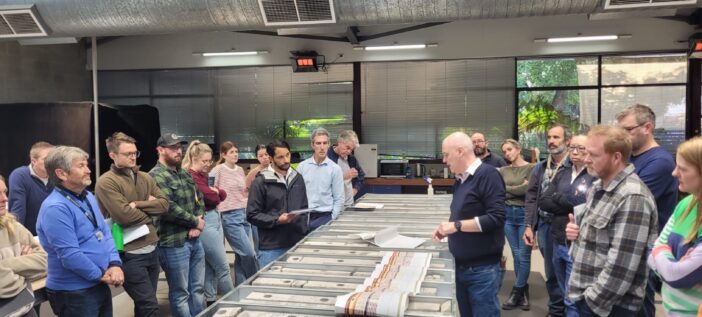
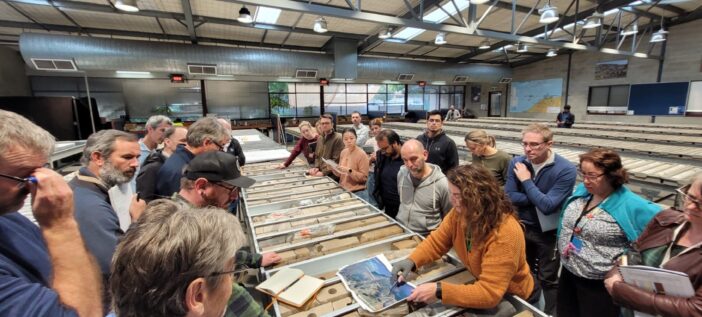
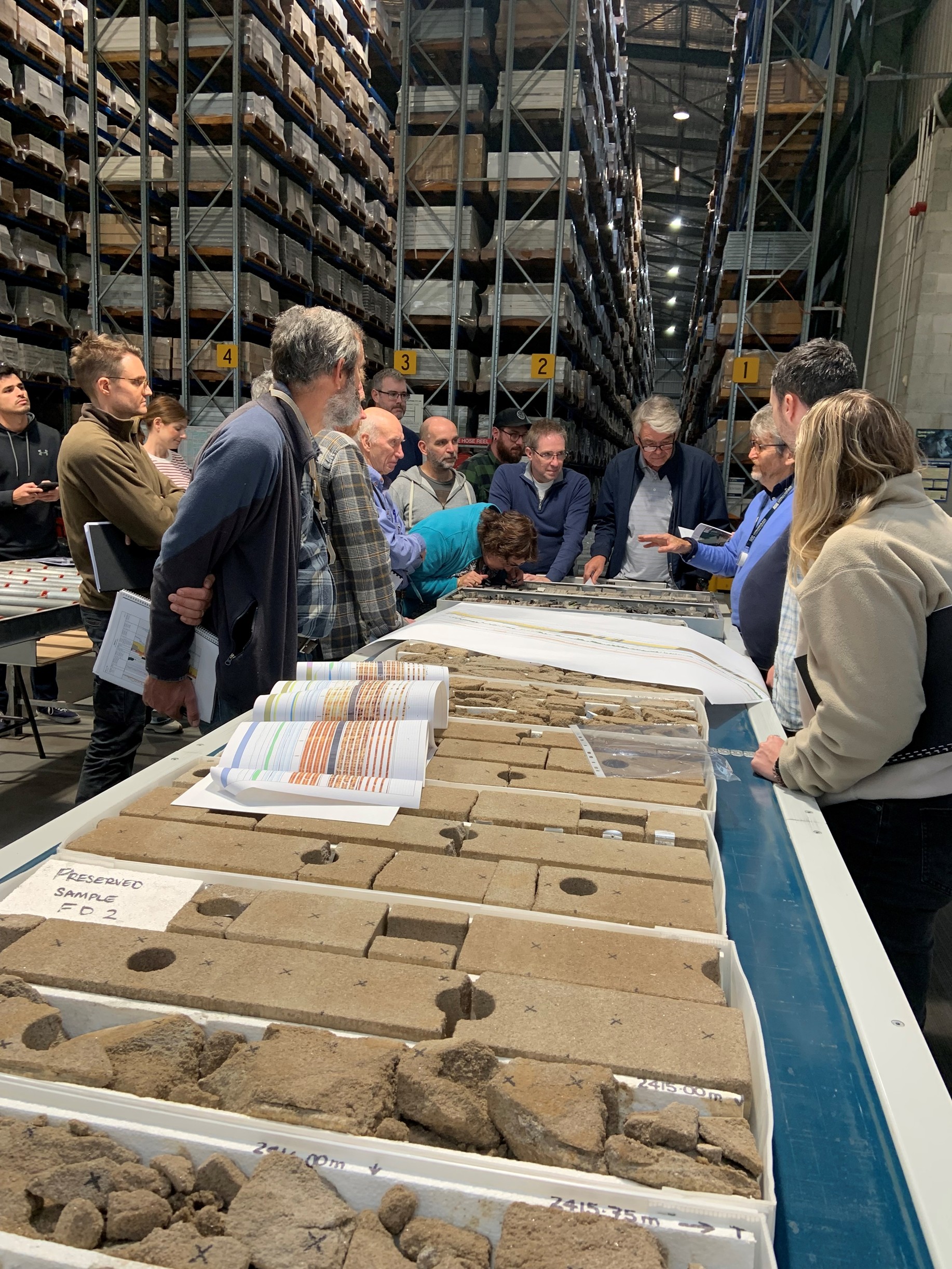
On Tuesday 10th June, DEMIRES (in collaboration with PESA WA and CCUSNA) organised a core workshop entitled “Perth Basin from a CCS Perspective” which was presented by Julie Cass and Dr Arthur Mory. We spent a day at the Perth Core Library considering how our collection of cores helps us to understand CCS targets in the Perth Basin. We also delved into the importance of characterising seals, the influence of reservoir heterogeneity vs homogeneity and how diagenesis impacts pore geometry. The Cattamarra Coal Measures ranks highly as a saline aquifer CCS reservoir target as it has excellent net-to-gross and reservoir quality over thick intervals. The fluvio-deltaic depositional environment of this unit provides for significant heterogeneity to promote lateral migration of the injected plume. Diagenesis impacts reservoir quality as a function of depth of burial and reservoir temperature. These impacts were demonstrated with a suite of cores from various structural settings in the basin. The Dongara Sandstone has attracted attention as a potential CCS reservoir target in depleted fields. Due to the homogeneous nature of the shoreface facies, this may be the best interval to study the impact of hydrocarbon charge on diagenesis and porosity preservation. Cores of sealing lithologies were rare but provide important constraints when characterising a CCS storage formation. A suite of cores from the Kockatea Shale and Hovea Member were investigated to understand variations in facies and the impact of diagenesis on geomechanical properties.
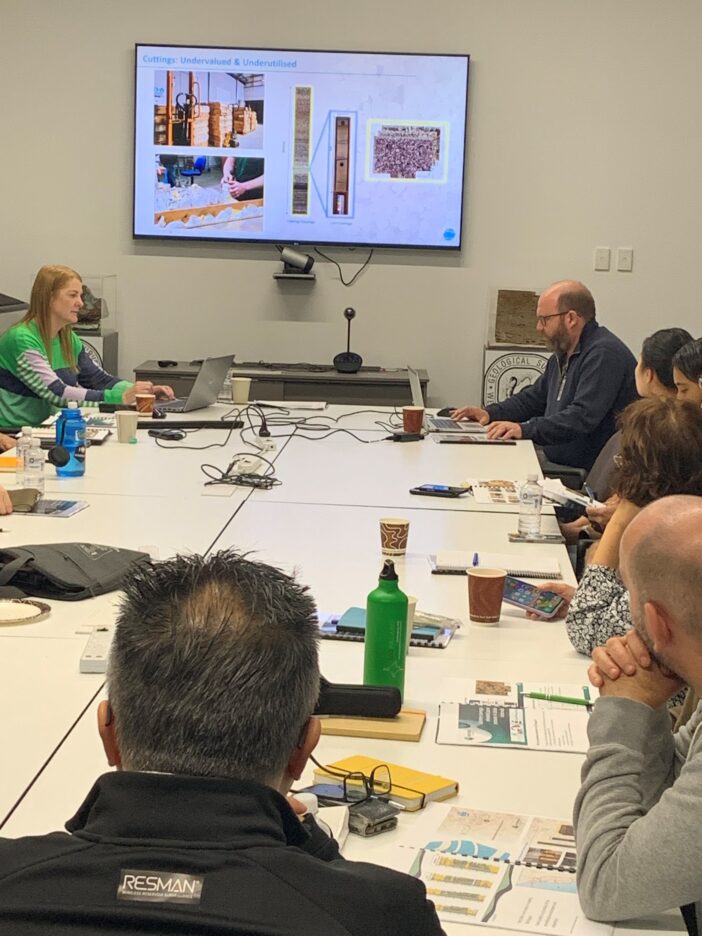
The workshop had assistance from Simon Molyneux (Molyneux Advisors, who provided lunch) and Dr Jeremy Prosser & Dr Fiona Burns (Task Fronterra). Simon showed how cuttings can be utilised to investigate reservoir quality controls, Jeremy illustrated how image log data compliments analyses of core and cuttings, particularly in relation to fault and fracture characterisation, as well as palaeocurrent data. Fiona highlighted features in the core that assisted with precise palaeoenvironmental interpretations, particularly in relation to the integration of sedimentology with ichnology.
Over 30 people were in attendance overall, with many length discussions on revision of stratigraphic nomenclature and palaeoenvironmental interpretations for various formations, with continued discussion at the Balmoral afterwards.