
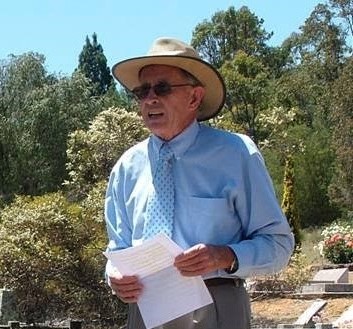
IT was with much sadness that PESA learned of the passing of Dr Phillip Playford AM at the age of 85 after a long battle with cancer. PESA President Toby Colson and Australia Geoscience Council President Bill Shaw both paid tribute to Dr Playford, a luminary of the geological profession, award-winning author and a remarkable man who even discovered a shipwreck, the Zuytdorp, which was the first Dutch ship to be found and identified in Western Australia. His book about the wreck, Carpet of Silver; The wreck of Zuytdorp, won a Premier’s Prize for literature.
Industry

Tillerson sometimes longs for oilman life
US Secretary of State Rex Tillerson picked up an industry award at the World Petroleum Congress in Istanbul, where he told delegates that he often missed his former life as an oilman. The Former ExxonMobil boss received the Dewhurst Award for his contribution to the oil and gas industry and told the conference that his expected retirement to spend fishing in the mountains had taken a dramatic turn since he was appointed the United States’ top diplomat. "It did not quite work out that way," he said. "I miss you as colleagues. I miss you as partners.

BassGas MLE arrives early and under budget
Origin Energy announced that the final phase of the mid-life enhancement (MLE) project at BassGas offshore Tasmania – entailing installation and successful commissioning of compressor and condensate pumping unit at the Yolla-A platform - has been completed ahead of schedule and under budget. This follows the drilling and completion of, and gas sales from the final two development wells, Yolla-5 and Yolla-6, in 2015. Gas, condensate and LPG from the Yolla fields is transported by pipeline from the Yolla platform to a gas processing facility at Lang Lang in Victoria.

APPEA wants GST gas incentives
The Australian Petroleum Production & Exploration Association (APPEA) is urging that the way GST revenues are shared is changed in order to incentivise states and territories to develop their own natural gas. The Productivity Commission is currently investigating the principle of horizontal fiscal equalisation, which underpins the distribution of GST revenue to state and territory governments. APPEA Director Matthew Doman said the current system disadvantaged jurisdictions that developed their resources while rewarding those that did not.

Oil struggles to sail out of the doldrums
The price of crude oil climbed for a seventh straight session on Friday, representing the longest bull run since April, albeit with the commodity sailing precariously close to its worst first half-year performance in 19-years. In spite of an OPEC deal to curb production brokered earlier this year, oversupply concerns have slugged Brent crude by 16% since January – three per cent worse than the first half-year slump in 1998. At the time of going to press Brent was trading at US$48.
Katalyst announces well data coup
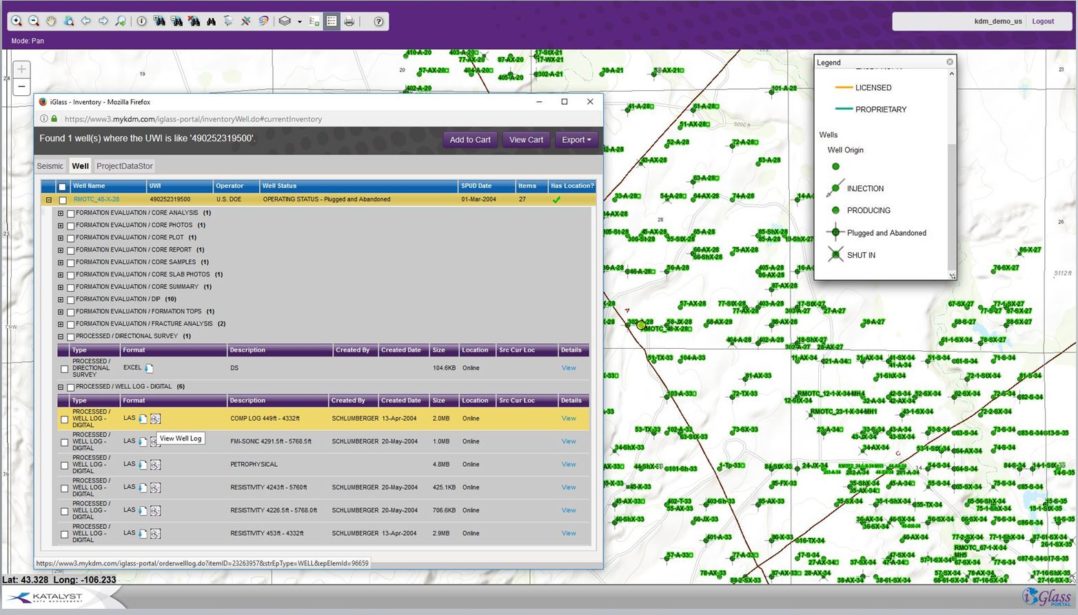
Katalyst Data Management in the United States has announced today that it signed its first major well data project. The well data project is essentially a “paper to digits” project involving the scanning and classification of physical well files associated with over 20,000 wells in the US Lower 48. This marks the first major well data project for Katalyst, who began providing geological data management solutions in 2016 after nearly 30 years focusing primarily on seismic data management. The well data volumes will be digitally stored and managed via Katalyst’s web-based subsurface data management solution iGlass. The hosted PPDM 3.

Schlumberger urges stockholders to reject TRC Capital overtures
Schlumberger Limited (NYSE: SLB) has been notified of an unsolicited “mini-tender” offer by TRC Capital Corporation to purchase up to 2 million shares of Schlumberger common stock, representing approximately 0.14 percent of Schlumberger’s shares of common stock outstanding. Schlumberger said in a media release that TRC Capital’s offer price of $65.63 per share is approximately 4.3 percent below the closing price per share of Schlumberger’s common stock on June 16, 2017, the last trading day before the commencement of TRC Capital’s offer.
CGG donates Software Suites to China University
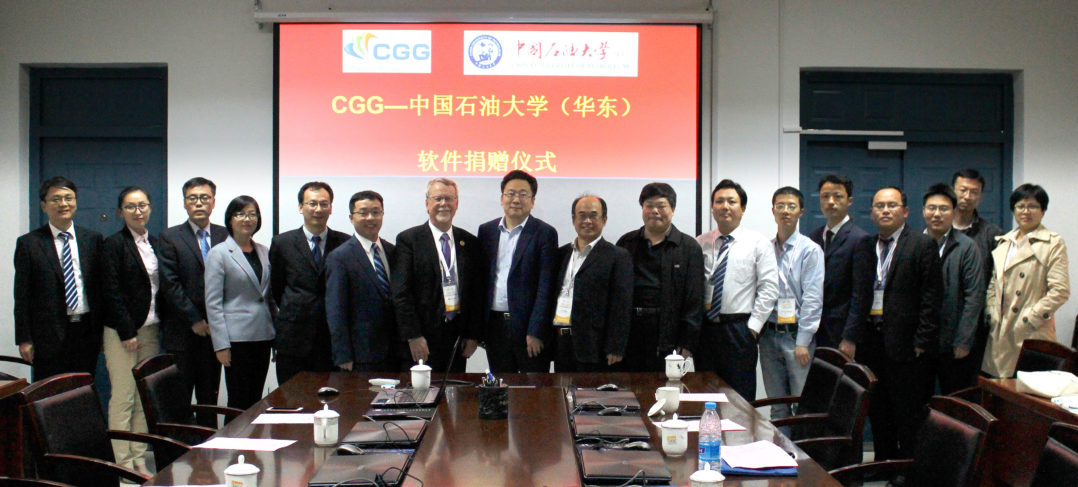
CGG GeoSoftware has donated its Jason®, PowerLog® and InsightEarth® software suites, encompassing all aspects of seismic reservoir characterization, to the Geoscience and Technology Institute of China University of Petroleum (East China). CGG said in a media release that ‘the donation will enhance scientific research and expand students’ theoretical and practical knowledge of quantitative reservoir characterization and inversion techniques.’ Dr. Xinwei He, China Operations Manager, CGG GeoSoftware, said: “This significant new donation strengthens our ties with China University of Petroleum (East China) which is recognized as an important training base for high-level petroleum and petrochemical professionals in China.

DUG builds one of the world’s largest supercomputers
To be at the top of your game in any sport, you need plenty of skill and lots of muscle,” DownUnder GeoSolutions proudly proclaimed as it announced it was building one of the world’s largest supercomputers. DUG is rolling out a series of muscle-building upgrades to its global seismic processing centres, including Perth, Kuala Lumpur, London and Houston; an expansion that the company says will see its Intel-supported processing capability grow and likely exceed its competitors, based on petaflops (PF) per geo. Details of its global expansion, and its progress, will be released as it becomes available during 2017.

McMahon opens new chapter with DataReSource
DataReSource has expanded its exploration and geophysical research capacity by appointing senior geophysicist Andrew McMahon to the team. Andrew joins DataReSource after stints at the Queensland Department of Natural Resources and Mines, Geoscience Australia, Paradigm and Schlumberger. DataResource said the extensive skills Andrew has acquired and developed, most notably through his work with Geoscience Australia, would enable him to have an “insightful, well-developed and refined perspective in locating difficult to find or lost datasets. His unique and vast contact network in the oil sector also makes him a valuable addition to the DataReSource team.