
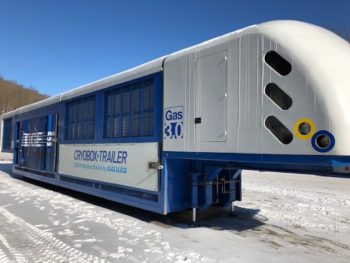
Edge Gathering Virtual Pipelines, a proclaimed “pioneer in delivering low-cost, high quality LNG by converting stranded and flared natural gas,” said it has produced and delivered its first LNG in the United States. “With no need for pipelines, EDGE is the first viable route to market for stranded gas reserves, and a revenue generating alternative to flaring or venting associated gas from oil production,” the company said. EDGE began on-well-site LNG production in the US on May 7 2019, accessing Marcellus gas in Pennsylvania, and making truck-delivered LNG sales to its first customers, which include Emera Energy Services, Inc.
Industry
Israel will emerge as gas exporter by mid-2020s
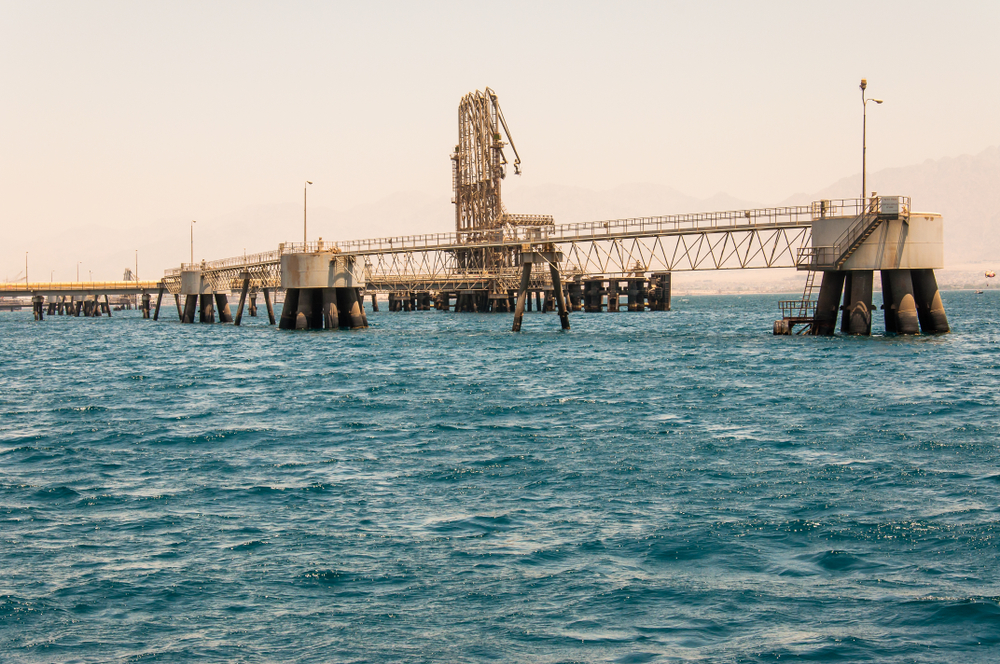
Israel has gone through an energy production revolution owing to discoveries of natural gas resources such as the Tamar and Leviathan fields over the past decade. Against this backdrop, the country’s gas production will significantly exceed demand and it will emerge as a gas exporter in the Eastern Mediterranean region by mid-2020s, says data and analytics company, GlobalData.

Australian gas exports cutting global emissions
The importance of Australia’s natural gas exports to reducing global greenhouse gas emissions is underlined in the latest government estimate released recently with the December Quarterly Update of Australia’s National Greenhouse Gas Inventory. Energy Minister Angus Taylor highlighted that Australia’s liquefied natural gas (LNG) exports were saving global emissions equal to over a quarter of the country’s domestic greenhouse gas emissions. APPEA Chief Executive Andrew McConville said this key contribution of Australia’s LNG industry was not always recognised in the broader energy debate. “The global appetite for energy is growing, with more than 1.
Unemployment down but self-employed geoscientists continue to struggle
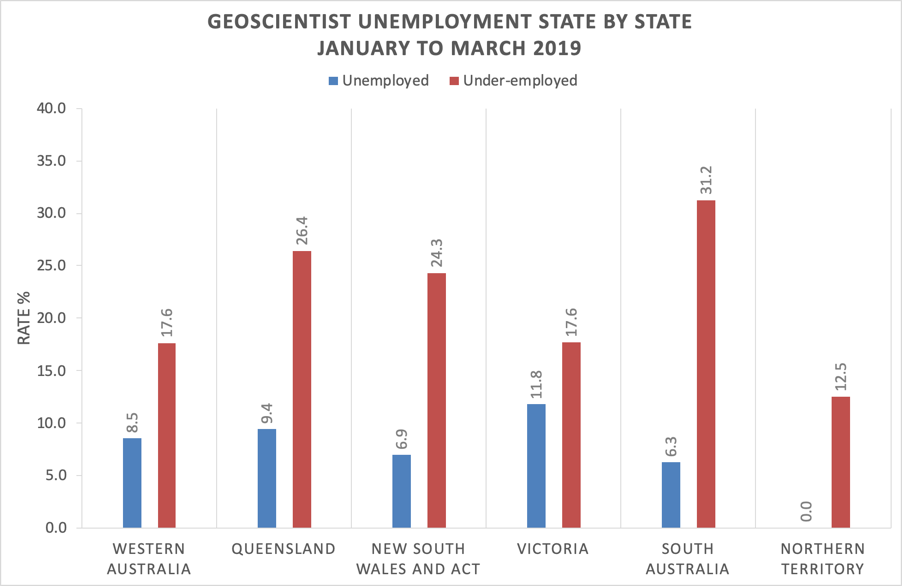
Unemployment amongst Australian geoscientists continued to fall during the first quarter of 2019. At 31 March 2019, the latest Australian Institute of Geoscientist’s (AIG) Employment Survey revealed an average unemployment rate of 7.5%, down from 9.1% recorded three months earlier at the end of December 2018. The underemployment rate amongst self-employed geoscientists, however, increased 2% to 20.5%, continuing an upturn in the self-employed’s unemployment rate evident in the December 2018 survey when a rate of 18.5% was recorded. The fall in geoscientist unemployment continues a gradual, downward trend that became evident in March 2016.

Wood to lead subsea integration and flow assurance for landmark subsea development in Australia
Wood has secured a new contract with Chevron Australia to provide subsea integration and flow assurance front-end engineering design (FEED) services for the Jansz-lo compression project offshore Western Australia. Effective immediately, the one-year contract will be delivered locally by Wood’s team based in Perth, harnessing local expertise and industry capability. The Jansz-lo compression project will maintain gas supply to the existing Gorgon LNG facility. Wood will lead as system integrator of the technology, providing independent flow assurance, subsea design, and construction engineering support during the FEED. This new contract extends Wood’s support of Chevron-operated major capital projects in Australia.
PESA WA May Branch Luncheon
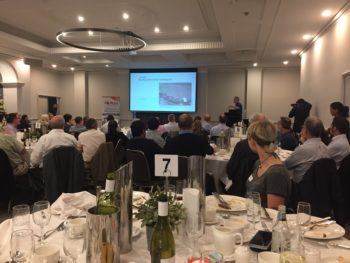
“If you’ve got an unconventionals focused geologist in your company, go talk to them, you might be surprised at the learnings applicable to conventional hydrocarbon accumulations”. That was the takeaway from Avon McIntyre’s WA Branch May luncheon talk - “Bursting Source Rock and Strange Hydrocarbon Occurrences Around the World”. The presentation challenged attendees' thoughts on maturation, migration and charge-timing (all may be later than we think) through analysis of unconventional geology. Photos of explosively delaminated source rocks and abandoned gilsonite mines complimented an excellent talk. Many thanks to Spectrum, Searcher and DownUnder Geophysical for sponsoring the event.

Future plans in WA to lower costs without compromising service
Lower revenue, lower costs and maintaining strong safety, reliability and service performance are thenfocus of proposed future plans announced recently for Western Australia's Dampier to Bunbury Natural Gas Pipeline (DBNGP) and its customers out to the year 2025. The pipeline - part of the Australian Gas Infrastructure Group (AGIG) - is the backbone of the WA economy, linking the gas fields in the State's north-west directly to mining, industrial, and commercial customers. AGIG's Chief Customer Officer, Andrew Staniford, said the Draft Plan released outlines DBNGPmactivities and expenditure proposed to be undertaken from 2021 through to 2025.
APPEA welcomes Australian wholesale gas prices that are below Asian average
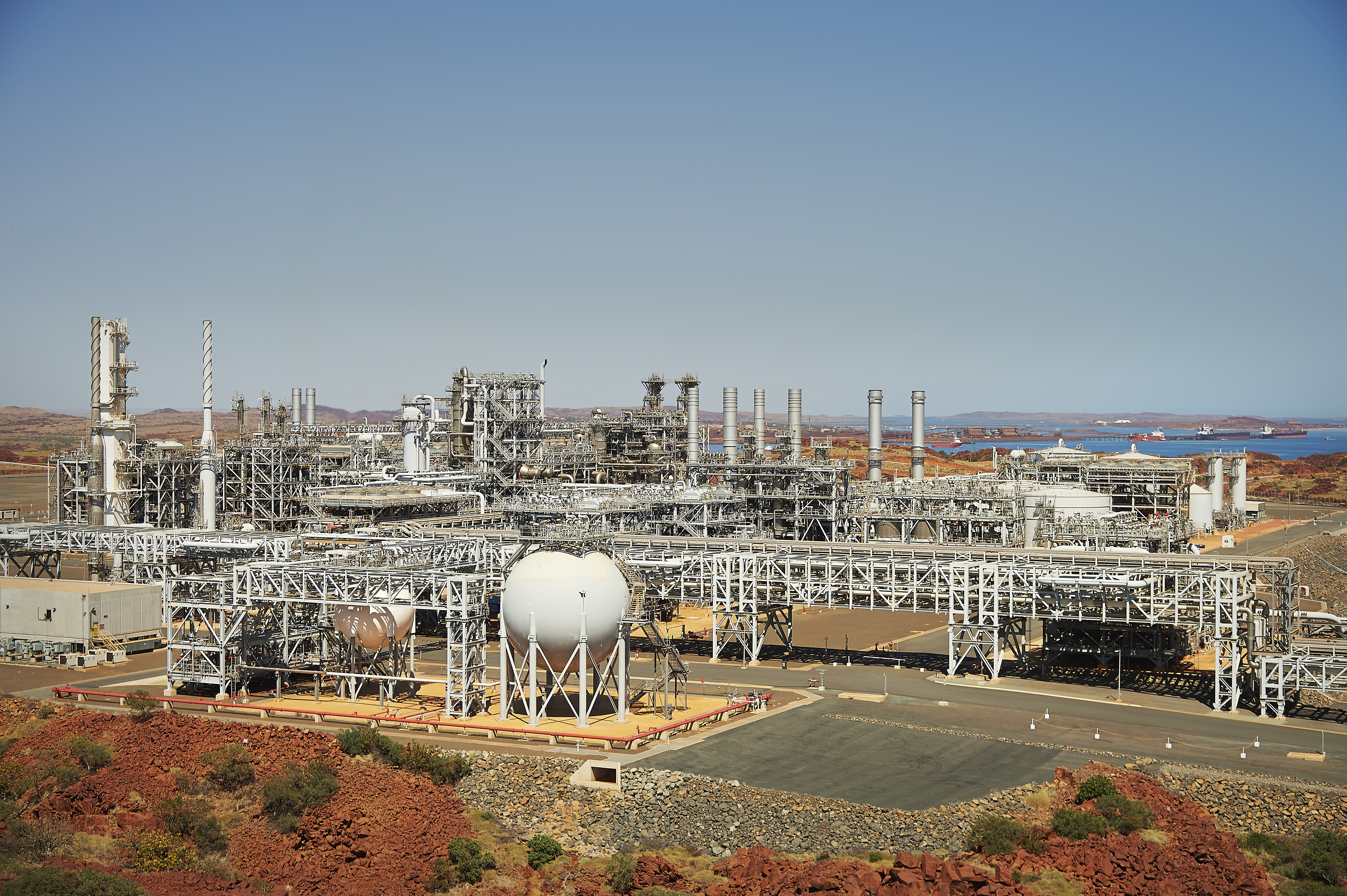
Australia’s average gas prices are amongst the lowest in Asia, according to the latest international survey of wholesale gas prices. The 2019 International Gas Union’s Wholesale Gas Price Survey shows the average wholesale gas price in Australia last year ($US4.54/MMBTU) was about 40 per cent less than the average wholesale price for the Asia‑Pacific region. The Australian price was also around one-third less than the average wholesale price in Asia. Australia’s leading trade partners Japan, South Korea and China all paid average wholesale gas prices over $US8 and in some cases approaching $US12/MMBTU.
APPEA applauds NT Budget for ‘vital role of gas investment’
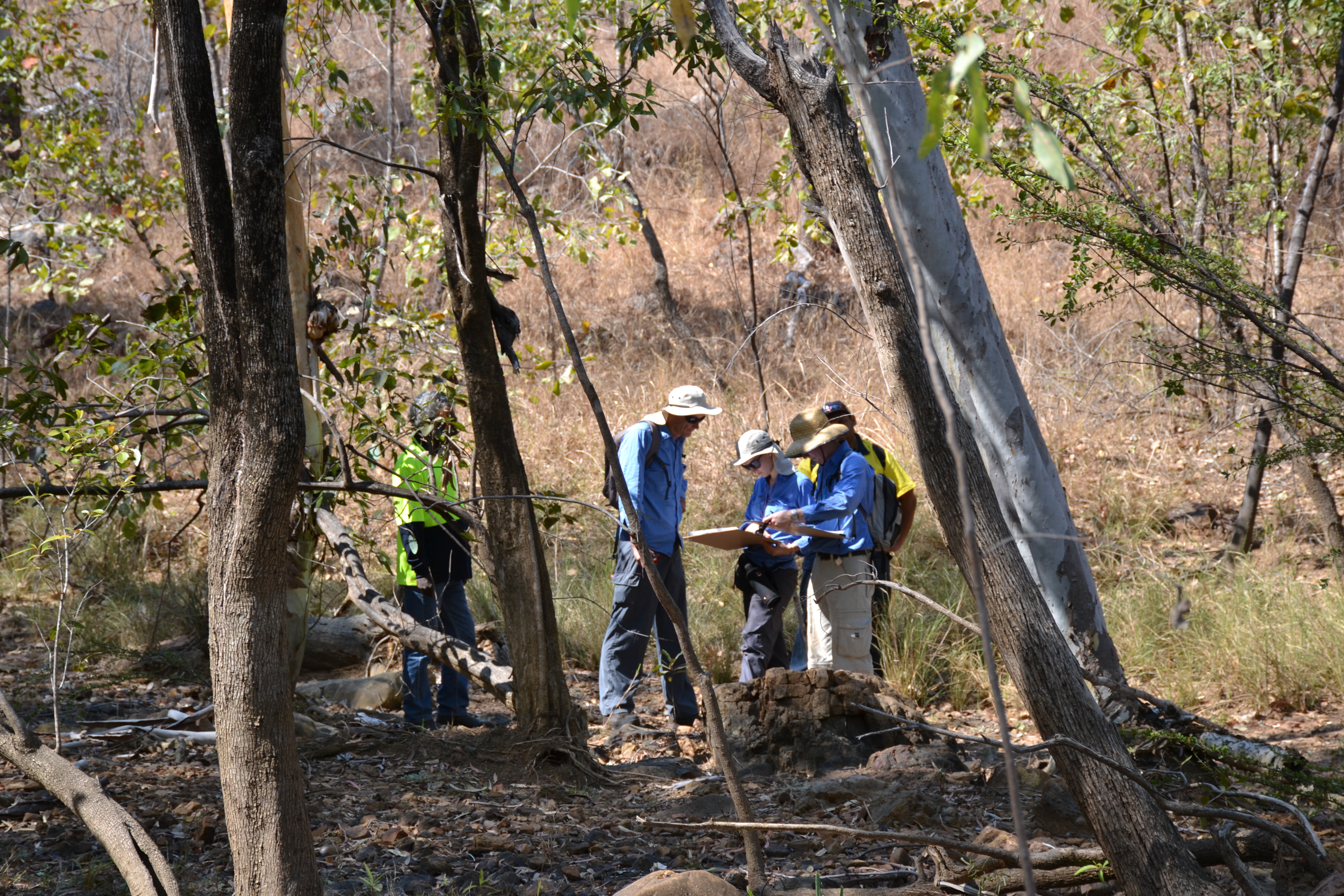
The Association of Petroleum Production and Exploration Association (APPEA) has responded to the recently released Northern Territory Budget, saying the blueprint ‘highlighted the key role the oil and gas industry will play in the long-term growth of the Territory’s economy’. ‘Treasurer Nicole Manison recommitted to the Government’s Gas Strategy which outlines a five-point plan to develop the NT’s substantial offshore and onshore gas resources to create new jobs and opportunities for downstream gas-based manufacturing,’ APPEA said in a statement.

UK Regulator Authorizes Deployment of Sercel’s QuietSea Marine Mammal Monitoring System
Sercel has announced that ‘successful deployment’ of its QuietSeaTM Passive Acoustic Monitoring (PAM) system has been extended to the UK, following approval by the UK Department for Business, Energy & Industrial Strategy (BEIS) and Joint Nature Conservation Committee (JNCC) of its use for a seismic survey operated by CGG in waters off the Shetland Islands. QuietSea is a fully integrated PAM system that Sercel claims ‘overcomes many of the limitations of its present-day competitors. The sensors are designed to fully integrate with seismic acquisition or navigation systems, and are incorporated with the hydrophones in the Sentinel streamer.