
Venezuela’s oil and gas sector was already caught in a vicious cycle well before the COVID-19 outbreak created a world economic crisis.
Even though there are several international companies still remaining in the country, they are not investing in any relevant manner and have minimum personnel.
GlobalData Oil & Gas Analyst Adrian Lara says it is fair to assume that, for most of these operators, the best scenario would be to wait for a change in government that could kick-start the sector under renewed rules or laws and improve their partnership terms with PDVSA. However, the political situation in the country seems to be going nowhere in the near future, and even with a change of regime, the oil and gas sector will require many years to recover.
Lara explains: “The country’s hydrocarbon sector has suffered from chronic underinvestment for years, with noteworthy kicks including 2019, when the US Government imposed sanctions on the country’s oil trade – its main source of revenue.
”This has effectively restricted the exporting capabilities of the country, created operational bottlenecks and left the Venezuelan Government, and its NOC PDVSA, with fewer and fewer means to invest in the sector. The outcome of all these events has been a continuous oil production decline since 2015, with a historic low output in May, reported at 570 thousand barrels per day (mbd), and with only one oil rig operating in the country.
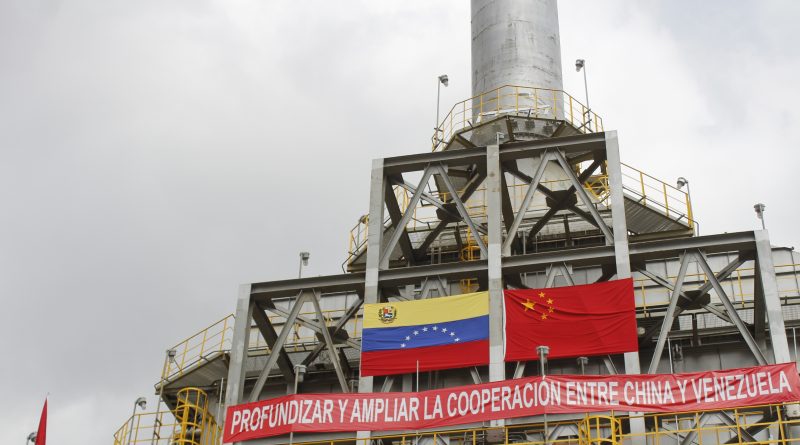
“After the 2019 sanctions, exports to China and India somehow compensated the loss of US buyers. However, during 2020, both lower demand for crude worldwide and a tightening of sanctions have reduced export capability to its worse level to date.
”Lower exports have led to an increase in the storage capacity utilization of the country, which has a peak operating capacity estimated at less than 40 million barrels. In consequence, the Orinoco Belt has experienced additional production cuts. Production in this area is currently estimated at 161mbd, already three times lower than in 2019.
“As for natural gas, there were some promising projects announced to develop Venezuela’s vast offshore reserves. In fact, during the last five years. negotiations between the Venezuelan government with Russia’s and Trinidad and Tobago’s counterparts had put these projects back on track. However, after a worsening of the political and economic climate of the country these projects are currently on hold.”
Crude reality
Venezuela’s situation had been exacerbated by excess crude supply suppressions in the US market.
Following the Energy Information Administration’s release of official weekly data on stocks, demand and supply of US crude oil and refined products, Lara said. “The US oil market has already suppressed the excess of supply that was created at the end of March. The production cuts of April, May and June were quite severe, reaching around two million barrels per day (mmbd) and now with less crude available, the system is more sensitive to changes in imported volumes of crude and the pace of demand for refined products.
“Furthermore, storage at Cushing is no longer at risk of saturating its operating capacity, so WTI price appears more normally linked to changes in the stocks and increases in refining utilisation capacity.
“Imports of crude first decreased from mid-March, but this trend has now reversed as imports have actually increased since mid-May to date. Furthermore, as refiners gradually increase their crude intake and with no increase in domestic production, stored crude oil could experience more relatively large withdrawals during the second half of the year.
“While US demand for gasoline continues on an overall increasing trend, there are concerns about a potential slowdown in mobility due to measures controlling ongoing COVID-19 outbreaks across the US. However, it is still too soon to know whether these setbacks will reverse gasoline demand. As for distillate and kerosene-jet fuel, these products still remain depressed in their demand.
“Refineries are also gradually increasing their crude oil intake although at a lower rate than the average increase of supplied refined products, in particular gasoline. This can be beneficial for lowering the stocked volume of products and eventually the crude oil input required from refineries could increase from the current 78% utilization capacity to a more normal utilization of around 85% to 90%.
“Domestic crude oil production continues to show an overall slight decline on a weekly basis, but the largest cuts appear to indeed be over. In fact, the production forecast for the remaining months of 2020 remains relatively flat at around 11 mmbd.
“Since May, crude oil inventories have also kept their decreasing trend through lower injections and even a few large withdrawals. This has supported the clear upward trend of WTI price during the last two and a half months.”