• Member Login
  • |
  • Join Now
PESA - Energy Geoscience

Promoting Professional and Technical Excellence in Energy Geoscience – Networking, On-going Professional Education, Monthly Technical Meetings

  • Home
  • About
    • About PESA
    • Objectives
    • PESA History
    • PESA Affiliates
    • Constitution and Rules
    • Strategic Plan
  • Events
    • Online
    • NSW / ACT
    • QLD
    • SA / NT
    • VIC / TAS
    • WA
    • Industry
    • Social
    • Past Events
  • Membership
    • Join Us
    • APPEA Conference Discounts
    • AEGC 2025 Travel Bursaries
    • PESA Membership Awards
  • Latest News
    • All News
    • Feature Articles
    • Industry
    • Company Updates
    • Tech Talk (public)
    • PESA Branch Activities
  • Library
    • Technical Library
    • PESA Gazette
    • Webinars
    • PESA News Magazine
    • Knowledgette Recordings
  • Scholarships
  • Employment
    • View Job Opportunities
    • Submit Job
  • Contact
Company Updates
Feature Articles
Seismic (public)

High-End Seismic Imaging Solves Shallow Gas Challenges

Posted by Dale | 23/10/2018

23/10/2018 by Dale

share
share
tweet

The latest Q modeling, and Q-compensating imaging techniques bring greater clarity to Northern Viking Graben, CGG has announced.

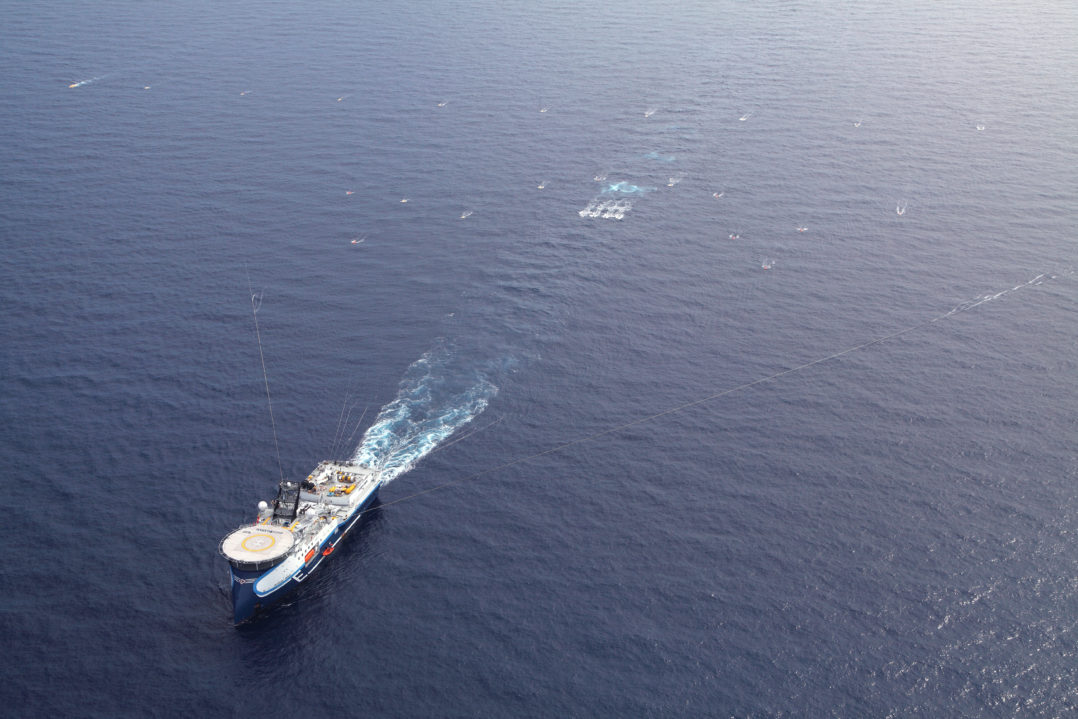
CGG has recently completed seismic depth imaging of its entire Northern Viking Graben multi-client survey, in the Norwegian North Sea. The latest visco-acoustic (“Q”) velocity modeling and seismic imaging technologies have been applied to BroadSeis™ broadband variable-depth streamer field data, acquired between 2014 and 2016. The final output forms a contiguous data volume covering 35,400 km².

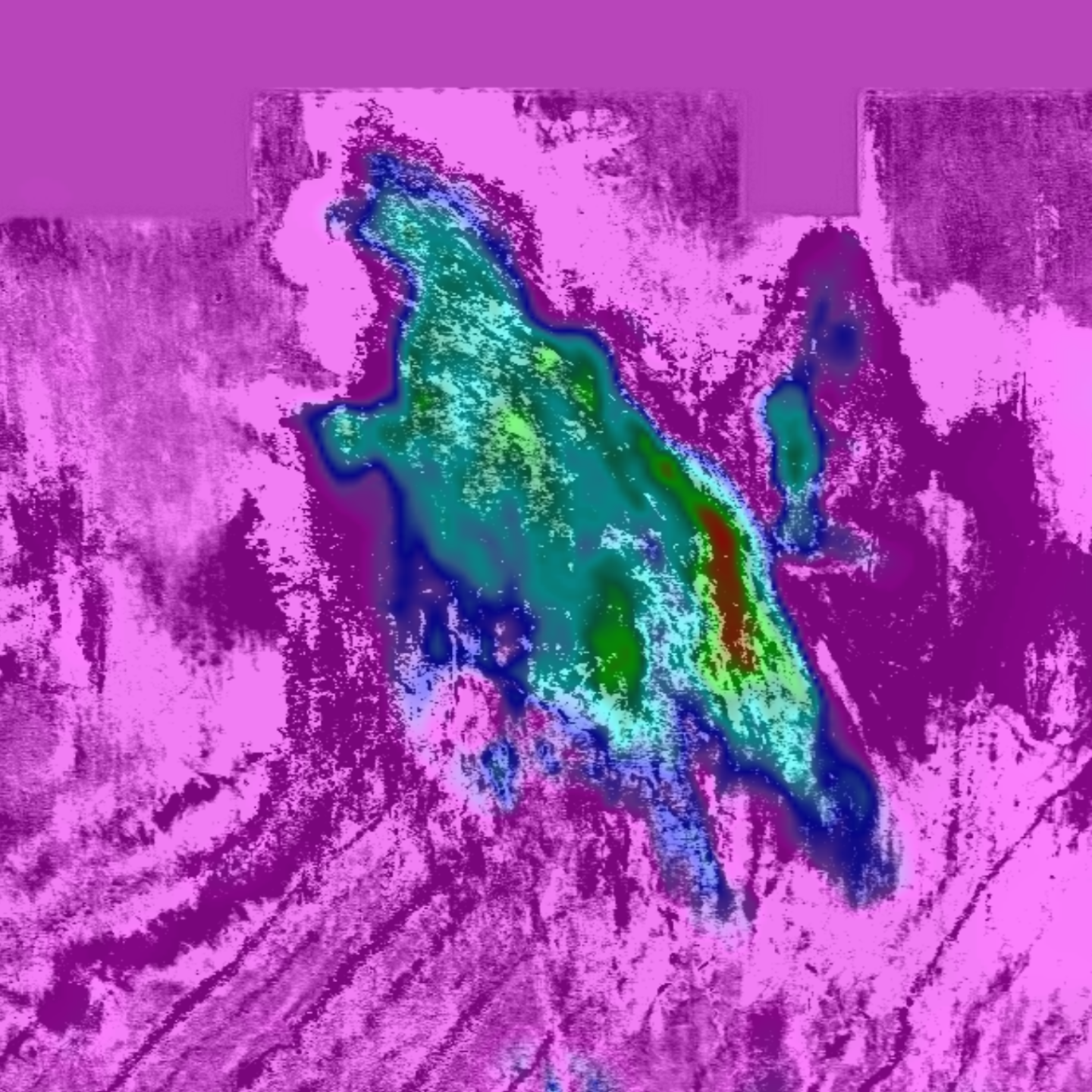
The Northern Viking Graben, like many other areas around the globe, contains a wide range of localized near-surface geological anomalies – with shallow gas being a particular feature in this area. In fact, some of the shallow gas accumulations are identified gas fields, including Frigg and Peon.

Shallow gas anomalies typically exhibit anomalously high absorption, associated with amplitude attenuation and phase distortion of seismic data. These challenging issues cause unwanted effects during imaging, such as dim zones, uneven image illumination and migration artifacts. Another absorption feature specific to the area is the large body associated with the Norwegian trench, which crosses the entire survey area from north-west to south-east.

Pre-processing for the imaging consisted notably of a noise attenuation flow targeting swell noise, seismic interference and post-critical energy, as well as broadband de-ghosting, short- and long-period free-surface multiple attenuation, common-offset binning and regularization.

The model building phase used both Q tomography and Q full-waveform inversion (FWI) to create a Q model which defined the location and extent of absorption anomalies. Advanced tomographic inversion and both refraction and reflection FWI were used alongside the Q work to derive the velocities and anisotropic parameters. This model building encompassed the full 35,400 km² area.

Imaging used advanced Q-compensating migration algorithms, which took full advantage of the velocity, anisotropy and Q models to correct for amplitude loss and phase dispersion and thus delivered improved resolution and continuity.

The final reprocessing delivers outstanding results, clearly highlighting near-surface features such as the Peon gas field (illustrated). A better model and understanding of the shallow geology also lead to clearer images of the deeper structures.

The Northern Viking Graben data set is complemented by a well study of 100 reinterpreted wells that have been integrated with the seismic results. A southern extension of 8,000 km² is currently being acquired, which will be processed through the same sequence and seamlessly merged.

The Q modeling and imaging techniques are widely applicable elsewhere in the world. For example, CGG’s 35,000 km² Cornerstone survey in the Central North Sea is currently being processed through a similar sequence, with impressive high-resolution images of the Forties channels already having been achieved.

Further research is ongoing, testing the benefits of Q least-squares migration algorithms. Least-squares migration inherently favors amplification of signal over noise, thus reducing the risk that the Q-compensation will over-boost noise. This is of practical relevance in areas of low signal-to-noise ratio, such as beneath the kind of shallow gas anomalies discussed earlier.

For more details on this topic, don’t miss the SEG 2018 paper “Imaging through near-surface absorption bodies with visco-acoustic least-squares migration: a case study from the Northern Viking Graben” by Latter et al. from CGG on Wednesday October 17th at 9:45 in the SPMI3 session.
Related Articles

CGG and Ardiseis complete highest-density seismic survey ever acquired

12/02/2018

CGG wins prestigious award in Paris

27/06/2016

CGG CEO Sophie Zurquiyah
CGG Cuts Cycle Time of OBN Imaging at Mad Dog Field  

17/06/2019

TopSeis, solution for imaging shallow reservoirs, launched

30/08/2016

Show CommentsHide Comments

Become a Member

petroleum exploration society member badge

Join PESA now and enjoy full membership benefits

  • access to fully searchable technical library
  • extensive networking opportunities with industry leaders and peers
  • further professional education and training
  • and more!

VISIT MEMBERSHIP PAGE

View Upcoming Events By Branch

PESA Events by State PESA Events in Western Australia PESA Events in South Australia and Northern Territory PESA Events in Victoria and Tasmania PESA Events in NSW PESA Events in Queensland

(Click on the the map)

Sponsored

PESA MAGAZINE – LATEST EDITION

PESA News Issue 173

Previous Editions

POPULAR POSTS

  • Shell Discovery Map WA Shell makes ‘significant’ gas discovery offshore Australia
  • APPEA CEO Samantha McCulloch Meet Samantha McCulloch, APPEA’s new CEO
  • USA oil exports exceeded imports 2019 How the USA became the world’s largest crude oil exporter in 2019
  • PESA WA Winter warmer at the Museum
  • SA announces successful applicants for acreage in Cooper and Otway Basins
  • CUE Permits NWS Ironbark exploration well delivers a disappointing duster

Norwood Resources

the Norwood resource

PESA members please use this group to help with "social license to operate" issues.

TOPICS

AEP Annual General Meeting Archer AVO AVO inversion Barry Goldstein Award Bowen inversion Branch News Bruce Ainsworth climate change complex seismic wavefield core workshop Dorado Early Triassic eFWI elastic full waveform inversion Energy Geoscience GA Golf Henry Posamentier Industry News Middle Triassic Mungaroo inversion NWS inversion PESA petroleum cores Qld Queensland CSG Queensland gas SA/NT Scholarships seismic inversion sequence boundary Social Surat-Bown Basin systems tracts WA wave influenced deltas WEB-AVO inversion women in energy women leadership women leadership scholarships womens career development women scholarships Zillmere core store

PESA - Energy Geoscience

PESA Energy Geoscience is a non-profit association of individuals involved in the exploration of oil and gas.

Connect with us

Subscribe to our newsletter and stay on the loop of what is happening in the field of Energy Geoscience and events near you.

pesa newsletter
* indicates required

PESA Energy Geoscience will use the information you provide on this form to be in touch with you and to provide updates and marketing. Please confirm you give us permission to contact you via your email address:

You can change your mind at any time by clicking the unsubscribe link in the footer of any email you receive from us. We will treat your information with respect. For more information about our privacy practices please visit our website. By clicking below, you agree that we may process your information in accordance with these terms.

We use Mailchimp as our marketing platform. By clicking below to subscribe, you acknowledge that your information will be transferred to Mailchimp for processing. Learn more about Mailchimp's privacy practices.

Copyright © 2025 PESA - Energy Geoscience. All Rights Reserved.

  • Advertise
  • Contact
  • Policies
  • Privacy
  • Terms & Conditions