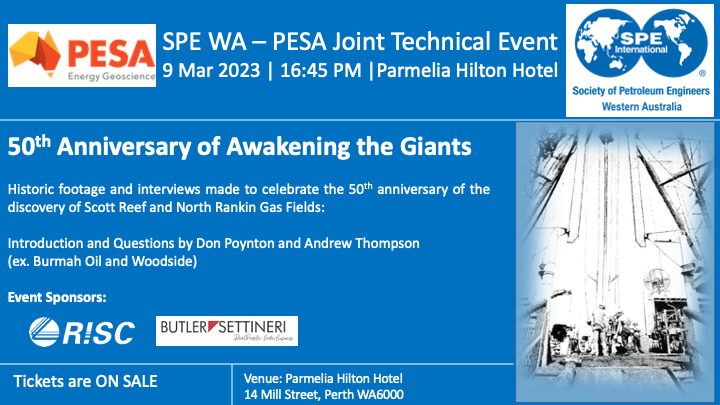
PESA WA : SPE WA Joint Technical Evening Meeting – Celebrating 50+ Years of Northwest Shelf Mega Gas Discoveries
9th March 2023 SPE WA and PESA WA Joint Technical Evening Meeting 4.45 pm – 8.00 pm, 9th March 2023...
Find out more »Categories:

9th March 2023 SPE WA and PESA WA Joint Technical Evening Meeting 4.45 pm – 8.00 pm, 9th March 2023...
Find out more »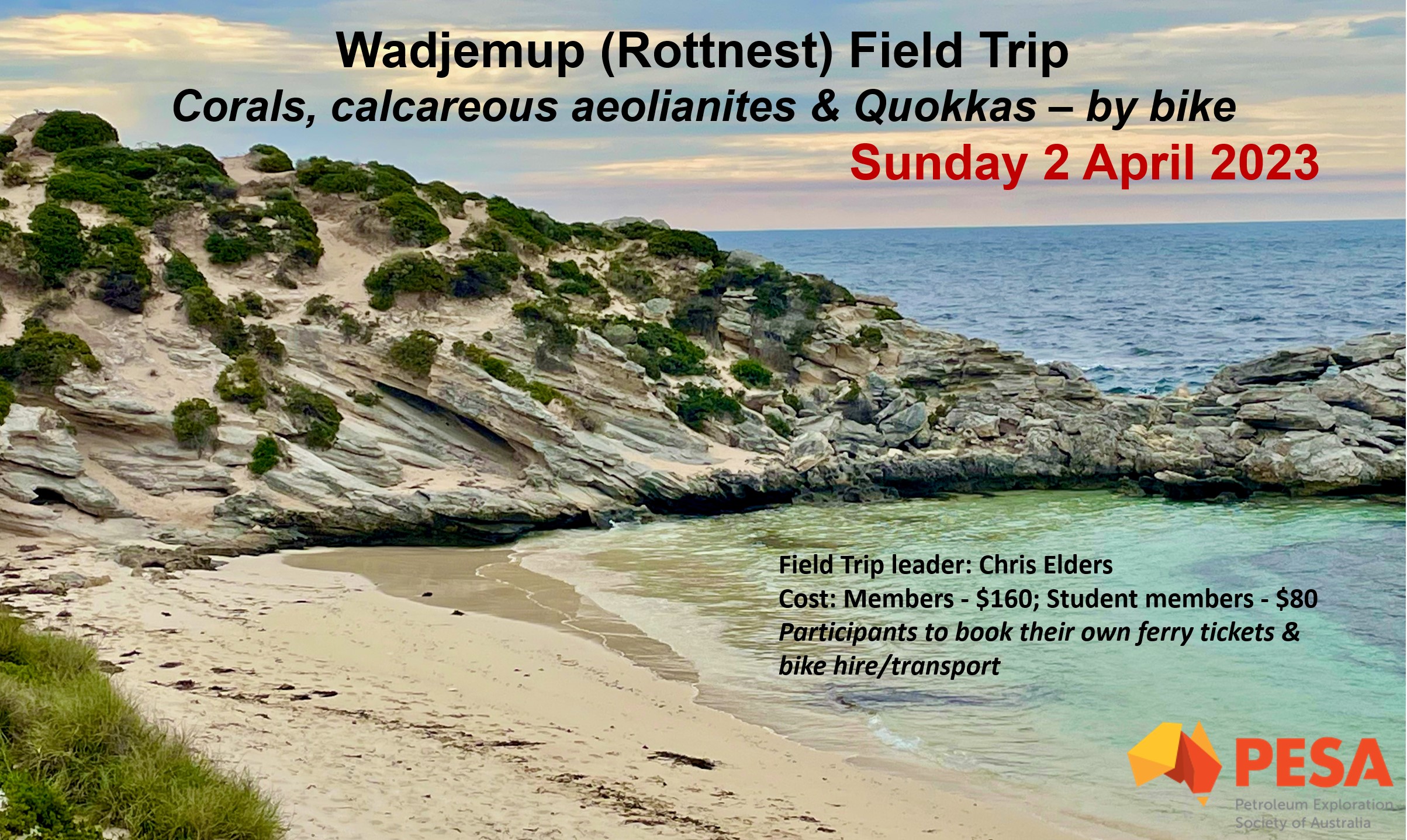
Wadjemup (Rottnest) Field Trip - Corals, calcareous aeolianites & Quokkas – by bike. A c. 17 km cycling tour of the island, taking in sights at Salmon Point, Fairbridge Bluff, the Lighthouse, Mt Herschell Quarry, and Geordie Bay will enable us to examine these different features. We will follow a circular route, with a scenic stop to eat our packed lunches (please bring your own) and return back to the settlement in time for a beer in the pub before the ferry returns to Perth.
Find out more »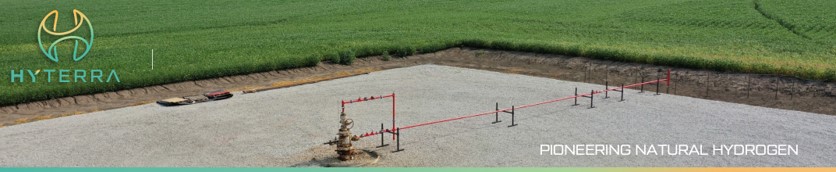
Presented by Jeff Goodall, HyTerra. This presentation demonstrates how the targeted methodology for natural hydrogen exploration has moved from surface circular features to a more expansive subsurface geological model which supports hydrogen generation on a regional scale in localized prospective areas.
The deliberate targeting of natural hydrogen resources in the Central Midwest of the USA is underway with a rapid ramp-up of exploration activity, including drilling and well testing by multiple companies. These data will help inform and refine our understanding of natural hydrogen system/s both in the Central Midwest and in other prospective locations globally.
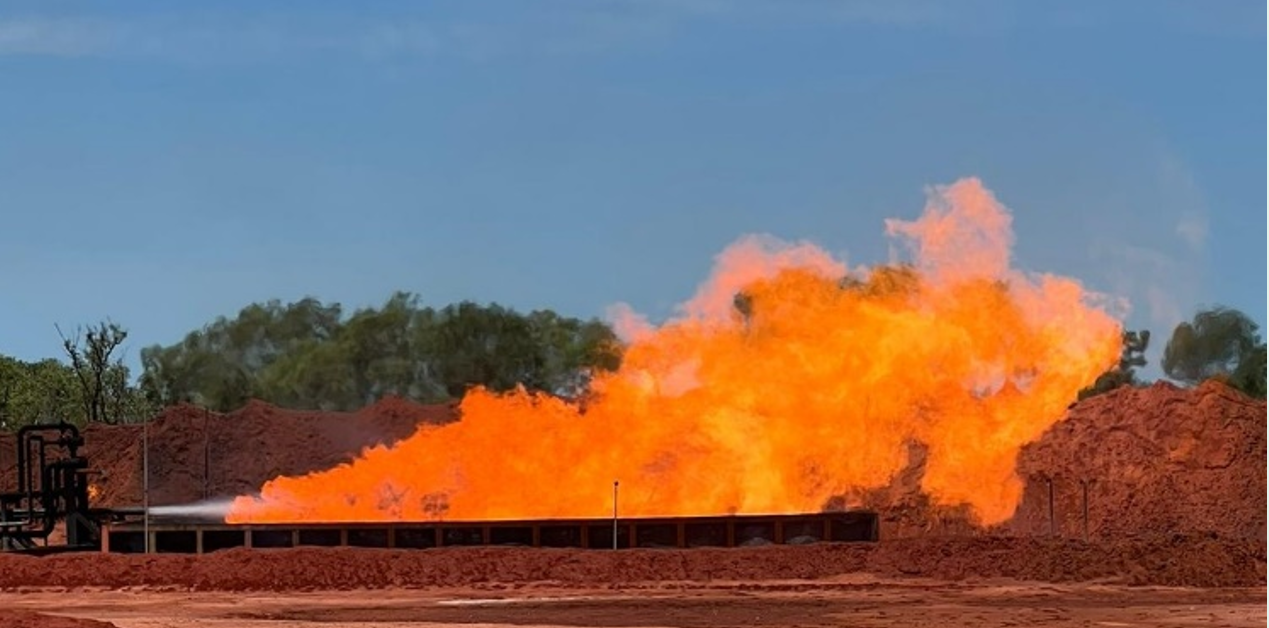
The Rafael 1 exploration well was drilled in the onshore Canning Basin by Buru Energy in late 2021 and made an exciting gas-condensate discovery in Devonian dolomites. The well tested a significant four-way structural closure mapped on a sparse regional 2D seismic grid, although the stratigraphic succession at the well location was difficult to predict due to the limited and distant well control. The Rafael 1 discovery has challenged a number of paradigms about the Canning Basin and supports the contention that significant volumes of gas in conventional reservoirs are yet to be discovered despite sporadic exploration over the past 100 years. The well also confirms that opportunity hides where high geological complexity and sparse datasets intersect.
Find out more »
Please join the Perth Young Professional Geoscientists and Engineers from the petroleum and mining industries for a light-hearted night of...
Find out more »
Presented by Sergey Shevchenko. This presentation demonstrates how the Extended Elastic Impedance (EEI) concept has been used as a method for reservoir monitoring, calculating changes in pressure and saturation in a producing reservoir by applying EEI to time-lapse seismic data. The method uses time-lapse seismic difference data rotated to specific EEI χ angles which are optimised for the changes expected in a given reservoir.
Find out more »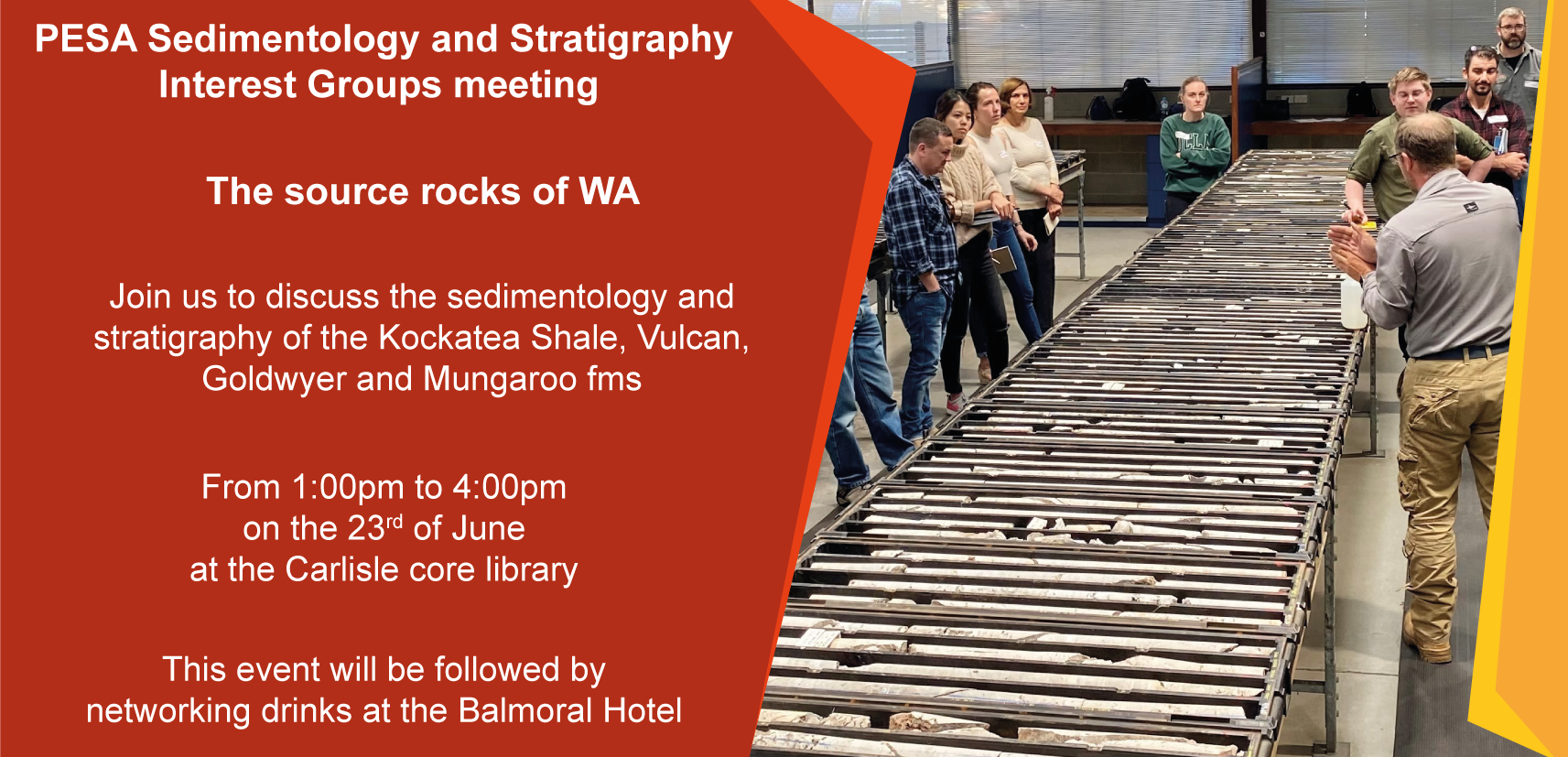
On Friday 24 February (1.00 pm to 4.00 pm) a special session of the Sedimentology and Stratigraphy Interest Group at the Perth Core Library, 37 Harris St, Carlisle, led by Vincent Crombez, Fionna McNee and Chris Elders, will examine cores from mineral and petroleum wells in the Canning and Office basins that have penetrated thick salt sequences. This will provide us with the opportunity to investigate the composition and deformational fabrics in mobile and non-mobile salt, as well as the underlying and overlying stratigraphic successions. As is tradition, the SSIG workshop will be followed by drinks at 4.00 pm at the Balmoral Hotel, Victoria Park.
Find out more »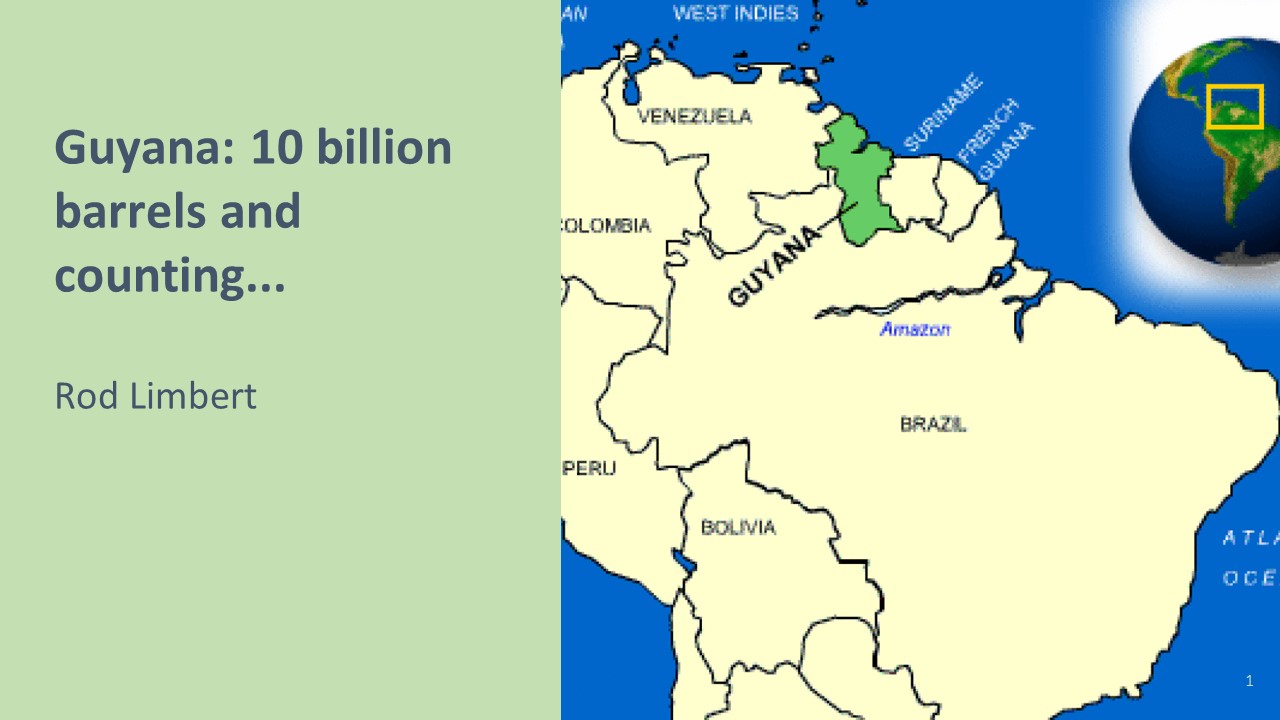
In 2015 ExxonMobil discovered oil in the Stabroek Block in the deep water of Guyana, South America. Subsequent discoveries have resulted in announced reserves of 10+ billion barrels. First oil commenced in December 2019 with a second development coming online February 1922. Current production capacity is 340,000 barrels per day with additional developments in progress.
Find out more »
Proudly sponsored by IKON Geoscience: We invite you to join friends and colleagues at our Annual Winter Warmer Social on...
Find out more »
Measurement, Monitoring, and Verification (MMV) are essential to Carbon Capture and Storage (CCS) projects. Precise CO2 emission measurements, ongoing project performance monitoring, and independent data verification provide stakeholder confidence in the CCS system's greenhouse gas reduction, safe operation, and prompt issue resolution. Likewise, developing ground models for offshore wind turbine placement demands a comprehensive approach that addresses various geotechnical, geophysical, regulatory, and stakeholder aspects. A common element should be that any ‘baseline’ geophysical platform is built to best practice standards for both CCS and Wind projects.
Find out more »