

• Member Login
  • |
  • Join Now
PESA - Energy Geoscience

Promoting Professional and Technical Excellence in Energy Geoscience – Networking, On-going Professional Education, Monthly Technical Meetings

  • Home
  • About
    • About PESA
    • Objectives
    • PESA History
    • PESA Affiliates
    • Constitution and Rules
    • Strategic Plan
  • Events
    • Online
    • NSW / ACT
    • QLD
    • SA / NT
    • VIC / TAS
    • WA
    • Industry
    • Social
    • Past Events
  • Membership
    • Join Us
    • APPEA Conference Discounts
    • AEGC 2025 Travel Bursaries
    • PESA Membership Awards
  • Latest News
    • All News
    • Feature Articles
    • Industry
    • Company Updates
    • Tech Talk (public)
    • PESA Branch Activities
  • Library
    • Technical Library
    • PESA Gazette
    • Webinars
    • PESA News Magazine
    • Knowledgette Recordings
  • Scholarships
  • Employment
    • View Job Opportunities
    • Submit Job
  • Contact

Subsurface plumbing of the Crayfish Group in the Penola Trough: Otway Basin

16/12/2004 by Sharperedge

Subsurface plumbing of the Crayfish Group in the Penola Trough: Otway Basin


Download Section

Please log in to download this file.

Alternatively, you can search for this item and individually purchase it from the PESA collection at AAPG DataPages

PESA collection at AAPG DataPages

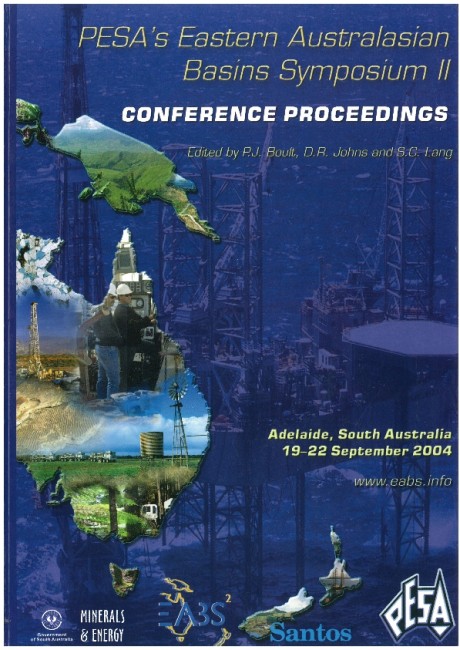
Publication Name: PESA's Eastern Australasian Basin Symposium II

Authors: P.J. Boult, P. Lyon, B. Camac, D. Edwards and D.M. McKirdy

Date Published: December 2004

Number of Pages: 33

Reference Type: Book Section

Abstract:

The Penola Trough is host to five commercial gas fields containing an estimated 127 petajoules of gas, while seven, possibly eight, wells have intersected residual or palaeo-gas and oil columns. Most gas accumulations are, or have been, full to structural spill point or seal capacity. Many traps have been breached during Tertiary compression. Source rocks are shales of the Casterton Formation and lower Pretty Hill Formation. An early oil charge was displaced by a later gas charge during the Albian-Aptian. Possible top-up of gas occurred during the Tertiary. Gas wetness and the probability of oil occurrence increase towards the trough margin. Reservoir net to gross ratios are related to structural control on initial deposition and subsequent diagenesis.
In situ gas columns are evident from RFT/MDT data. Palaeo-columns have been interpreted to exist, with varying
degrees of confidence, using a variety of methods. Early and palaeo-oil charge have been identified by three methods. Palaeo-gas columns are more difficult to establish, but can be identified by eight different methods.
The Laira Formation and intraformational shales of the Pretty Hill Formation are the major regional seals. These have variable internal seal capacity and contain potential thief zones. Shale smear needs to be invoked within fault planes in some locations for retention of commercial sized columns. Seal breach and the concomitant formation of palaeo-gas columns is caused by strain associated with recent inversion tectonics. This created structural permeability within the caprock which is related to either pre-existing faults or downward propagation of newer faults.

Tags: Casterton leakage. palaeo-column Penola Trough petroleum system Pretty Hill seal source rock

PESA - Energy Geoscience

PESA Energy Geoscience is a non-profit association of individuals involved in the exploration of oil and gas.

Connect with us

Subscribe to our newsletter and stay on the loop of what is happening in the field of Energy Geoscience and events near you.

pesa newsletter
* indicates required

PESA Energy Geoscience will use the information you provide on this form to be in touch with you and to provide updates and marketing. Please confirm you give us permission to contact you via your email address:

You can change your mind at any time by clicking the unsubscribe link in the footer of any email you receive from us. We will treat your information with respect. For more information about our privacy practices please visit our website. By clicking below, you agree that we may process your information in accordance with these terms.

We use Mailchimp as our marketing platform. By clicking below to subscribe, you acknowledge that your information will be transferred to Mailchimp for processing. Learn more about Mailchimp's privacy practices.

Copyright © 2025 PESA - Energy Geoscience. All Rights Reserved.

  • Advertise
  • Contact
  • Policies
  • Privacy
  • Terms & Conditions