

• Member Login
  • |
  • Join Now
PESA - Energy Geoscience

Promoting Professional and Technical Excellence in Energy Geoscience – Networking, On-going Professional Education, Monthly Technical Meetings

  • Home
  • About
    • About PESA
    • Objectives
    • PESA History
    • PESA Affiliates
    • Constitution and Rules
    • Strategic Plan
  • Events
    • Online
    • NSW / ACT
    • QLD
    • SA / NT
    • VIC / TAS
    • WA
    • Industry
    • Social
    • Past Events
  • Membership
    • Join Us
    • APPEA Conference Discounts
    • AEGC 2025 Travel Bursaries
    • PESA Membership Awards
  • Latest News
    • All News
    • Feature Articles
    • Industry
    • Company Updates
    • Tech Talk (public)
    • PESA Branch Activities
  • Library
    • Technical Library
    • PESA Gazette
    • Webinars
    • PESA News Magazine
    • Knowledgette Recordings
  • Scholarships
  • Employment
    • View Job Opportunities
    • Submit Job
  • Contact

Overview of the structure and associated petroleum prospectivity of the Taranaki Fault, New Zealand

16/12/2004 by Sharperedge

Overview of the structure and associated petroleum prospectivity of the Taranaki Fault, New Zealand


Download Section

Please log in to download this file.

Alternatively, you can search for this item and individually purchase it from the PESA collection at AAPG DataPages

PESA collection at AAPG DataPages

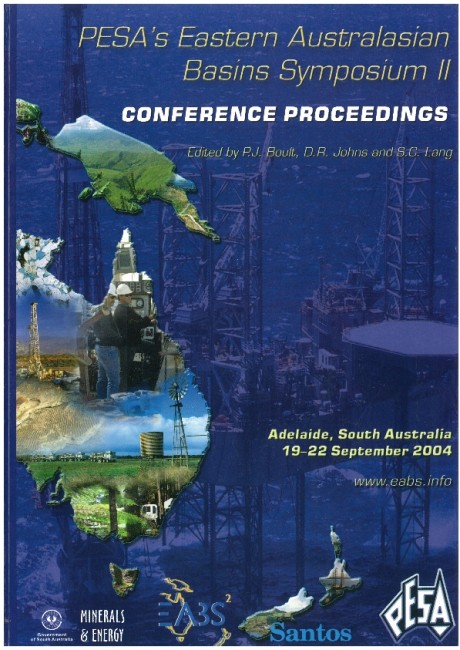
Publication Name: PESA's Eastern Australasian Basin Symposium II

Authors: V. Stagpoole, R. Funnell and A. Nicol

Date Published: December 2004

Number of Pages: 27

Reference Type: Book Section

Abstract:

The Taranaki Fault is a crustal scale thrust fault forming the eastern margin of the Taranaki Basin. The fault, extending for over 400 km with 5-10 km of vertical and 10 km of horizontal displacement, has been the target of intensive petroleum exploration. New detailed seismic interpretation indicates that periods of rapid deformation and reverse displacement occurred primarily during the Mid-Late Eocene (ca. 43-35 Ma) and the Early Miocene (ca. 23- 18 Ma), with a southward migration in the locus of activity with time. In conjunction with modelling, new seismic interpretation has improved definition of the complex geometry and helped to constrain the charge history for associated petroleum accumulations. Oil and gas generation is predicted from Cretaceous source rocks to the north and south of the Taranaki Peninsula, prior to trap formation, with westerly dipping sedimentary strata focussing migration towards the principal slip surface of the fault. On the peninsula, primarily oil generated from Palaeogene source rocks in the vicinity of the fault is predicted to migrate mainly westwards away from the fault towards the Tarata Thrust Zone. The complex nature of faulting, however, means that a large variety of trapping styles, reservoir intervals and potential seals are present-leading to a diversity of petroleum systems. The irregular nature of the hanging wall in~icates that traps associated with the principal slip surface are likely to be relatively small (<50 MMBBLs in-place), although there is potential for multiple stacked plays and for larger single accumulations westward of the fault and in the north.

Tags: basin modelling displacement history petroleum systems Taranaki Basin Taranaki Fault thrust fault

PESA - Energy Geoscience

PESA Energy Geoscience is a non-profit association of individuals involved in the exploration of oil and gas.

Connect with us

Subscribe to our newsletter and stay on the loop of what is happening in the field of Energy Geoscience and events near you.

pesa newsletter
* indicates required

PESA Energy Geoscience will use the information you provide on this form to be in touch with you and to provide updates and marketing. Please confirm you give us permission to contact you via your email address:

You can change your mind at any time by clicking the unsubscribe link in the footer of any email you receive from us. We will treat your information with respect. For more information about our privacy practices please visit our website. By clicking below, you agree that we may process your information in accordance with these terms.

We use Mailchimp as our marketing platform. By clicking below to subscribe, you acknowledge that your information will be transferred to Mailchimp for processing. Learn more about Mailchimp's privacy practices.

Copyright © 2025 PESA - Energy Geoscience. All Rights Reserved.

  • Advertise
  • Contact
  • Policies
  • Privacy
  • Terms & Conditions