

• Member Login
  • |
  • Join Now
PESA - Energy Geoscience

Promoting Professional and Technical Excellence in Energy Geoscience – Networking, On-going Professional Education, Monthly Technical Meetings

  • Home
  • About
    • About PESA
    • Objectives
    • PESA History
    • PESA Affiliates
    • Constitution and Rules
    • Strategic Plan
  • Events
    • Online
    • NSW / ACT
    • QLD
    • SA / NT
    • VIC / TAS
    • WA
    • Industry
    • Social
    • Past Events
  • Membership
    • Join Us
    • APPEA Conference Discounts
    • AEGC 2025 Travel Bursaries
    • PESA Membership Awards
  • Latest News
    • All News
    • Feature Articles
    • Industry
    • Company Updates
    • Tech Talk (public)
    • PESA Branch Activities
  • Library
    • Technical Library
    • PESA Gazette
    • Webinars
    • PESA News Magazine
    • Knowledgette Recordings
  • Scholarships
  • Employment
    • View Job Opportunities
    • Submit Job
  • Contact

The structural history of Tasmania: a review for petroleum explorers

16/12/2004 by Sharperedge

The structural history of Tasmania: a review for petroleum explorers


Download Section

Please log in to download this file.

Alternatively, you can search for this item and individually purchase it from the PESA collection at AAPG DataPages

PESA collection at AAPG DataPages

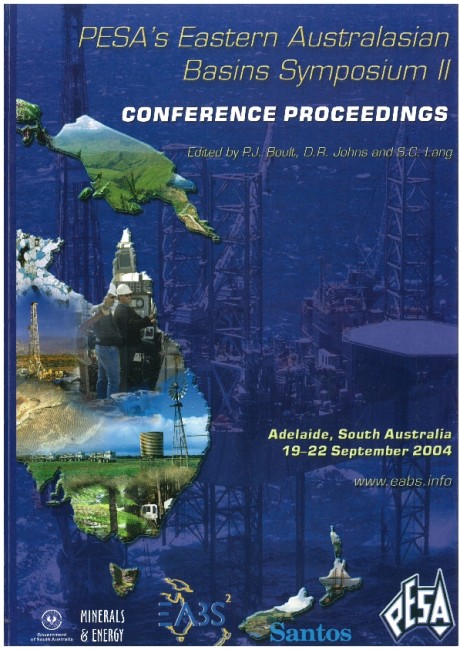
Publication Name: PESA's Eastern Australasian Basin Symposium II

Authors: A.R. Stacey and R.F. Berry

Date Published: December 2004

Number of Pages: 29

Reference Type: Book Section

Abstract:

The Mesoproterozoic basement ofTasmania is overlain by a Neoproterozoic passive margin sequence. Deposition was interrupted by a major Cambrian arc-continent collision. Ordovician to early Devonian, shallow-water sedimentation dominated across the Western Tasmanian Terrane, while a turbidite succession built rapidly across eastern Tasmania. Most sequences were metamorphosed to an overmature state (greater than or equal to 300oC) during a Devonian orogeny.
In the latest Carboniferous, deposition began in the Tasmania Basin. The Late Carboniferous-Permian Lower
Parmeener Supergroup consists of glaciomarine sediments, and is unconformably overlain by Triassic non-marine sandstones and coal measures of the Upper Parmeener Supergroup. A large volume of tholeiitic dolerite intruded the Tasmania basin during the Middle Jurassic. The main body of the Tasmania Basin reached maturity in the Mesozoic and there is evidence for widespread hydrocarbon generation. Locally, evidence for hydrocarbon migration has been detected but no hydrocarbon accumulations have been found.
The Sorell, Bass and Durroon basins were initiated in the latest Jurassic-Early Cretaceous by extension related to
rifting between Australia and Antarctica. By the Late Cretaceous active spreading had begun in the Tasman Sea. The Bass Basin continued to propagate southwards, extending onshore with the opening of the Tamar Graben in the latest Cretaceous, the Devonport-Port Sorell Sub-basin in the Early Paleocene, and the Longford Sub-basin in the Late Paleocene. On the west coast, the Sorell Basin extended onshore with the development of the Macquarie Harbour Graben in the Late Paleocene. During the Late Paleocene-Early Eocene, Tasmania was moving north along a left-lateral transform against Northern Victoria Land. In the Eocene, Australian-Antarctic motion became more divergent along this margin and the most active extension migrated to the southern rift basins. Only the Bass Basin has yielded economic accumulations of gas. Minor hydrocarbon shows have been encountered in the Sorell Basin. The younger southern basins have not accumulated sufficient sediment to reach maturity.

Tags: basin structure Tasmania tectonics

PESA - Energy Geoscience

PESA Energy Geoscience is a non-profit association of individuals involved in the exploration of oil and gas.

Connect with us

Subscribe to our newsletter and stay on the loop of what is happening in the field of Energy Geoscience and events near you.

pesa newsletter
* indicates required

PESA Energy Geoscience will use the information you provide on this form to be in touch with you and to provide updates and marketing. Please confirm you give us permission to contact you via your email address:

You can change your mind at any time by clicking the unsubscribe link in the footer of any email you receive from us. We will treat your information with respect. For more information about our privacy practices please visit our website. By clicking below, you agree that we may process your information in accordance with these terms.

We use Mailchimp as our marketing platform. By clicking below to subscribe, you acknowledge that your information will be transferred to Mailchimp for processing. Learn more about Mailchimp's privacy practices.

Copyright © 2025 PESA - Energy Geoscience. All Rights Reserved.

  • Advertise
  • Contact
  • Policies
  • Privacy
  • Terms & Conditions