

• Member Login
  • |
  • Join Now
PESA - Energy Geoscience

Promoting Professional and Technical Excellence in Energy Geoscience – Networking, On-going Professional Education, Monthly Technical Meetings

  • Home
  • About
    • About PESA
    • Objectives
    • PESA History
    • PESA Affiliates
    • Constitution and Rules
    • Strategic Plan
  • Events
    • Online
    • NSW / ACT
    • QLD
    • SA / NT
    • VIC / TAS
    • WA
    • Industry
    • Social
    • Past Events
  • Membership
    • Join Us
    • APPEA Conference Discounts
    • AEGC 2025 Travel Bursaries
    • PESA Membership Awards
  • Latest News
    • All News
    • Feature Articles
    • Industry
    • Company Updates
    • Tech Talk (public)
    • PESA Branch Activities
  • Library
    • Technical Library
    • PESA Gazette
    • Webinars
    • PESA News Magazine
    • Knowledgette Recordings
  • Scholarships
  • Employment
    • View Job Opportunities
    • Submit Job
  • Contact

Aspects of the hydrogeology of the southern Eromanga Basin, Queenland

17/12/1989 by Sharperedge

Aspects of the hydrogeology of the southern Eromanga Basin, Queenland


Download Section

Please log in to download this file.

Alternatively, you can search for this item and individually purchase it from the PESA collection at AAPG DataPages

PESA collection at AAPG DataPages

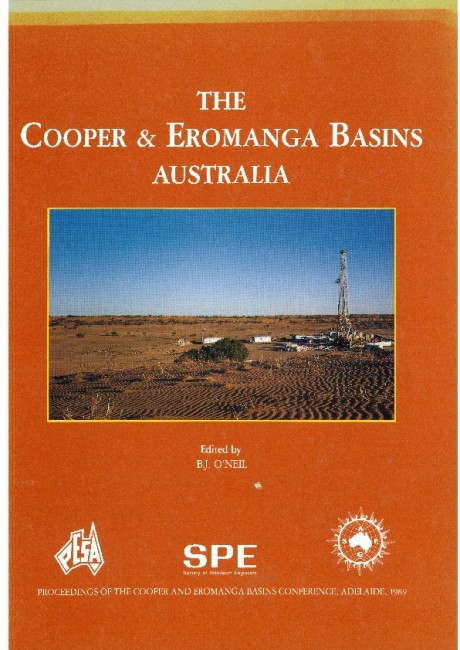
Publication Name: The Cooper & Eromanga Basins Australia

Authors: P.J. Muller

Date Published: June 1989

Number of Pages: 27

Reference Type: Book Section

Abstract:

The Eromanga Basin consists essentially of a multilayered aquifer system which contains two distinct groups of
aquifers, namely those in the pre-Wallumbilla Formation units, and those in the Wallumbilla Formation and ounger units. The two groups reflect groundwater environments differing in the nature of the aquifers, hydraulics, and water chemistry. In particular, sodium bicarbonate waters predominate in the lower group and sodium chloride waters with higher average salinities in the upper group.
The present-day regiop.al groundwater flow directions in the Hooray Sandstone may indicate broadly the migration paths of petroleum, but the effects of local flow conditions, which are generally unknown, are of obvious importance. Groundwaters in, and near, the recharge area are mostly of the sodium chloride or sodium
bicarbonochloride types with considerable amounts of calcium, magnesium, and sulphate. The waters evolve
along flow paths to produce waters rich in sodium and bicarbonate. The proportion of chloride in some waters
in the western part of the area suggests possible intermixing with sodium chloride type waters from deeper or shallower aquifers. Mixing of waters via faults is indicated in an area to the west of the Canaway Fault where the Winton and Mackunda Formations yield water with the same chemical characteristics as water from the Hooray Sandstone. In areas where vertical leakage between aquifers occurs, hydrocarbons are probably prevented from accumulating in potential reservoirs. A groundwater divide stretching northeast from Betoota has been inferred from salinity and boron concentrations. This divide effectively prohibits the north-westwards migration of hydrocarbons from potential source rocks in the Ullenbury Depression and Cooper and Thomson Synclines. The high boron content of some waters indicates possible marine incursions during deposition of the Hooray Sandstone, or intermixing with water derived from marine sediments.

Tags: Aspects basin Eromanga hydrogeology Queenland southern

PESA - Energy Geoscience

PESA Energy Geoscience is a non-profit association of individuals involved in the exploration of oil and gas.

Connect with us

Subscribe to our newsletter and stay on the loop of what is happening in the field of Energy Geoscience and events near you.

pesa newsletter
* indicates required

PESA Energy Geoscience will use the information you provide on this form to be in touch with you and to provide updates and marketing. Please confirm you give us permission to contact you via your email address:

You can change your mind at any time by clicking the unsubscribe link in the footer of any email you receive from us. We will treat your information with respect. For more information about our privacy practices please visit our website. By clicking below, you agree that we may process your information in accordance with these terms.

We use Mailchimp as our marketing platform. By clicking below to subscribe, you acknowledge that your information will be transferred to Mailchimp for processing. Learn more about Mailchimp's privacy practices.

Copyright © 2025 PESA - Energy Geoscience. All Rights Reserved.

  • Advertise
  • Contact
  • Policies
  • Privacy
  • Terms & Conditions