

• Member Login
  • |
  • Join Now
PESA - Energy Geoscience

Promoting Professional and Technical Excellence in Energy Geoscience – Networking, On-going Professional Education, Monthly Technical Meetings

  • Home
  • About
    • About PESA
    • Objectives
    • PESA History
    • PESA Affiliates
    • Constitution and Rules
    • Strategic Plan
  • Events
    • Online
    • NSW / ACT
    • QLD
    • SA / NT
    • VIC / TAS
    • WA
    • Industry
    • Social
    • Past Events
  • Membership
    • Join Us
    • APPEA Conference Discounts
    • AEGC 2025 Travel Bursaries
    • PESA Membership Awards
  • Latest News
    • All News
    • Feature Articles
    • Industry
    • Company Updates
    • Tech Talk (public)
    • PESA Branch Activities
  • Library
    • Technical Library
    • PESA Gazette
    • Webinars
    • PESA News Magazine
    • Knowledgette Recordings
  • Scholarships
  • Employment
    • View Job Opportunities
    • Submit Job
  • Contact

Miocene Turbidite Reservoir Systems in the Taranaki Basin, New Zealand: Established Plays and Analogues for Deep-Water Exploration

09/12/2001 by Sharperedge

Miocene Turbidite Reservoir Systems in the Taranaki Basin, New Zealand: Established Plays and Analogues for Deep-Water Exploration


Download Section

Please log in to download this file.

Alternatively, you can search for this item and individually purchase it from the PESA collection at AAPG DataPages

PESA collection at AAPG DataPages

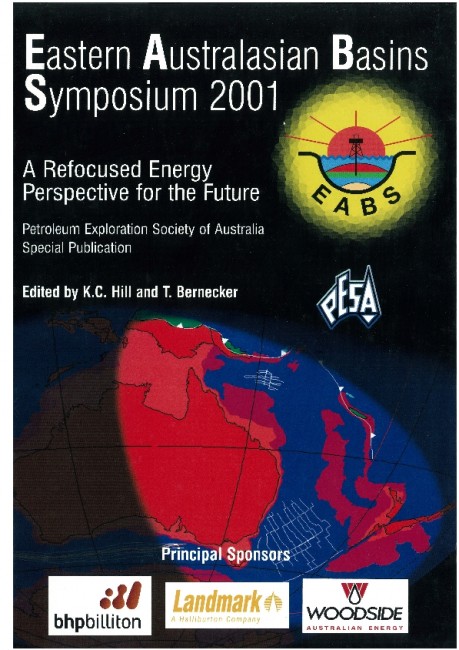
Publication Name: Eastern Australian Basins Symposium 2001

Authors: P.R. King and G.H. Browne

Date Published: November 2001

Number of Pages: 34

Reference Type: Magazine Article

Abstract:

Two turbidite formations, Moki and Mount Messenger, represent discrete progradational sandy pulses in an otherwise mud-dominated regressive Miocene succession in the Taranaki Basin, New Zealand. The fairways
for these formations overlap, with best development of mid-Miocene Moki sandstones in central-southern regions, and of Late Miocene Mount Messenger sandstones in central-northeastern areas. Both formations have comparable seismic reflection and gamma/SF log attributes, and are characterised by fine to very fine grain size, and litharenite to feldspathic litharenite composition indicative of a primarily metasedimentary provenance. Differences in average porosity and permeability between the two formations (Mount Messenger 20%, 211 mD; Moki 15%, 32 mD) primarily reflect differing degrees of burial and physical grain compaction. A sequence stratigraphic model deduced from superb exposures of the Mount Messenger Formation along the north Taranaki
coast can also be applied to the Moki Formation, given the overall similarities between the two intervals. This model can serve as both a test of other models established for deep-water strata worldwide, and as an
analogue for further exploration. We suggest that each formation represents a progradational third-order succession comprising basin floor fan and overlying slope fan elements, and superimposed stacked
fourth-order lowstand sequences. Basin floor fan cycles fine upwards, from overtly massive sandstone facies with high net:gross, through thinly interbedded sandstones/siltstones, to massive siltstones with low net:
gross. Basin floor fan facies have wide areal extent, but exhibit compensation-style depositional switching at bed-scale and lobe-scale, which has implications for reservoir continuity. Seismic, log, and outcrop data indicate that sandstones in upper parts of each formation have more channelised than sheetlike stratal geometries. These upper intervals are attributed to deposition on fan aprons at or close to the base of the advancing slope.

Tags: Deep-Water Established exploration Miocene New Zealand plays reservoir. systems Taranaki Basin turbidite

PESA - Energy Geoscience

PESA Energy Geoscience is a non-profit association of individuals involved in the exploration of oil and gas.

Connect with us

Subscribe to our newsletter and stay on the loop of what is happening in the field of Energy Geoscience and events near you.

pesa newsletter
* indicates required

PESA Energy Geoscience will use the information you provide on this form to be in touch with you and to provide updates and marketing. Please confirm you give us permission to contact you via your email address:

You can change your mind at any time by clicking the unsubscribe link in the footer of any email you receive from us. We will treat your information with respect. For more information about our privacy practices please visit our website. By clicking below, you agree that we may process your information in accordance with these terms.

We use Mailchimp as our marketing platform. By clicking below to subscribe, you acknowledge that your information will be transferred to Mailchimp for processing. Learn more about Mailchimp's privacy practices.

Copyright © 2025 PESA - Energy Geoscience. All Rights Reserved.

  • Advertise
  • Contact
  • Policies
  • Privacy
  • Terms & Conditions