

• Member Login
  • |
  • Join Now
PESA - Energy Geoscience

Promoting Professional and Technical Excellence in Energy Geoscience – Networking, On-going Professional Education, Monthly Technical Meetings

  • Home
  • About
    • About PESA
    • Objectives
    • PESA History
    • PESA Affiliates
    • Constitution and Rules
    • Strategic Plan
  • Events
    • Online
    • NSW / ACT
    • QLD
    • SA / NT
    • VIC / TAS
    • WA
    • Industry
    • Social
    • Past Events
  • Membership
    • Join Us
    • APPEA Conference Discounts
    • AEGC 2025 Travel Bursaries
    • PESA Membership Awards
  • Latest News
    • All News
    • Feature Articles
    • Industry
    • Company Updates
    • Tech Talk (public)
    • PESA Branch Activities
  • Library
    • Technical Library
    • PESA Gazette
    • Webinars
    • PESA News Magazine
    • Knowledgette Recordings
  • Scholarships
  • Employment
    • View Job Opportunities
    • Submit Job
  • Contact

Sequence Stratigraphy and Petroleum Potential of Upper Jurassic – Lower Cretaceous Depositional System in the Dampier Sub-basin, North West Shelf, Australia

17/12/1994 by Sharperedge

Sequence Stratigraphy and Petroleum Potential of Upper Jurassic – Lower Cretaceous Depositional System in the Dampier Sub-basin, North West Shelf, Australia


Download Section

Please log in to download this file.

Alternatively, you can search for this item and individually purchase it from the PESA collection at AAPG DataPages

PESA collection at AAPG DataPages

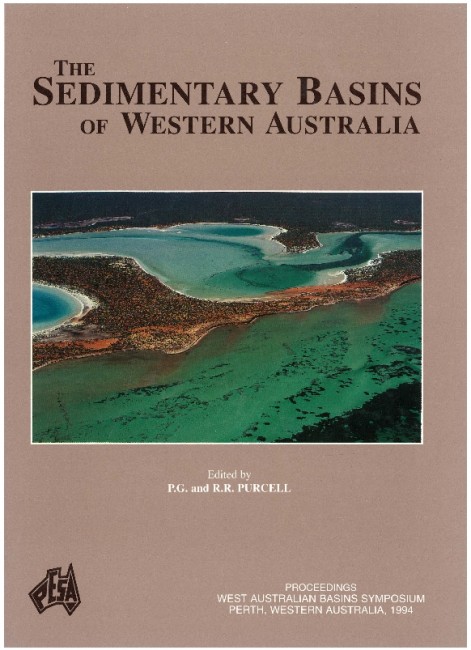
Publication Name: The Sedimentary Basins of WA

Authors: Peter Barber

Publication Volume: 1

Date Published: July 1994

Number of Pages: 29

Reference Type: Book Section

Abstract:

A diminishing prospect-inventory, based on traditional structural targets, has placed increasing emphasis upon
finding commercially-viable stratigraphic traps. This is especially true in the Dampier Sub-basin where recent drilling has identified at least twelve depositional sequences within the Upper Jurassic to Lower Cretaceous
succession. These sequences document a far more complex Late Jurassic to Early Cretaceous sedimentary history than previously recognised using traditional lithostratigraphic mapping techniques. Use of a chronostratigraphic framework to develop Late Jurassic and Early Cretaceous systems tract models, reveals that
several repetitive facies suites may be penetrated by the drill, depending on geographic location and frequency
of lowstand events. These models have profound implications for prediction of Upper Jurassic to Lower Cretaceous submarine fan systems, their potential reservoir distribution, and sealing capacity for hydrocarbon entrapment.
At least eight lowstand events have been recognised in the Oxfordian to Tithonian sequence alone, associated
with both syn-rift crustal extension and related fluctuations in global-eustatic sea level. During these lowstand episodes, huge volumes of coarse clastics were transported by mass-flow into the Lewis Trough, with sediment transport of some 5-40 km. The magnitude of shelf-margin tectonic instability, sediment supply, and relative sea level change, controlled the geometry of submarine fan complexes that developed within each lowstand depositional cycle. In general, earlier (Oxfordian) basin-floor sand cycles comprise mixed channel-fill and submarine-fan lobe moundforms confined to the Lewis Trough. Following collapse of the Madeleine intra-basinal high in early Kimmeridgian times, these earlier channelised lobes were progressively replaced by more widespread, massive, detached, non-channelised basin floor lobes, which became dominant by end-Tithonian time. The Lower Cretaceous succession comprises mainly transgressive-highstand shelf to slope sediments, heralding a change from syn-rift lowstand to post-rift highstand depositional cycles.
Sequence boundaries identified in the Dampier Sub-basin demonstrate a remarkable synchroneity with the worldwide global-eustatic curve, suggesting that a symbiotic relationship may exist between major tectonic
events and third-order eustatic cycles, at least within the syn-rift section of the Dampier Sub-basin.

Tags: Australia. Cretaceous. Dampier depositional Jurassic Lower North petroleum potential sequence shelf. stratigraphy Sub-basin system upper

PESA - Energy Geoscience

PESA Energy Geoscience is a non-profit association of individuals involved in the exploration of oil and gas.

Connect with us

Subscribe to our newsletter and stay on the loop of what is happening in the field of Energy Geoscience and events near you.

pesa newsletter
* indicates required

PESA Energy Geoscience will use the information you provide on this form to be in touch with you and to provide updates and marketing. Please confirm you give us permission to contact you via your email address:

You can change your mind at any time by clicking the unsubscribe link in the footer of any email you receive from us. We will treat your information with respect. For more information about our privacy practices please visit our website. By clicking below, you agree that we may process your information in accordance with these terms.

We use Mailchimp as our marketing platform. By clicking below to subscribe, you acknowledge that your information will be transferred to Mailchimp for processing. Learn more about Mailchimp's privacy practices.

Copyright © 2025 PESA - Energy Geoscience. All Rights Reserved.

  • Advertise
  • Contact
  • Policies
  • Privacy
  • Terms & Conditions