

• Member Login
  • |
  • Join Now
PESA - Energy Geoscience

Promoting Professional and Technical Excellence in Energy Geoscience – Networking, On-going Professional Education, Monthly Technical Meetings

  • Home
  • About
    • About PESA
    • Objectives
    • PESA History
    • PESA Affiliates
    • Constitution and Rules
    • Strategic Plan
  • Events
    • Online
    • NSW / ACT
    • QLD
    • SA / NT
    • VIC / TAS
    • WA
    • Industry
    • Social
    • Past Events
  • Membership
    • Join Us
    • APPEA Conference Discounts
    • AEGC 2025 Travel Bursaries
    • PESA Membership Awards
  • Latest News
    • All News
    • Feature Articles
    • Industry
    • Company Updates
    • Tech Talk (public)
    • PESA Branch Activities
  • Library
    • Technical Library
    • PESA Gazette
    • Webinars
    • PESA News Magazine
    • Knowledgette Recordings
  • Scholarships
  • Employment
    • View Job Opportunities
    • Submit Job
  • Contact

Rankin Platform, Western Australia: Structural Development and Exploration Potential

17/12/1994 by Sharperedge

Rankin Platform, Western Australia: Structural Development and Exploration Potential


Download Section

Please log in to download this file.

Alternatively, you can search for this item and individually purchase it from the PESA collection at AAPG DataPages

PESA collection at AAPG DataPages

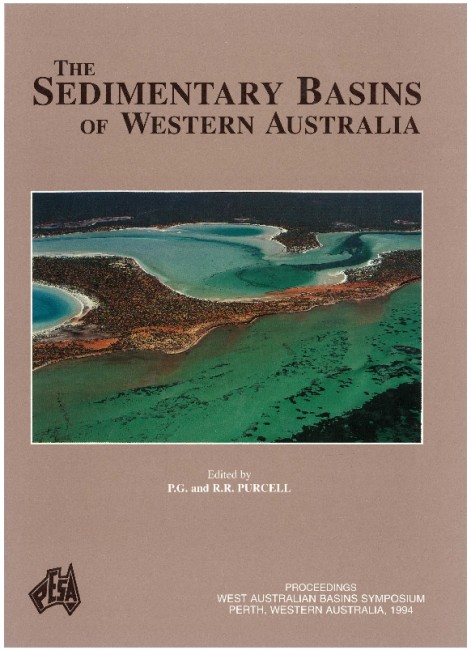
Publication Name: The Sedimentary Basins of WA

Authors: Alan Stein

Publication Volume: 1

Date Published: July 1994

Number of Pages: 26

Reference Type: Book Section

Abstract:

The Rankin Platform on Australia's North West Shelf is, and will continue to be, a major source of gas and condensate to expanding markets in Australia and Asia. Based on current figures, recoverable reserves are estimated to be in excess of 25 TCF of gas, 700 MMBBL of condensate and 200 MMBBL of oil. The focus of exploration to date has been upon the leading edge of the Rankin Platform which forms a prominant structural
feature within the Carnarvon Basin. The internal parts of the platform remain virtually unexplored. Conventionally the Rankin Platform has been viewed as the 'stable margin' of the Carnarvon Basin which subsided rapidly during the Jurassic and Early Cretaceous. This analysis of the flexural and isostatic response of the platform to rifting suggests that it was not stable and that it underwent deformation, mostly uplift, associated with subsidence in the adjoining basin. Using mathematical models from analogous basin settings it is predicted that some of the frontal parts of the platform have undergone in excess of one and a half kilometres of uplift, and that the effects of rift-related uplift extend back onto the platform, with exponentially decreasing effect, for as much as 30 km. A corollary of this structural model is the identification of new plays on the unexplored parts of the platform which upgrade the exploration potential for oil.

Tags: Australia. development exploration platform potential Rankin structural

PESA - Energy Geoscience

PESA Energy Geoscience is a non-profit association of individuals involved in the exploration of oil and gas.

Connect with us

Subscribe to our newsletter and stay on the loop of what is happening in the field of Energy Geoscience and events near you.

pesa newsletter
* indicates required

PESA Energy Geoscience will use the information you provide on this form to be in touch with you and to provide updates and marketing. Please confirm you give us permission to contact you via your email address:

You can change your mind at any time by clicking the unsubscribe link in the footer of any email you receive from us. We will treat your information with respect. For more information about our privacy practices please visit our website. By clicking below, you agree that we may process your information in accordance with these terms.

We use Mailchimp as our marketing platform. By clicking below to subscribe, you acknowledge that your information will be transferred to Mailchimp for processing. Learn more about Mailchimp's privacy practices.

Copyright © 2025 PESA - Energy Geoscience. All Rights Reserved.

  • Advertise
  • Contact
  • Policies
  • Privacy
  • Terms & Conditions