

• Member Login
  • |
  • Join Now
PESA - Energy Geoscience

Promoting Professional and Technical Excellence in Energy Geoscience – Networking, On-going Professional Education, Monthly Technical Meetings

  • Home
  • About
    • About PESA
    • Objectives
    • PESA History
    • PESA Affiliates
    • Constitution and Rules
    • Strategic Plan
  • Events
    • Online
    • NSW / ACT
    • QLD
    • SA / NT
    • VIC / TAS
    • WA
    • Industry
    • Social
    • Past Events
  • Membership
    • Join Us
    • APPEA Conference Discounts
    • AEGC 2025 Travel Bursaries
    • PESA Membership Awards
  • Latest News
    • All News
    • Feature Articles
    • Industry
    • Company Updates
    • Tech Talk (public)
    • PESA Branch Activities
  • Library
    • Technical Library
    • PESA Gazette
    • Webinars
    • PESA News Magazine
    • Knowledgette Recordings
  • Scholarships
  • Employment
    • View Job Opportunities
    • Submit Job
  • Contact

Integrated approach to platform- basin correlation and deciphering the evolution of Devonian reefs, northern Canning Basin, Western Australia

18/12/2002 by Sharperedge

Integrated approach to platform- basin correlation and deciphering the evolution of Devonian reefs, northern Canning Basin, Western Australia


Download Section

Please log in to download this file.

Alternatively, you can search for this item and individually purchase it from the PESA collection at AAPG DataPages

PESA collection at AAPG DataPages

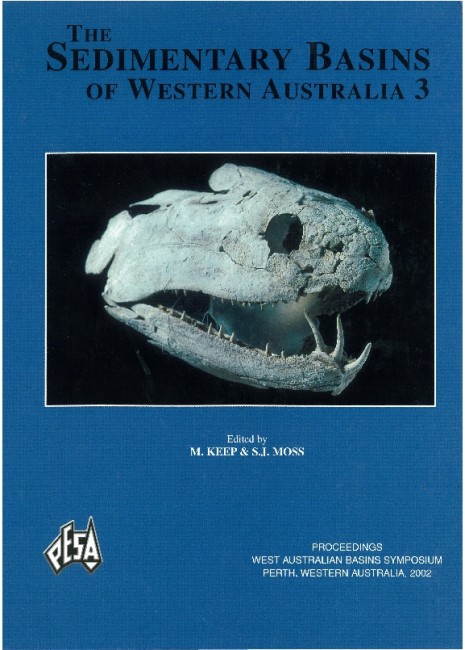
Publication Name: The Sedimentary Basins of WA

Authors: A.D. George, N. Chow & K.M. Trinajstic

Publication Volume: 3

Date Published: December 2002

Number of Pages: 36

Reference Type: Book Section

Abstract:

Upper Devonian reef complexes are well exposed in a number of ranges along the Kimberley margin of the Fitzroy Trough in the northern Canning Basin. The Napier Range exposes predominantly fore-reef strata with remnants of older and coeval platform remnants. Comparison of the stratigraphic patterns in the Napier Range shows that there are along-strike variations with no one part of the range preserving a complete history. Four phases of Frasnian platform growth and three phases of Famennian platform growth are recognised. The older platforms have retrogradational geometries whereas the younger platforms are progradational with maximum transgression occurring in the latest Frasnian. Although near-continuous siliciclastic sedimentation is a feature of some areas, discrete phases of siliciclastic deposition preceded almost all phases of platform growth and it is
likely that they were associated with periods of lowered relative sea level. Maximum flooding of the Kimberley
landmass was followed by a phase of carbonate lowstand deposition in the latest Frasnian that is not apparently associated with siliciclastic sedimentation. Tectonism clearly influenced reef building although post- depositional uplift and exhumation has complicated the record. A significant relative sea-level fall, attributed to footwall uplift of the underlying fault block, produced a karsted Frasnian-Famennian surface. Other platforms also show evidence for major erosion and accompanying siliciclastic deposition (e.g. platform B) which we suggest may also record significant tectonic events at the basin margin.

Tags: approach Australia. basin Canning Correlation deciphering Devonian evolution integrated northern platform Reefs

PESA - Energy Geoscience

PESA Energy Geoscience is a non-profit association of individuals involved in the exploration of oil and gas.

Connect with us

Subscribe to our newsletter and stay on the loop of what is happening in the field of Energy Geoscience and events near you.

pesa newsletter
* indicates required

PESA Energy Geoscience will use the information you provide on this form to be in touch with you and to provide updates and marketing. Please confirm you give us permission to contact you via your email address:

You can change your mind at any time by clicking the unsubscribe link in the footer of any email you receive from us. We will treat your information with respect. For more information about our privacy practices please visit our website. By clicking below, you agree that we may process your information in accordance with these terms.

We use Mailchimp as our marketing platform. By clicking below to subscribe, you acknowledge that your information will be transferred to Mailchimp for processing. Learn more about Mailchimp's privacy practices.

Copyright © 2025 PESA - Energy Geoscience. All Rights Reserved.

  • Advertise
  • Contact
  • Policies
  • Privacy
  • Terms & Conditions