

• Member Login
  • |
  • Join Now
PESA - Energy Geoscience

Promoting Professional and Technical Excellence in Energy Geoscience – Networking, On-going Professional Education, Monthly Technical Meetings

  • Home
  • About
    • About PESA
    • Objectives
    • PESA History
    • PESA Affiliates
    • Constitution and Rules
    • Strategic Plan
  • Events
    • Online
    • NSW / ACT
    • QLD
    • SA / NT
    • VIC / TAS
    • WA
    • Industry
    • Social
    • Past Events
  • Membership
    • Join Us
    • APPEA Conference Discounts
    • AEGC 2025 Travel Bursaries
    • PESA Membership Awards
  • Latest News
    • All News
    • Feature Articles
    • Industry
    • Company Updates
    • Tech Talk (public)
    • PESA Branch Activities
  • Library
    • Technical Library
    • PESA Gazette
    • Webinars
    • PESA News Magazine
    • Knowledgette Recordings
  • Scholarships
  • Employment
    • View Job Opportunities
    • Submit Job
  • Contact

Geological history of the western Barrow Sub-basin: Implications for hydrocarbon entrapment at Woollybutt and surrounding oil and gas fields

18/12/2002 by Sharperedge

Geological history of the western Barrow Sub-basin: Implications for hydrocarbon entrapment at Woollybutt and surrounding oil and gas fields


Download Section

Please log in to download this file.

Alternatively, you can search for this item and individually purchase it from the PESA collection at AAPG DataPages

PESA collection at AAPG DataPages

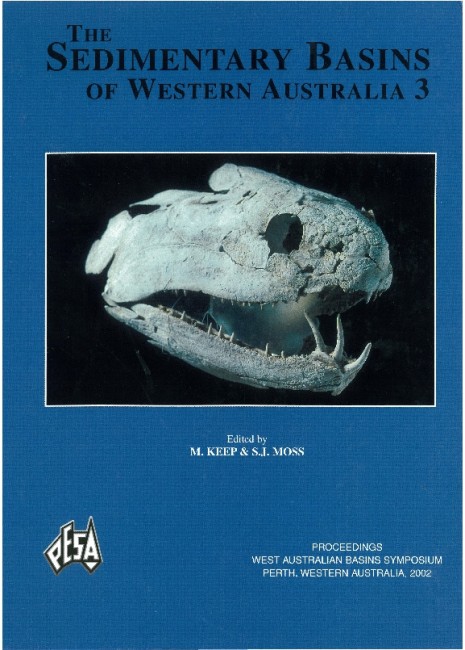
Publication Name: The Sedimentary Basins of WA

Authors: D.J. Hearty, G.K. Ellis & K.A. Webster

Publication Volume: 3

Date Published: December 2002

Number of Pages: 39

Reference Type: Book Section

Abstract:

The Woollybutt Oil Field, discovered in 1997, is located approximately 50 km west of Barrow Island in the Barrow Sub-basin of the Northern Carnarvon Basin, Western Australia. The under-saturated oil accumulation occurs in sandstones of the Early Cretaceous, deltaic Barrow Group and the overlying porous unit of the Mardie Greensand. The field comprises a north and southwest lobe, each having a different oil-water contact and a
different structural history.
During the break-up of Gondwana, deep-seated structures influenced the Triassic and Jurassic fault styles and basin geometry. The resulting structural trends, in conjunction with deep-seated, northwest-trending structural lineaments, have in turn influenced both the depositional form of the Early Cretaceous Barrow Group delta progrades, and wrench-related deformation in the Turonian and Late Tertiary, forming a focus for development of closures at the Top Barrow Group level at the Woollybutt Oil Field. Turonian tectonism initially created the Woollybutt southwest lobe, whereas Tertiary movement, resulting from the collision of the Australian and Asian plates, further enhanced the southwest lobe and formed the Woollybutt north lobe. These Late Cretaceous and Late Tertiary tectonic movements created traps for other Top Barrow Group oil and gas fields in the Barrow Sub-basin. Fields located on the Alpha Arch and Barrow Island Trend initially formed during the Early Cretaceous and were structurally enhanced or altered by subsequent tectonism during the Late Cretaceous and Late Tertiary. The Spar and East Spar gas fields are located on a major northwesterly-plunging fold that shielded the Woollybutt
structure from any gas migrating from further north in the sub-basin. The source for the Woollybutt oil is interpreted to be from the Late Jurassic Dingo Claystone in the southern part of the Barrow Sub-basin.

Tags: entrapment fields gas geological history hydrocarbon implications oil Sub-basin surrounding Woollybutt

PESA - Energy Geoscience

PESA Energy Geoscience is a non-profit association of individuals involved in the exploration of oil and gas.

Connect with us

Subscribe to our newsletter and stay on the loop of what is happening in the field of Energy Geoscience and events near you.

pesa newsletter
* indicates required

PESA Energy Geoscience will use the information you provide on this form to be in touch with you and to provide updates and marketing. Please confirm you give us permission to contact you via your email address:

You can change your mind at any time by clicking the unsubscribe link in the footer of any email you receive from us. We will treat your information with respect. For more information about our privacy practices please visit our website. By clicking below, you agree that we may process your information in accordance with these terms.

We use Mailchimp as our marketing platform. By clicking below to subscribe, you acknowledge that your information will be transferred to Mailchimp for processing. Learn more about Mailchimp's privacy practices.

Copyright © 2025 PESA - Energy Geoscience. All Rights Reserved.

  • Advertise
  • Contact
  • Policies
  • Privacy
  • Terms & Conditions