

• Member Login
  • |
  • Join Now
PESA - Petroleum Exploration Society of Australia

Promoting Professional and Technical Excellence in Energy Geoscience – Networking, On-going Professional Education, Monthly Technical Meetings

  • Home
  • About
    • About PESA
    • Objectives
    • PESA History
    • PESA Affiliates
    • Constitution and Rules
    • Strategic Plan
  • Events
    • Online
    • NSW / ACT
    • QLD
    • SA / NT
    • VIC / TAS
    • WA
    • Industry
    • Social
    • Past Events
  • Membership
    • Join Us
    • APPEA Conference Discounts
    • AEGC 2025 Travel Bursaries
    • PESA Membership Awards
  • Latest News
    • All News
    • Feature Articles
    • Industry
    • Company Updates
    • Tech Talk (public)
    • PESA Branch Activities
  • Library
    • Technical Library
    • PESA Gazette
    • Webinars
    • PESA News Magazine
    • Knowledgette Recordings
  • Scholarships
  • Employment
    • View Job Opportunities
    • Submit Job
  • Contact

Historical Perspective of Hydrocarbon Volumes in the Westralian Superbasin – Where are the Next Billion Barrels?

18/12/2002 by Sharperedge

Historical Perspective of Hydrocarbon Volumes in the Westralian Superbasin – Where are the Next Billion Barrels?


Download Section

Please log in to download this file.

Alternatively, you can search for this item and individually purchase it from the PESA collection at AAPG DataPages

PESA collection at AAPG DataPages

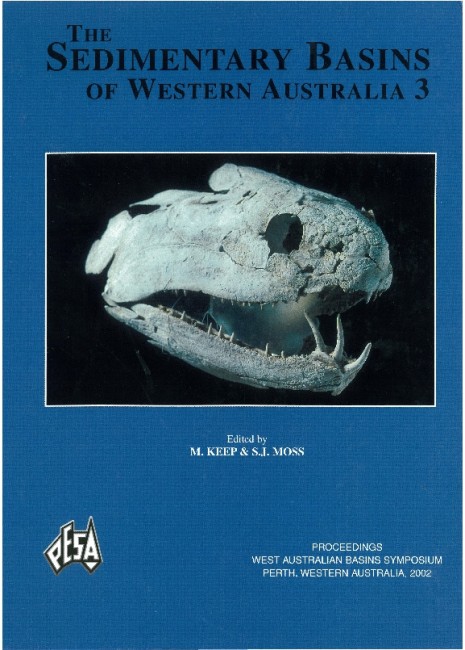
Publication Name: The Sedimentary Basins of WA

Authors: E. Kopsen

Publication Volume: 3

Date Published: December 2002

Number of Pages: 28

Reference Type: Book Section

Abstract:

The Northern Carnarvon Basin and the Northern Basins (Browse and Bonaparte basins, including the Vulcan Sub-basin) within the Westralian Superbasin have each now been tested by around 400 new field wildcat wells. The PSO (proven and probable) reserves and resources in the Carnarvon currently amount to some 96 trillion cubic (TCF) of gas, 1.8 billion barrels (BBO) of oil and nearly 1.5 billion barrels (BBC) of condensate. In comparison, the Northern Basins presently account for around 61 TCF of gas, 1.6 BBC and just 1/2 a BBO.
A clear pattern of discoveries has been recognised over many years with huge gas/ condensate fields lying in the
outer basin platform areas bounding deep Mesozoic hydrocarbon kitchen areas and more liquids-prone fairways in inshore areas.
An important liquids-rich component of the resources occurs through the aborted Jurassic rift centre (Central
Fairway) and these areas are still quite under-explored. Further exploration through the Inner Fairway in the
Northern Basins and in the Central Fairway areas should yield significant liquid reserves additions. Important trends have emerged over the last decade, namely:
? New Northern Carnarvon Basin discoveries in reservoirs sealed by formations older than the Muderong Shale regional seal.
? The emergence of the Exmouth Sub-basin as a significant new oil province with surprisingly little gas reserves in the total hydrocarbon mix.
? New large gas/condensate discoveries made in the Central Fairway of the Browse Basin, details of which remain scant.
The industry is also confronted by anomalies in the exploration record that still remain unresolved:
? The commercially unsuccessful exploration track record in the Vulcan Graben where prime Upper Jurassic marine source rocks have expelled around nine billion barrels of oil from just two small grabens.
? Limited success of the Echuca Shoals petroleum system in the Northern Basins, particularly in the Browse
Basin.
? No commercial production and few oil recoveries from offshore Palaeozoic reservoirs in the region, despite
frequent oil shows.
Nevertheless, the last decade has seen dramatic growth of hydrocarbon reserves and resources through exploration drilling on the Westralian Superbasin and the creaming curves for the region show no clear signs of "tailing-off". This is a healthy sign for future new field discoveries even though the discovery index, a measure of exploration success per metre drilled, has fallen away in the most mature basin, the Northern Carnarvon Basin.

Tags: Australian Billion Historical hydrocarbon perspective Superbasin Volumes

PESA - Petroleum Exploration Society of Australia

The Petroleum Exploration Society of Australia is a non-profit association of individuals involved in the exploration of oil and gas.

Connect with us

Subscribe to our newsletter and stay on the loop of what is happening in the petroleum industry and events near you.

pesa newsletter
* indicates required

Petroleum Exploration Society Of Australia Limited will use the information you provide on this form to be in touch with you and to provide updates and marketing. Please confirm you give us permission to contact you via your email address:

You can change your mind at any time by clicking the unsubscribe link in the footer of any email you receive from us. We will treat your information with respect. For more information about our privacy practices please visit our website. By clicking below, you agree that we may process your information in accordance with these terms.

We use Mailchimp as our marketing platform. By clicking below to subscribe, you acknowledge that your information will be transferred to Mailchimp for processing. Learn more about Mailchimp's privacy practices.

Copyright © 2025 PESA - Petroleum Exploration Society of Australia. All Rights Reserved.

  • Advertise
  • Contact
  • Policies
  • Privacy
  • Terms & Conditions