

• Member Login
  • |
  • Join Now
PESA - Energy Geoscience

Promoting Professional and Technical Excellence in Energy Geoscience – Networking, On-going Professional Education, Monthly Technical Meetings

  • Home
  • About
    • About PESA
    • Objectives
    • PESA History
    • PESA Affiliates
    • Constitution and Rules
    • Strategic Plan
  • Events
    • Online
    • NSW / ACT
    • QLD
    • SA / NT
    • VIC / TAS
    • WA
    • Industry
    • Social
    • Past Events
  • Membership
    • Join Us
    • APPEA Conference Discounts
    • AEGC 2025 Travel Bursaries
    • PESA Membership Awards
  • Latest News
    • All News
    • Feature Articles
    • Industry
    • Company Updates
    • Tech Talk (public)
    • PESA Branch Activities
  • Library
    • Technical Library
    • PESA Gazette
    • Webinars
    • PESA News Magazine
    • Knowledgette Recordings
  • Scholarships
  • Employment
    • View Job Opportunities
    • Submit Job
  • Contact

State of Stress in the Timor Sea Area based on Deep Wellbore Observations and Frictional Failure Criteria: Application to Fault-trap Integrity

18/12/1998 by Sharperedge

State of Stress in the Timor Sea Area based on Deep Wellbore Observations and Frictional Failure Criteria: Application to Fault-trap Integrity


Download Section

Please log in to download this file.

Alternatively, you can search for this item and individually purchase it from the PESA collection at AAPG DataPages

PESA collection at AAPG DataPages

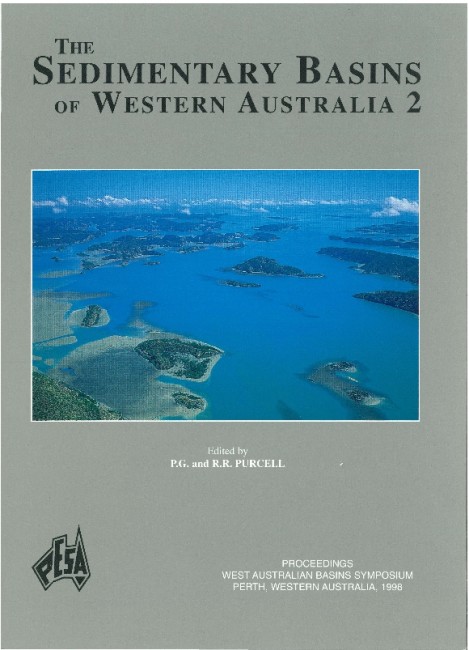
Publication Name: The Sedimentary Basins of WA

Authors: David A. Castillo, Richard R. Hillis, Keven Asquith and Mike Fischer

Publication Volume: 2

Date Published: December 1998

Number of Pages: 28

Reference Type: Book Section

Abstract:

A regional in situ stress analysis based on data collected in over thirty wells drilled in the Zone of Cooperation (ZOCA) 91-01, 91-12, 91-13, 95-16 and AC/PS have been used to better understand the mechanisms responsible for fault seal failure in the Timor Sea area. Details of the three-dimensional stress field are constrained by borehole images of wellbore failure inferred from electrical and acoustic data, and engineering pressure tests. This improved knowledge of the stress field has allowed us to determine the stresses operating on these faults and evaluate thelikelihood of fault seal failure.
Based on the style of wellbore failure and drilling test estimates Of Shmax in ZOCA 91-01 and northern sectors of 91-12, a strike-slip stress regime exists with SHmax > S, where the SHmax stress direction subparallels the convergence direction between Australia and Indonesia. A systematic variation in the stress field occurs within central ZOCA 91-12, such that SHmax is more northeast-southwest directed and Shmax stress magnitudes are reduced bringing the crust closer to a transitional strike-slip/normal faulting stress regime.
High frictional fault strength, implying a low probability of fault-seal failure, is a natural consequence of SHmax being approximately perpendicular to the east-west trending faults in the northernmost ZOCA 91-01 block. These observations are consistent with the discovery of the Laminaria, Corallina, and Jabal fields. The northeast-southwest SHmax stress direction in the southern sectors of ZOCA 91-01 and ZOCA 91-12 implies that the east-west trending reservoir faults are closer to shear failure, although, they remain outside the critical slip threshold. This is consistent with the discovery of the Kakatua, Elang and Bayu/Undan fields. However, secondary faults and fault-zone properties have profoundly contributed to the pattern of fault seal failures seen in several wells in the Timor Sea area. These secondary faults (imaged in seismic and wellbore data) include those faults that trend oblique to the regional trend, and therefore, are more optimally oriented for shear failure (e.g. Squilla, 1).

Tags: Application Area Criteria deep Failure fault Frictional integrity Observations Sea State Stress Timor trap

PESA - Energy Geoscience

PESA Energy Geoscience is a non-profit association of individuals involved in the exploration of oil and gas.

Connect with us

Subscribe to our newsletter and stay on the loop of what is happening in the field of Energy Geoscience and events near you.

pesa newsletter
* indicates required

PESA Energy Geoscience will use the information you provide on this form to be in touch with you and to provide updates and marketing. Please confirm you give us permission to contact you via your email address:

You can change your mind at any time by clicking the unsubscribe link in the footer of any email you receive from us. We will treat your information with respect. For more information about our privacy practices please visit our website. By clicking below, you agree that we may process your information in accordance with these terms.

We use Mailchimp as our marketing platform. By clicking below to subscribe, you acknowledge that your information will be transferred to Mailchimp for processing. Learn more about Mailchimp's privacy practices.

Copyright © 2025 PESA - Energy Geoscience. All Rights Reserved.

  • Advertise
  • Contact
  • Policies
  • Privacy
  • Terms & Conditions