

• Member Login
  • |
  • Join Now
PESA - Energy Geoscience

Promoting Professional and Technical Excellence in Energy Geoscience – Networking, On-going Professional Education, Monthly Technical Meetings

  • Home
  • About
    • About PESA
    • Objectives
    • PESA History
    • PESA Affiliates
    • Constitution and Rules
    • Strategic Plan
  • Events
    • Online
    • NSW / ACT
    • QLD
    • SA / NT
    • VIC / TAS
    • WA
    • Industry
    • Social
    • Past Events
  • Membership
    • Join Us
    • APPEA Conference Discounts
    • AEGC 2025 Travel Bursaries
    • PESA Membership Awards
  • Latest News
    • All News
    • Feature Articles
    • Industry
    • Company Updates
    • Tech Talk (public)
    • PESA Branch Activities
  • Library
    • Technical Library
    • PESA Gazette
    • Webinars
    • PESA News Magazine
    • Knowledgette Recordings
  • Scholarships
  • Employment
    • View Job Opportunities
    • Submit Job
  • Contact

Vagrant Oils: Geochemical Signposts to Unrecognised Petroleum Systems

18/12/1998 by Sharperedge

Vagrant Oils: Geochemical Signposts to Unrecognised Petroleum Systems


Download Section

Please log in to download this file.

Alternatively, you can search for this item and individually purchase it from the PESA collection at AAPG DataPages

PESA collection at AAPG DataPages

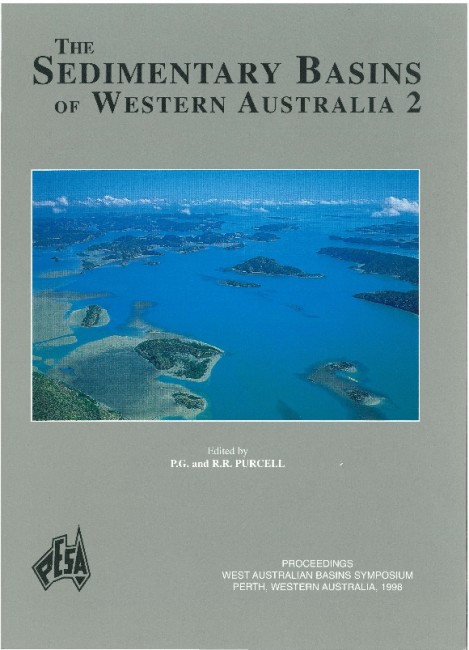
Publication Name: The Sedimentary Basins of WA

Authors: Roger E. Summons, Marita Bradshaw, James Crowley, Dianne S. Edwards, Simon C. George and John E. Zumberge

Publication Volume: 2

Date Published: December 1998

Number of Pages: 27

Reference Type: Book Section

Abstract:

Biodegraded oils and residual oil stains from wells in the Arafura, Bonaparte and Carnarvon basins have been chemically analysed and the data compared to a reference set for known petroleum systems of the western Australian margin. The biodegraded Wandoo and Stag oils are shown to be chemically related to the Barrow, Harriet, Bambra and Campbell accumulations and consequently part of the prolific Late Jurassic Westralian 2 Petroleum System. The biodegraded Arafura 1 oil shares many characteristics with early Palaeozoic oils of the Canning Basin and is logically classified within the Larapintine 1 Petroleum System. Other samples, termed 'vagrants', evade classification due to geochemical features which distinguish them from previously defined oil families. Residual oil in Dill 1 is chemically similar to the Leatherback 1 oil and is derived from a clastic marine
source rock with a predominant component of terrestrial organic matter. These oils are sufficiently distinct from the bulk of Westralian 2 oils to indicate a different source rock, although it is possibly a basin margin facies of the Upper Jurassic Dingo Claystone. Residual oil in Torrens 1 on the Londonderry High shares geochemical imilarities with oil from Dill and Leatherback suggesting that they were sourced from predominantly terrestrial organic matter. However, local geology suggests a probable Palaeozoic origin for this oil. Oil from the North Herald Field has some subtle features that distinguish it from nearby Westralian 2 oils of the Barrow Sub-basin and it may contain oil residues derived from an older calcareous marine source rock. The Torrens 1 oil appears to represent a new Bonaparte Basin petroleum system while Dill 1 and Leatherback 1 provide evidence for a new system in the Carnarvon Basin.

Tags: Geochemical Oil's petroleum Signposts systems Unrecognised Vagrant

PESA - Energy Geoscience

PESA Energy Geoscience is a non-profit association of individuals involved in the exploration of oil and gas.

Connect with us

Subscribe to our newsletter and stay on the loop of what is happening in the field of Energy Geoscience and events near you.

pesa newsletter
* indicates required

PESA Energy Geoscience will use the information you provide on this form to be in touch with you and to provide updates and marketing. Please confirm you give us permission to contact you via your email address:

You can change your mind at any time by clicking the unsubscribe link in the footer of any email you receive from us. We will treat your information with respect. For more information about our privacy practices please visit our website. By clicking below, you agree that we may process your information in accordance with these terms.

We use Mailchimp as our marketing platform. By clicking below to subscribe, you acknowledge that your information will be transferred to Mailchimp for processing. Learn more about Mailchimp's privacy practices.

Copyright © 2025 PESA - Energy Geoscience. All Rights Reserved.

  • Advertise
  • Contact
  • Policies
  • Privacy
  • Terms & Conditions