

• Member Login
  • |
  • Join Now
PESA - Energy Geoscience

Promoting Professional and Technical Excellence in Energy Geoscience – Networking, On-going Professional Education, Monthly Technical Meetings

  • Home
  • About
    • About PESA
    • Objectives
    • PESA History
    • PESA Affiliates
    • Constitution and Rules
    • Strategic Plan
  • Events
    • Online
    • NSW / ACT
    • QLD
    • SA / NT
    • VIC / TAS
    • WA
    • Industry
    • Social
    • Past Events
  • Membership
    • Join Us
    • APPEA Conference Discounts
    • AEGC 2025 Travel Bursaries
    • PESA Membership Awards
  • Latest News
    • All News
    • Feature Articles
    • Industry
    • Company Updates
    • Tech Talk (public)
    • PESA Branch Activities
  • Library
    • Technical Library
    • PESA Gazette
    • Webinars
    • PESA News Magazine
    • Knowledgette Recordings
  • Scholarships
  • Employment
    • View Job Opportunities
    • Submit Job
  • Contact

Polycyclic Rifting – An Interpretation of Gravity and Magnetics in the North West Shelf

17/12/1988 by Sharperedge

Polycyclic Rifting – An Interpretation of Gravity and Magnetics in the North West Shelf


Download Section

Please log in to download this file.

Alternatively, you can search for this item and individually purchase it from the PESA collection at AAPG DataPages

PESA collection at AAPG DataPages

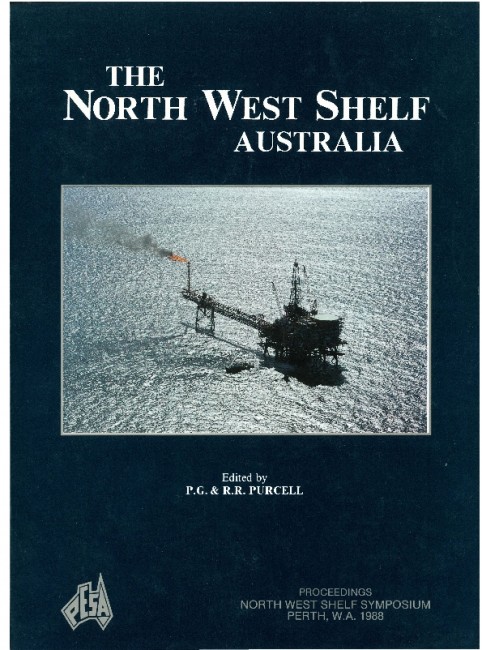
Publication Name: The North West Shelf Australia

Authors: V. Anfiloff

Date Published: July 1988

Number of Pages: 25

Reference Type: Book Section

Abstract:

Marine gravity surveys of the North West Shelf by the BMR between 1965 and 1968 provide a good indication of the tectonic framework. In most areas, gravity trends generally agree with seismic trends. In the Browse Basin, prominent linear gravity highs may be caused by extensive volcanism; in the Bonaparte Basin strong gravity anomalies reflect major deep structures. The marine magnetic coverage is less revealing; it shows some igneous activity, but little of the primary basement related structures, and is too sparse to show textural information. A systematic detailed aeromagnetic coverage would provide a better insight into deep igneous intrusives and shallow volcanic activity.
A polycyclic rift model developed in the Eromanga and Murray Basins and consistent with African rifting, can explain much of the primary framework. This framework, defined by gravity anomalies greater than 100 ums-2, is attributed to basement topography associated with vertical faults of the "Cardinal System", and igneous activity controlled by those faults. Magnetics show little of this framework. In many areas, basement ridges form a continuous bifurcating network, in which ridges isolate troughs from each other. Ridges also cut across troughs, producing compartments which can be intruded by acid or basic igneous rocks. It appears that basement ridges can also include igneous rocks from a previous cycle of rifting. Ridges may represent the propagation of horizontal
compression; and troughs, the zones of tension between ridges.
Structures under the Bonaparte Basin are interpreted in terms of polycyclic intracratonic rifting producing the characteristic gravity "dipole". The first cycle produces a basement ridge and a flanking trough which fills with dense volcanics. Later, the volcanics are incorporated in a new basement ridge, and two flanking rifts develop. The Dampier Sub-Basin may also be a polycyclic rift zone, underlain by granites of an older rift, and flanked by dense volcanics in the Rankin Platform, also from an older rift.

Tags: Gravity Magnetics North Polycyclic rifting shelf.

PESA - Energy Geoscience

PESA Energy Geoscience is a non-profit association of individuals involved in the exploration of oil and gas.

Connect with us

Subscribe to our newsletter and stay on the loop of what is happening in the field of Energy Geoscience and events near you.

pesa newsletter
* indicates required

PESA Energy Geoscience will use the information you provide on this form to be in touch with you and to provide updates and marketing. Please confirm you give us permission to contact you via your email address:

You can change your mind at any time by clicking the unsubscribe link in the footer of any email you receive from us. We will treat your information with respect. For more information about our privacy practices please visit our website. By clicking below, you agree that we may process your information in accordance with these terms.

We use Mailchimp as our marketing platform. By clicking below to subscribe, you acknowledge that your information will be transferred to Mailchimp for processing. Learn more about Mailchimp's privacy practices.

Copyright © 2025 PESA - Energy Geoscience. All Rights Reserved.

  • Advertise
  • Contact
  • Policies
  • Privacy
  • Terms & Conditions