

• Member Login
  • |
  • Join Now
PESA - Energy Geoscience

Promoting Professional and Technical Excellence in Energy Geoscience – Networking, On-going Professional Education, Monthly Technical Meetings

  • Home
  • About
    • About PESA
    • Objectives
    • PESA History
    • PESA Affiliates
    • Constitution and Rules
    • Strategic Plan
  • Events
    • Online
    • NSW / ACT
    • QLD
    • SA / NT
    • VIC / TAS
    • WA
    • Industry
    • Social
    • Past Events
  • Membership
    • Join Us
    • APPEA Conference Discounts
    • AEGC 2025 Travel Bursaries
    • PESA Membership Awards
  • Latest News
    • All News
    • Feature Articles
    • Industry
    • Company Updates
    • Tech Talk (public)
    • PESA Branch Activities
  • Library
    • Technical Library
    • PESA Gazette
    • Webinars
    • PESA News Magazine
    • Knowledgette Recordings
  • Scholarships
  • Employment
    • View Job Opportunities
    • Submit Job
  • Contact

The Geology of the Challis Oilfield – Timor Sea, Australia

17/12/1988 by Sharperedge

The Geology of the Challis Oilfield – Timor Sea, Australia


Download Section

Please log in to download this file.

Alternatively, you can search for this item and individually purchase it from the PESA collection at AAPG DataPages

PESA collection at AAPG DataPages

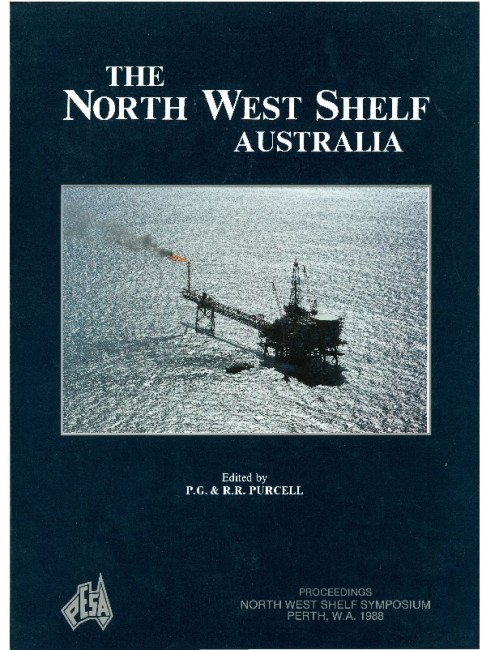
Publication Name: The North West Shelf Australia

Authors: G.B. Wormald

Date Published: July 1988

Number of Pages: 24

Reference Type: Book Section

Abstract:

The Challis oilfield, discovered in October 1984, is located within the Territory of Ashmore and Cartier Islands Licence AC/L3 in the Vulcan Sub-basin. Following the Challis-1 discovery well, a reconnaissance 3D seismic survey was conducted over the field and a further 4 wells were drilled. Oil columns, varying between 18 and 38 m, were intersected in all 5 wells and subsequent production testing resulted in oil flows of up to 9276 stb/day.
The oil accumulation is small, with reserves of around 20 MMBbls, and occurs in a low relief, fault dependent closure which covers an area of approximately 7 sq km with a maximum vertical relief of 55 m. Reactivation of pre-existing faults during Late Miocene tectonism has served to create a complex pattern of faulting not easily mapped by seismic methods. The Middle to Upper Triassic reservoir section was deposited in a marginal marine setting where sheet sands were formed by coalescing channels which migrated across a broad estuary or bay. These sands are interbedded with tidal flat, bay and shallow marine claystones, siltstones and carbonates. Reservoir quality is excellent in the main reservoir sand, the CS 2.3 Unit, where effective porosities average 29%
and horizontal permeabilities range between 500 and 7000 md. The 40? API Challis crude is a high quality,
undersaturated and unaltered paraffinic/napthenic oil which is likely to have been generated from Upper
Jurassic shales in the Swan Graben and Skua Trough, southwest of the Challis field.
On account of the complex faulting and thin reservoir sands which exist at Challis, water injection may be required. Oil production is due to commence in late 1989 using a Floating Production Facility.

Tags: Australia. Challis geology Oilfield Sea Timor

PESA - Energy Geoscience

PESA Energy Geoscience is a non-profit association of individuals involved in the exploration of oil and gas.

Connect with us

Subscribe to our newsletter and stay on the loop of what is happening in the field of Energy Geoscience and events near you.

pesa newsletter
* indicates required

PESA Energy Geoscience will use the information you provide on this form to be in touch with you and to provide updates and marketing. Please confirm you give us permission to contact you via your email address:

You can change your mind at any time by clicking the unsubscribe link in the footer of any email you receive from us. We will treat your information with respect. For more information about our privacy practices please visit our website. By clicking below, you agree that we may process your information in accordance with these terms.

We use Mailchimp as our marketing platform. By clicking below to subscribe, you acknowledge that your information will be transferred to Mailchimp for processing. Learn more about Mailchimp's privacy practices.

Copyright © 2025 PESA - Energy Geoscience. All Rights Reserved.

  • Advertise
  • Contact
  • Policies
  • Privacy
  • Terms & Conditions