

• Member Login
  • |
  • Join Now
PESA - Energy Geoscience

Promoting Professional and Technical Excellence in Energy Geoscience – Networking, On-going Professional Education, Monthly Technical Meetings

  • Home
  • About
    • About PESA
    • Objectives
    • PESA History
    • PESA Affiliates
    • Constitution and Rules
    • Strategic Plan
  • Events
    • Online
    • NSW / ACT
    • QLD
    • SA / NT
    • VIC / TAS
    • WA
    • Industry
    • Social
    • Past Events
  • Membership
    • Join Us
    • APPEA Conference Discounts
    • AEGC 2025 Travel Bursaries
    • PESA Membership Awards
  • Latest News
    • All News
    • Feature Articles
    • Industry
    • Company Updates
    • Tech Talk (public)
    • PESA Branch Activities
  • Library
    • Technical Library
    • PESA Gazette
    • Webinars
    • PESA News Magazine
    • Knowledgette Recordings
  • Scholarships
  • Employment
    • View Job Opportunities
    • Submit Job
  • Contact

The influence of pre-Jurassic tectonic regimes on the structural development of the southern Eromanga Basin, Queensland

17/12/1989 by Sharperedge

The influence of pre-Jurassic tectonic regimes on the structural development of the southern Eromanga Basin, Queensland


Download Section

Please log in to download this file.

Alternatively, you can search for this item and individually purchase it from the PESA collection at AAPG DataPages

PESA collection at AAPG DataPages

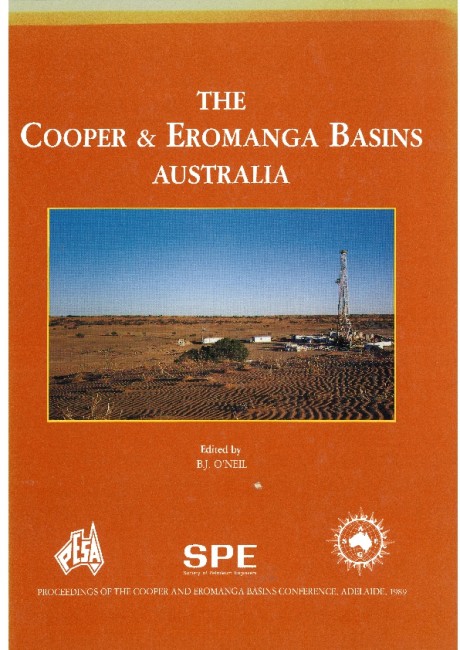
Publication Name: The Cooper & Eromanga Basins Australia

Authors: K.L. Hoffmann

Date Published: June 1989

Number of Pages: 28

Reference Type: Book Section

Abstract:

A structural study, including detailed seismic interpretation, of the southern Eromanga Basin, Queensland, has allowed determination of a sequence of structural events which have been age-correlated with plate tectonics. Widespread extension occurred during the Late Cretaceous to Palaeocene, followed by two episodes of compression. The initial extensional phase may have been associated with the rifting open of the Tasman Sea. The north-south compressional strain is probably a response to the increased interaction of the Australian and Pacific Plates during the Middle Oligocene-Miocene. The final east-west compression is tentatively dated as MioceneHolocene which is considered to be the age of uplift and tilting of the Eromanga Basin. These Tertiary compressional strains have been determined from an area where the Eromanga Basin sequence overlies competent basement devoid of any structural deformation. In areas overlying the Devonian extensional terranes, these Tertiary strains are obscured by the pre-existing basement features, which have controlled the structural style and trend of later deformation. The north-west trending features in the Tintaburra-Bodalla Oil Field region are inferred to have developed prior to hydrocarbon generation from Jurassic source rocks.

Tags: basin development Eromanga influence pre-Jurassic Queensland regimes southern structural tectonic

PESA - Energy Geoscience

PESA Energy Geoscience is a non-profit association of individuals involved in the exploration of oil and gas.

Connect with us

Subscribe to our newsletter and stay on the loop of what is happening in the field of Energy Geoscience and events near you.

pesa newsletter
* indicates required

PESA Energy Geoscience will use the information you provide on this form to be in touch with you and to provide updates and marketing. Please confirm you give us permission to contact you via your email address:

You can change your mind at any time by clicking the unsubscribe link in the footer of any email you receive from us. We will treat your information with respect. For more information about our privacy practices please visit our website. By clicking below, you agree that we may process your information in accordance with these terms.

We use Mailchimp as our marketing platform. By clicking below to subscribe, you acknowledge that your information will be transferred to Mailchimp for processing. Learn more about Mailchimp's privacy practices.

Copyright © 2025 PESA - Energy Geoscience. All Rights Reserved.

  • Advertise
  • Contact
  • Policies
  • Privacy
  • Terms & Conditions