

• Member Login
  • |
  • Join Now
PESA - Energy Geoscience

Promoting Professional and Technical Excellence in Energy Geoscience – Networking, On-going Professional Education, Monthly Technical Meetings

  • Home
  • About
    • About PESA
    • Objectives
    • PESA History
    • PESA Affiliates
    • Constitution and Rules
    • Strategic Plan
  • Events
    • Online
    • NSW / ACT
    • QLD
    • SA / NT
    • VIC / TAS
    • WA
    • Industry
    • Social
    • Past Events
  • Membership
    • Join Us
    • APPEA Conference Discounts
    • AEGC 2025 Travel Bursaries
    • PESA Membership Awards
  • Latest News
    • All News
    • Feature Articles
    • Industry
    • Company Updates
    • Tech Talk (public)
    • PESA Branch Activities
  • Library
    • Technical Library
    • PESA Gazette
    • Webinars
    • PESA News Magazine
    • Knowledgette Recordings
  • Scholarships
  • Employment
    • View Job Opportunities
    • Submit Job
  • Contact

Significance of Airborne Magnetic and Gamma Spectrometric Anomalies over the Eastern Margin of the Canning Basin

17/12/1984 by Sharperedge

Significance of Airborne Magnetic and Gamma Spectrometric Anomalies over the Eastern Margin of the Canning Basin


Download Section

Please log in to download this file.

Alternatively, you can search for this item and individually purchase it from the PESA collection at AAPG DataPages

PESA collection at AAPG DataPages

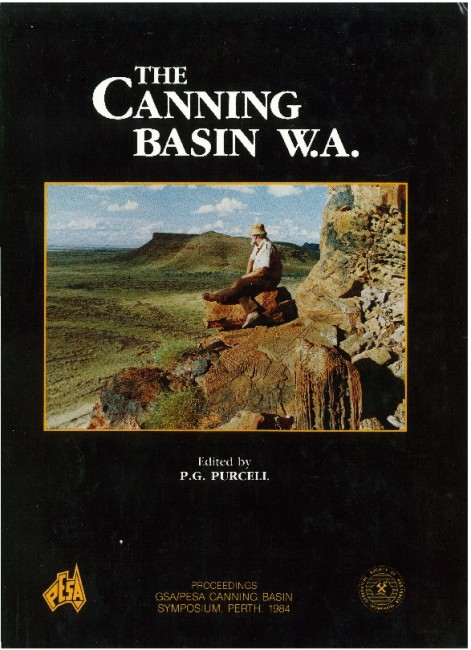
Publication Name: The Canning Basin, W.A.

Authors: D.H. Tucker, M. Bacchin and R. Almond

Date Published: December 1984

Number of Pages: 31

Reference Type: Book Section

Abstract:

The BMR 1980 regional airborne survey used 1500m line spacing and 150m continuous ground clearance and
provides new detail of both short and long wavelength magnetic anomalies, not evident in earlier wide line spacing constant altitude surveys over the Canning Basin.
Long wavelength magnetic anomalies indicate sources at depths of lOkm or more beneath Proterozoic rocks.Some of these anomalies trend subparallel to the northwest-southeast axis of the basin, possibly indicating a deep crustal control on all basins in the area. Crosscutting breaks in the short wavelength magnetic
pattern trend 45 to 55 degrees. They extend basinwards from the Proterozoic rocks across the Phanerozoic cover, indicating basement controlled fractures with a long history of movement.
Short wavelength magnetic anomalies (15-20km) may indicate intrasedimentary magnetic horizons in the Permian sediments near Carnegie Bluff. Surface sporadic anomalies were detected in at least three areas and are probably caused by surface maghemite. There is the possibility that some of the anomalies may be of interest as petroleum related magnetite or igneous intrusion related features.
The gamma spectrometric pattern shows the most prominent high count rates over the general area of Permian
outcrop in Lucas and Stansmore. This is attributed to elevated Thalium 208 (Thorium) and less Bismuth 214 (Uranium) concentrations in laterite capping. Trends of various zones of highs approximately 5-10km across appear to trace closures around various structures. Good examples occur near Point Moody No.1. Such features are likely to be caused by the combined effects of structure and laterite exposure.
Surveys flown over the rest of the Canning Basin with parameters similar to those of the BMR survey are likely
to reveal significant new information to aid exploration. The information would relate not only to basin
framework, geological mapping and structure, but may also may include identification of intrasedimentary
magnetic beds and igneous intrusions, and possible detection of indicators of radioactive minerals, fluid migration paths, and subsurface hydrocarbons.

Tags: Anomalies basin Canning eastern Gamma Magnetic margin Significance Spectrometric

PESA - Energy Geoscience

PESA Energy Geoscience is a non-profit association of individuals involved in the exploration of oil and gas.

Connect with us

Subscribe to our newsletter and stay on the loop of what is happening in the field of Energy Geoscience and events near you.

pesa newsletter
* indicates required

PESA Energy Geoscience will use the information you provide on this form to be in touch with you and to provide updates and marketing. Please confirm you give us permission to contact you via your email address:

You can change your mind at any time by clicking the unsubscribe link in the footer of any email you receive from us. We will treat your information with respect. For more information about our privacy practices please visit our website. By clicking below, you agree that we may process your information in accordance with these terms.

We use Mailchimp as our marketing platform. By clicking below to subscribe, you acknowledge that your information will be transferred to Mailchimp for processing. Learn more about Mailchimp's privacy practices.

Copyright © 2025 PESA - Energy Geoscience. All Rights Reserved.

  • Advertise
  • Contact
  • Policies
  • Privacy
  • Terms & Conditions