

• Member Login
  • |
  • Join Now
PESA - Energy Geoscience

Promoting Professional and Technical Excellence in Energy Geoscience – Networking, On-going Professional Education, Monthly Technical Meetings

  • Home
  • About
    • About PESA
    • Objectives
    • PESA History
    • PESA Affiliates
    • Constitution and Rules
    • Strategic Plan
  • Events
    • Online
    • NSW / ACT
    • QLD
    • SA / NT
    • VIC / TAS
    • WA
    • Industry
    • Social
    • Past Events
  • Membership
    • Join Us
    • APPEA Conference Discounts
    • AEGC 2025 Travel Bursaries
    • PESA Membership Awards
  • Latest News
    • All News
    • Feature Articles
    • Industry
    • Company Updates
    • Tech Talk (public)
    • PESA Branch Activities
  • Library
    • Technical Library
    • PESA Gazette
    • Webinars
    • PESA News Magazine
    • Knowledgette Recordings
  • Scholarships
  • Employment
    • View Job Opportunities
    • Submit Job
  • Contact

Seismic stratigraphy and crustal structure of offshore Wilkes Land, Antarctica

17/12/1986 by Sharperedge

Seismic stratigraphy and crustal structure of offshore Wilkes Land, Antarctica


Download Section

Please log in to download this file.

Alternatively, you can search for this item and individually purchase it from the PESA collection at AAPG DataPages

PESA collection at AAPG DataPages

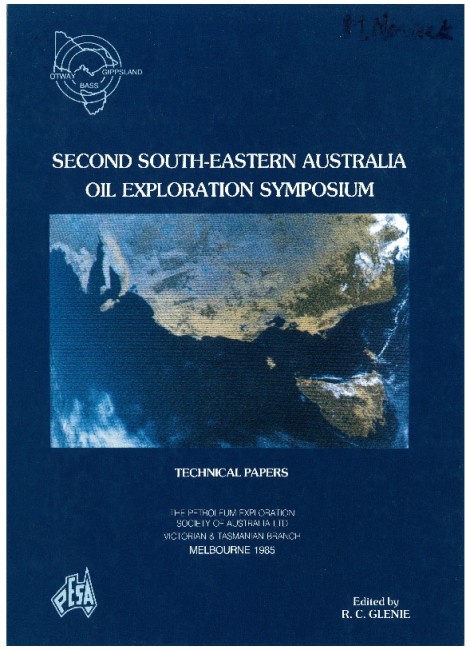
Publication Name: Second South-Eastern Australia Oil Exploration Symposium - Technical Papers

Authors: H.M.J. Stagg, J.J. Veevers, S.L. Eittreim and J.R. Childs

Date Published: December 1986

Number of Pages: 16

Reference Type: Book Section

Abstract:

Multichannel seismic and other geophysical data from the Wilkes Land continental margin reveal that continental crust thins oceanwards by extension in fault-blocks of the lowermost strata. Near the mid Cretaceous continent-ocean boundary, the continental crust, measured from the top of the fault-blocks to Moho, thins to as little as 3 km, and is overlain by high-amplitude reflectors interpreted as flood basalts. The Moho deepens from about 12 km under oceanic crust, to 17 km under the continental rise, and 20+ km under the upper slope.
Four major seismic sequences, with a maximum total thickness of about 7 km, are recognised. The uppermost sequence, A, is a highly stratified series of channel levee and contourite deposits deeply cut by canyons above 3500 m water depth. Below a highly reflective unconformity, sequence B is poorly stratified and probably represents a shallow-water shelf deposit. Sequence B downlaps onto surface K1 that marks the uppermost limit of faulting and which in turn downlaps onto the hummocky edge of the oldest oceanic crust. Below K1, sequence C displays a highly variable reflector pattern, with numerous faults of short throw and variable bedding angles. The base of sequence C is an erosional surface (K2) along the tops of fault blocks of the lowermost sequence (D), which is a distinctive set of layered blocks separated by low-angle normal faults.
Two interpretations are offered: (1) K1 is the breakup unconformity, and K2 the rift-onset unconformity, in which case sequence D is probably older than Cretaceous (?Beacon Supergroup), or (2) K2 is the breakup unconformity, the base of sequence D is the rift-onset unconformity, and hence sequence D is of Early Cretaceous age (consistent with the southern margin of Australia).

Tags: Antarctica Crustal land offshore Seismic stratigraphy structure Wilkes

PESA - Energy Geoscience

PESA Energy Geoscience is a non-profit association of individuals involved in the exploration of oil and gas.

Connect with us

Subscribe to our newsletter and stay on the loop of what is happening in the field of Energy Geoscience and events near you.

pesa newsletter
* indicates required

PESA Energy Geoscience will use the information you provide on this form to be in touch with you and to provide updates and marketing. Please confirm you give us permission to contact you via your email address:

You can change your mind at any time by clicking the unsubscribe link in the footer of any email you receive from us. We will treat your information with respect. For more information about our privacy practices please visit our website. By clicking below, you agree that we may process your information in accordance with these terms.

We use Mailchimp as our marketing platform. By clicking below to subscribe, you acknowledge that your information will be transferred to Mailchimp for processing. Learn more about Mailchimp's privacy practices.

Copyright © 2025 PESA - Energy Geoscience. All Rights Reserved.

  • Advertise
  • Contact
  • Policies
  • Privacy
  • Terms & Conditions