

• Member Login
  • |
  • Join Now
PESA - Energy Geoscience

Promoting Professional and Technical Excellence in Energy Geoscience – Networking, On-going Professional Education, Monthly Technical Meetings

  • Home
  • About
    • About PESA
    • Objectives
    • PESA History
    • PESA Affiliates
    • Constitution and Rules
    • Strategic Plan
  • Events
    • Online
    • NSW / ACT
    • QLD
    • SA / NT
    • VIC / TAS
    • WA
    • Industry
    • Social
    • Past Events
  • Membership
    • Join Us
    • APPEA Conference Discounts
    • AEGC 2025 Travel Bursaries
    • PESA Membership Awards
  • Latest News
    • All News
    • Feature Articles
    • Industry
    • Company Updates
    • Tech Talk (public)
    • PESA Branch Activities
  • Library
    • Technical Library
    • PESA Gazette
    • Webinars
    • PESA News Magazine
    • Knowledgette Recordings
  • Scholarships
  • Employment
    • View Job Opportunities
    • Submit Job
  • Contact

A history of the search for commercial hydrocarbons in the Otway Basin complex

17/12/1986 by Sharperedge

A history of the search for commercial hydrocarbons in the Otway Basin complex


Download Section

Please log in to download this file.

Alternatively, you can search for this item and individually purchase it from the PESA collection at AAPG DataPages

PESA collection at AAPG DataPages

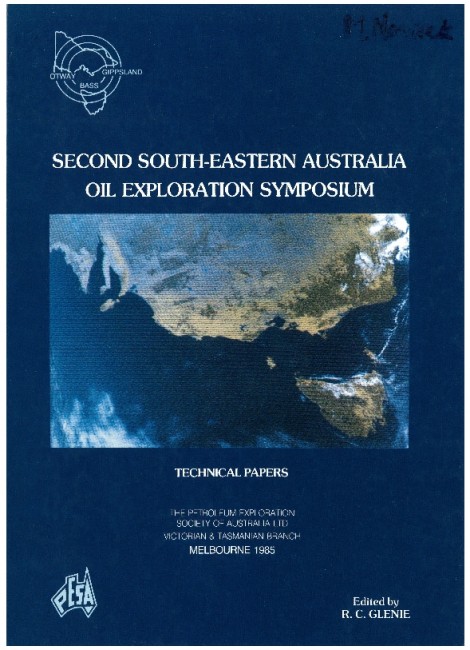
Publication Name: Second South-Eastern Australia Oil Exploration Symposium - Technical Papers

Authors: R.C. Sprigg

Date Published: December 1986

Number of Pages: 39

Reference Type: Book Section

Abstract:

Botryococcus algal scums (coorongite) on sub-coastal lagoons and offshore oil seeps, resulting in the stranding
of 'coastal bitumen' at not infrequent intervals along the southern Australian coasts, initiated the first oil drilling in Australia in 1866. The first well in the Otway Basin was drilled near Kingston in 1892. From 1915 drilling was spurred on by the search for surface expressed anticlines. In the ninety or so years since drilling commenced, more than 120 exploration wells have been drilled for the discovery of only three small gas fields, notably by Beach Petroleum NL near Port Campbell, and the recording of numerous gas and oil shows principally in Cretaceous age sediments, but more recently in the basal Tertiary Pebble Point Formation. Exploration drilling peaked in the 1960s (30 land wells; 11 offshore wells) with the drilling of a total 95,126 metres of hole. This immediately followed the initial natural gas discovery at Port Campbell by the Frome-Broken Hill Group in 1959.
Relatively intense faulting, typical of early and late stages in Atlantic-type coastal pull-apart tectonics, combined with relatively poor quality early seismic data, has undoubtedly delayed more widespread discovery to this time. Regarded as of relatively low source-bed potential, the voluminous Lower Cretaceous Otway beds give evidence of coorongitesourced oil generation and natural gas from coaly detritus. Deterioration of reservoir beds at greater depths is obviously a problem.
The graben-type Otway 'Infra-basin' gave way in later Cretaceous times to half-graben extension and finally Tertiary pull-apart tectonics and extension.
The basin complex is obviously a difficult and geologically complex area to explore, demanding application of the latest state-of-the-art seismic technology. Many small oil and gas fields will eventually be found, but the basin is not likely to be a flush producer.

Tags: basin commercial Complex history hydrocarbons Otway Search

PESA - Energy Geoscience

PESA Energy Geoscience is a non-profit association of individuals involved in the exploration of oil and gas.

Connect with us

Subscribe to our newsletter and stay on the loop of what is happening in the field of Energy Geoscience and events near you.

pesa newsletter
* indicates required

PESA Energy Geoscience will use the information you provide on this form to be in touch with you and to provide updates and marketing. Please confirm you give us permission to contact you via your email address:

You can change your mind at any time by clicking the unsubscribe link in the footer of any email you receive from us. We will treat your information with respect. For more information about our privacy practices please visit our website. By clicking below, you agree that we may process your information in accordance with these terms.

We use Mailchimp as our marketing platform. By clicking below to subscribe, you acknowledge that your information will be transferred to Mailchimp for processing. Learn more about Mailchimp's privacy practices.

Copyright © 2025 PESA - Energy Geoscience. All Rights Reserved.

  • Advertise
  • Contact
  • Policies
  • Privacy
  • Terms & Conditions