

• Member Login
  • |
  • Join Now
PESA - Energy Geoscience

Promoting Professional and Technical Excellence in Energy Geoscience – Networking, On-going Professional Education, Monthly Technical Meetings

  • Home
  • About
    • About PESA
    • Objectives
    • PESA History
    • PESA Affiliates
    • Constitution and Rules
    • Strategic Plan
  • Events
    • Online
    • NSW / ACT
    • QLD
    • SA / NT
    • VIC / TAS
    • WA
    • Industry
    • Social
    • Past Events
  • Membership
    • Join Us
    • APPEA Conference Discounts
    • AEGC 2025 Travel Bursaries
    • PESA Membership Awards
  • Latest News
    • All News
    • Feature Articles
    • Industry
    • Company Updates
    • Tech Talk (public)
    • PESA Branch Activities
  • Library
    • Technical Library
    • PESA Gazette
    • Webinars
    • PESA News Magazine
    • Knowledgette Recordings
  • Scholarships
  • Employment
    • View Job Opportunities
    • Submit Job
  • Contact

Improving fault geometry interpretation through ‘pseudo-depth’ conversion of seismic data in the Penola Trough, Otway Basin

16/12/2004 by Sharperedge

Improving fault geometry interpretation through ‘pseudo-depth’ conversion of seismic data in the Penola Trough, Otway Basin


Download Section

Please log in to download this file.

Alternatively, you can search for this item and individually purchase it from the PESA collection at AAPG DataPages

PESA collection at AAPG DataPages

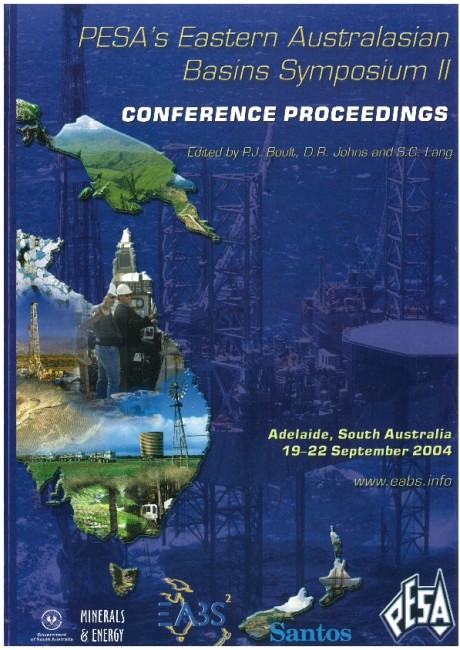
Publication Name: PESA's Eastern Australasian Basin Symposium II

Authors: P.J. Lyon, P.J. Boult, A. Mitchell and R.R. Hillis

Date Published: December 2004

Number of Pages: 29

Reference Type: Book Section

Abstract:

Accurate interpretation of fault geometry is essential to the assessment of fault seal integrity in the Penola Trough, Otway Basin. Fault geometries in the Penola Trough are variable with complex kinematic interactions between younger, Early Cretaceous and older, Late Cretaceous fault populations. This complexity, combined with issues of seismic data quality, makes interpretation of fault geometry particularly difficult.
A laterally invariant velocity function was applied to the seismic time data of the area to redisplay the seismic in a form that gives a better representation of depth, here termed 'pseudo-depth' conversion. This technique appears to work well in the Penola Trough where lateral velocity variation, as revealed by well data and stacking velocities, is minimal. This new pseudo-depth seismic data set has shown that many of the apparent listric fault geometries in time data are in fact planar. Pseudo-depth conversion has also improved the clarity of the seismic data and shows almost identical depth matching of structure and horizon interpretation when compared with pre-stack depth-migrated sections.
The insights into fault geometry, which pseudo-depth seismic data provides, is having significant impact on a new structural interpretation of the Penola Trough. Different structural styles and the kinematic relationships of different fault populations are more clearly discernable on pseudo-depth seismic sections. This paper therefore demonstrates how depth conversion of time seismic data has provided a better domain in which to view, analyse and interpret fault geometry than the conventional time domain.

Tags: Depth conversion fault geometry faultsealanalysis. structural interpretation velocity function

PESA - Energy Geoscience

PESA Energy Geoscience is a non-profit association of individuals involved in the exploration of oil and gas.

Connect with us

Subscribe to our newsletter and stay on the loop of what is happening in the field of Energy Geoscience and events near you.

pesa newsletter
* indicates required

PESA Energy Geoscience will use the information you provide on this form to be in touch with you and to provide updates and marketing. Please confirm you give us permission to contact you via your email address:

You can change your mind at any time by clicking the unsubscribe link in the footer of any email you receive from us. We will treat your information with respect. For more information about our privacy practices please visit our website. By clicking below, you agree that we may process your information in accordance with these terms.

We use Mailchimp as our marketing platform. By clicking below to subscribe, you acknowledge that your information will be transferred to Mailchimp for processing. Learn more about Mailchimp's privacy practices.

Copyright © 2025 PESA - Energy Geoscience. All Rights Reserved.

  • Advertise
  • Contact
  • Policies
  • Privacy
  • Terms & Conditions