

• Member Login
  • |
  • Join Now
PESA - Energy Geoscience

Promoting Professional and Technical Excellence in Energy Geoscience – Networking, On-going Professional Education, Monthly Technical Meetings

  • Home
  • About
    • About PESA
    • Objectives
    • PESA History
    • PESA Affiliates
    • Constitution and Rules
    • Strategic Plan
  • Events
    • Online
    • NSW / ACT
    • QLD
    • SA / NT
    • VIC / TAS
    • WA
    • Industry
    • Social
    • Past Events
  • Membership
    • Join Us
    • APPEA Conference Discounts
    • AEGC 2025 Travel Bursaries
    • PESA Membership Awards
  • Latest News
    • All News
    • Feature Articles
    • Industry
    • Company Updates
    • Tech Talk (public)
    • PESA Branch Activities
  • Library
    • Technical Library
    • PESA Gazette
    • Webinars
    • PESA News Magazine
    • Knowledgette Recordings
  • Scholarships
  • Employment
    • View Job Opportunities
    • Submit Job
  • Contact

The in situ stress field of the Cooper Basin and its implications for hot dry rock geothermal energy development

16/12/2004 by Sharperedge

The in situ stress field of the Cooper Basin and its implications for hot dry rock geothermal energy development


Download Section

Please log in to download this file.

Alternatively, you can search for this item and individually purchase it from the PESA collection at AAPG DataPages

PESA collection at AAPG DataPages

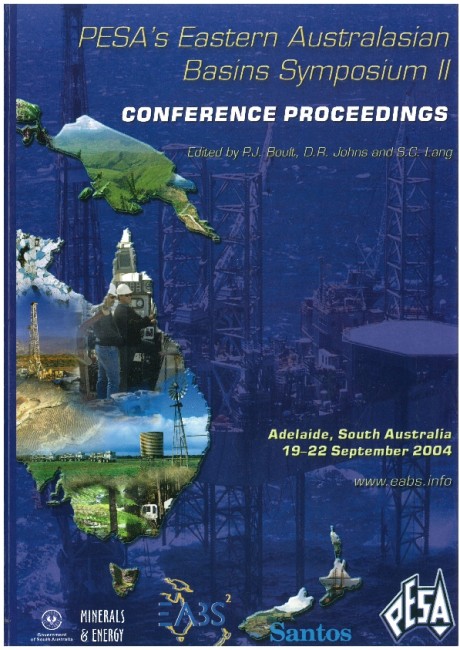
Publication Name: PESA's Eastern Australasian Basin Symposium II

Authors: S.D. Reynolds, S.D. Mildren, R.R. Hillis and J.J. Meyer

Date Published: December 2004

Number of Pages: 27

Reference Type: Book Section

Abstract:

Hot dry rock (HDR) geothermal energy resources are currently being investigated in the Cooper Basin, an area with a high geothermal gradient. The in situ stress field and natural fracture network are critical to the design of the subsurface circulation system in any HDR development. This study uses knowledge of the in situ stress field from petroleum-based data in the Cooper Basin to predict the likely stress conditions in basement granite bodies and thus determine the most probable fluid flow paths. In situ stress data indicate a relatively consistent maximum horizontal stress orientation of 101 in the Cooper Basin and a transitional strike-slip to reverse faulting stress regime. Exploration for HDR geothermal energy should target areas with a high geothermal gradient and a reverse faulting stress regime. In a reverse faulting stress regime, shallowly dipping fractures have the highest permeability. Fluid flow is predicted to be focussed in the intermediate principal stress direction because this is the direction in which the elements of structural permeability intersect. Hence, in a reverse faulting stress regime in the Cooper Basin, fluid flow would be focussed in the minimum horizontal stress or north-south direction. Vertical conjugate shear fractures striking 073? and 133? have the greatest permeability in a strike-slip faulting stress regime where the intermediate principal stress and thus fluid flow is likely to be focussed vertically. Production and injection wells should be aligned in the direction of maximum fluid flow and configured to intersect the greatest number of permeable fractures.

Tags: CooperBasin. geothermal energy hot dry rock stress field

PESA - Energy Geoscience

PESA Energy Geoscience is a non-profit association of individuals involved in the exploration of oil and gas.

Connect with us

Subscribe to our newsletter and stay on the loop of what is happening in the field of Energy Geoscience and events near you.

pesa newsletter
* indicates required

PESA Energy Geoscience will use the information you provide on this form to be in touch with you and to provide updates and marketing. Please confirm you give us permission to contact you via your email address:

You can change your mind at any time by clicking the unsubscribe link in the footer of any email you receive from us. We will treat your information with respect. For more information about our privacy practices please visit our website. By clicking below, you agree that we may process your information in accordance with these terms.

We use Mailchimp as our marketing platform. By clicking below to subscribe, you acknowledge that your information will be transferred to Mailchimp for processing. Learn more about Mailchimp's privacy practices.

Copyright © 2025 PESA - Energy Geoscience. All Rights Reserved.

  • Advertise
  • Contact
  • Policies
  • Privacy
  • Terms & Conditions