

Please log in to your active PESA member account in order to view this video.
Publication Name: PESA Webinar Series
Authors: Fernando Valencia Fermin (Santos)
Date Published: September 2025
Abstract:
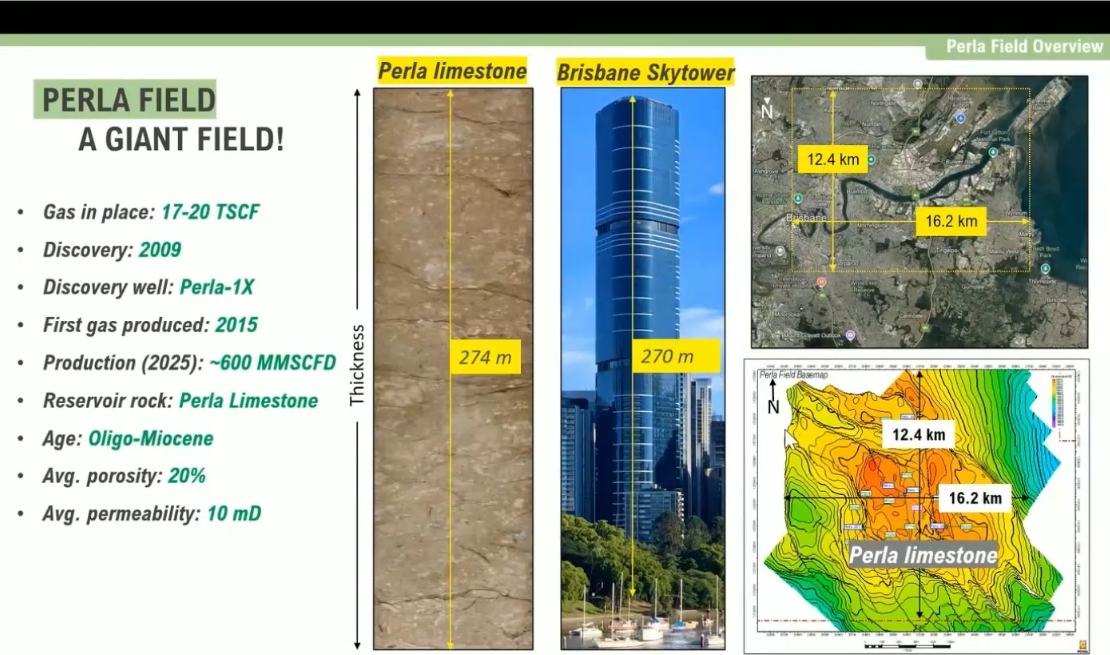
Diagenesis comprise all the physical, chemical, and biological modifications underwent by a sediment, after its initial deposition, during and after lithification but before reaching pressures and temperatures proper of metamorphism. Burial diagenesis, in particular, refers to the diagenetic modifications occurred due to the influence of burial processes in the mesogenetic environment. The study of diagenesis is important in both siliciclastic and carbonate reservoirs; however, they are key in the latter since they are more chemically reactive. The Perla Limestone, an Oligo-Miocene carbonate reservoir located in the Gulf of Venezuela Basin, considered the largest gas field in Latin America (>17 Tscf of gas in place), shows a complex porosity system marked by a strong diagenetic control. Despite comprehensive depositional facies modelling carried out in this reservoir, inconsistencies remained when distributing petrophysical properties with depositional facies. Specifically, in areas strongly affected by diagenetic processes since they constitute a complex variable to reproduce in a predictive reservoir quality-model. In order to understand the impact of diagenesis in the Perla Limestone, and its distribution along the carbonate succession; a detailed petrographic, mineralogical and chemical analysis on well-cores was performed. As a result, several diagenetic processes that created and destroyed porosity and permeability were identified and grouped chronologically in function of the evolution of the diagenetic environment. Within these processes, an important burial dissolution process, likely linked to the ascent of CO2-rich fluids mediated by basement-root faults, fractures, and stylolites allowed the development of pervasive secondary porosity in the vicinity of the major discontinuity surfaces. On the other hand, blocky-calcite cementation in the near surface to shallow burial environment, and the progressive mechanical compaction in the burial realm, were the main responsible for reservoir quality destruction.