

• Member Login
  • |
  • Join Now
PESA - Energy Geoscience

Promoting Professional and Technical Excellence in Energy Geoscience – Networking, On-going Professional Education, Monthly Technical Meetings

  • Home
  • About
    • About PESA
    • Objectives
    • PESA History
    • PESA Affiliates
    • Constitution and Rules
    • Strategic Plan
  • Events
    • Online
    • NSW / ACT
    • QLD
    • SA / NT
    • VIC / TAS
    • WA
    • Industry
    • Social
    • Past Events
  • Membership
    • Join Us
    • APPEA Conference Discounts
    • AEGC 2025 Travel Bursaries
    • PESA Membership Awards
  • Latest News
    • All News
    • Feature Articles
    • Industry
    • Company Updates
    • Tech Talk (public)
    • PESA Branch Activities
  • Library
    • Technical Library
    • PESA Gazette
    • Webinars
    • PESA News Magazine
    • Knowledgette Recordings
  • Scholarships
  • Employment
    • View Job Opportunities
    • Submit Job
  • Contact

‘The role of ESSO Univis J-26 and similar substances in source rock contamination, 1986 to 1992

09/12/1998 by Sharperedge

‘The role of ESSO Univis J-26 and similar substances in source rock contamination, 1986 to 1992


Download Section

Please log in to download this file.

Alternatively, you can search for this item and individually purchase it from the PESA collection at AAPG DataPages

PESA collection at AAPG DataPages

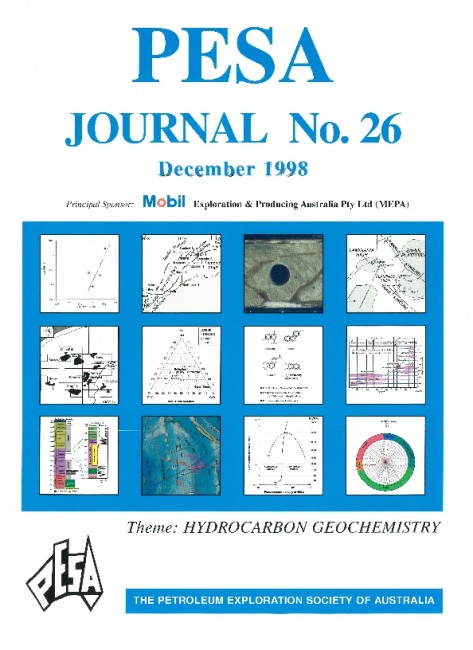
Publication Name: PESA Journal No. 26

Authors: John D. Gorter

Publication Volume: 26

Date Published: December 1998

Number of Pages: 12

Reference Type: Journal Article

Abstract:

A particular type of source rock contamination is
geographically widespread in the Timor Sea. First
recognised from Bond Petroleum's Avocet 1A, Barita 1, and
Cygnet 1, drilled on the Londonderry High in the late 1980s,
the contamination was attributed to the compound ESSO
Univis J-26. Similar contamination on the C12? saturate
chromatograms has been detected in wells drilled between
1990 and 1992 by different operators. ESSO Univis J-26
has been implicated in increasing the apparent hydrocarbon
potential of argillaceous rocks, which if not recognised
could lead to erroneous conclusions of the generative
capacity of potential petroleum source rocks. The
contaminant occurs in samples with total organic carbon
contents ranging from less than 0.5% to over 4%. As only
some of these samples show evidence of migrated
hydrocarbons, it is concluded that the contaminant has only
minimal effect on source rock quantity.

Tags: contamination ESSOUnivisJ-26. Journal source rocks

PESA - Energy Geoscience

PESA Energy Geoscience is a non-profit association of individuals involved in the exploration of oil and gas.

Connect with us

Subscribe to our newsletter and stay on the loop of what is happening in the field of Energy Geoscience and events near you.

pesa newsletter
* indicates required

PESA Energy Geoscience will use the information you provide on this form to be in touch with you and to provide updates and marketing. Please confirm you give us permission to contact you via your email address:

You can change your mind at any time by clicking the unsubscribe link in the footer of any email you receive from us. We will treat your information with respect. For more information about our privacy practices please visit our website. By clicking below, you agree that we may process your information in accordance with these terms.

We use Mailchimp as our marketing platform. By clicking below to subscribe, you acknowledge that your information will be transferred to Mailchimp for processing. Learn more about Mailchimp's privacy practices.

Copyright © 2025 PESA - Energy Geoscience. All Rights Reserved.

  • Advertise
  • Contact
  • Policies
  • Privacy
  • Terms & Conditions