• Member Login
  • |
  • Join Now
PESA - Energy Geoscience

Promoting Professional and Technical Excellence in Energy Geoscience – Networking, On-going Professional Education, Monthly Technical Meetings

  • Home
  • About
    • About PESA
    • Objectives
    • PESA History
    • PESA Affiliates
    • Constitution and Rules
    • Strategic Plan
  • Events
    • Online
    • NSW / ACT
    • QLD
    • SA / NT
    • VIC / TAS
    • WA
    • Industry
    • Social
    • Past Events
  • Membership
    • Join Us
    • APPEA Conference Discounts
    • AEGC 2025 Travel Bursaries
    • PESA Membership Awards
  • Latest News
    • All News
    • Feature Articles
    • Industry
    • Company Updates
    • Tech Talk (public)
    • PESA Branch Activities
  • Library
    • Technical Library
    • PESA Gazette
    • Webinars
    • PESA News Magazine
    • Knowledgette Recordings
  • Scholarships
  • Employment
    • View Job Opportunities
    • Submit Job
  • Contact
Feature Articles
Industry

Hydrogen ICE Vehicle Shipments to Hit 400,000 by 2040

Posted by Dale | 09/01/2023

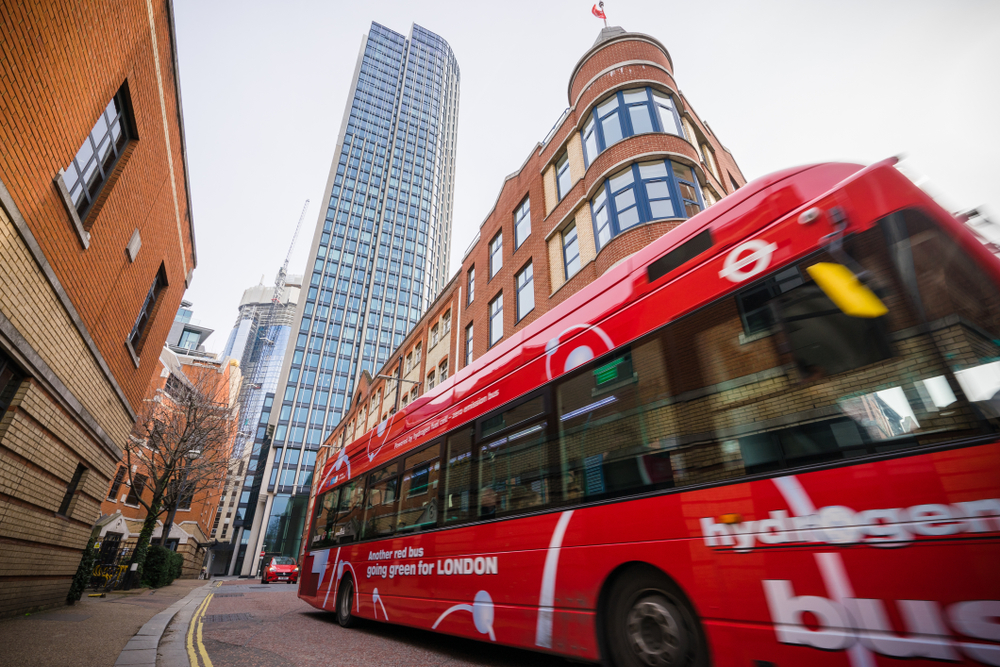
Hydrogen Bus

09/01/2023 by Dale

share
share
tweet

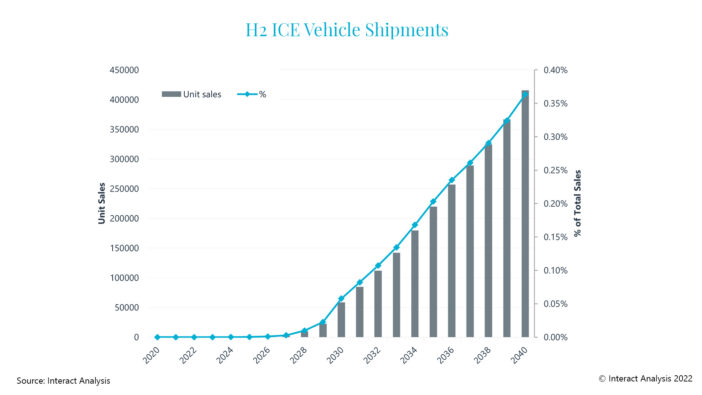
New research from Interact Analysis shows that hydrogen ICE vehicles are in their infancy in terms of rollout. However, mass production is predicted to take off within 5 years.

Although the costs of the engine and the vehicles themselves are relatively low, their running costs are currently high, making the total cost of ownership (TCO) unfavourable. This, coupled with the lack of refuelling infrastructure required, means they are less attractive compared with fuel cell and battery electric alternatives.

Hydrogen ICE vehicles require a series of minor changes compared with traditional ICE vehicles, including different spark plugs and other changes to materials. On their own, individual changes do not present too much of a challenge, but in combination the total cost of manufacturing the vehicle soars. In addition to this, adding greater complexity increases the potential risks once the vehicle is in mass production. Hydrogen ICE vehicles are most attractive to those companies who are most climate aware, or where battery electric alternatives are either unavailable for a particular vehicle or not fit for purpose. Without either of these catalysts for adoption, uptake of hydrogen ICE vehicles is likely to remain low in the short term. Off-road vehicles are perhaps best suited to this technology since battery electric and fuel cell alternatives face greater infrastructure challenges in off-road environments.
The total cost of a hydrogen engine is only slightly higher than that of a diesel engine. On average, for a class 8 40-tonne truck, a hydrogen tank would cost around $76,000, a figure far in excess of the price of a diesel equivalent. However, the unit price of an H2 vehicle is still less than a FCEV alternative. Therefore, because the average cost of fuel per mile for H2 vehicles is higher than for FCEV and BEV vehicles, H2 technology is best suited to applications with low mileage/hours per day. Interact Analysis predicts that the cost of hydrogen will reduce significantly over time and, if it continues to fall at pace, it could become more competitive across a wider range of applications in the future. Although maintenance costs for H2 vehicles will be similar to those of other vehicles, fuel costs for hydrogen vehicles mean the TCO will be worse than for diesel and battery electric alternatives. Therefore, H2 vehicle application is likely to be limited to applications or regions where diesel has been legislated against or where BEV alternatives are not available.

Jamie Fox, Principal Analyst at Interact Analysis adds, “The number of registered H2 ICE vehicles is forecast to grow to 58,000 in 2030. Covering all on road and off-road vehicles (including trains, agricultural equipment, trucks and passenger cars), this figure is set to see significant growth post 2030, with uptake of H2 ICE technology projected to soar to more than 400,000 shipments by 2040.”

“Due to unfavourable TCO and high fuel costs H2 ICE vehicles are unlikely to become the market leader. Despite the many environmental benefits to the use of hydrogen vehicles, for mass adoption to occur the refuelling infrastructure required must be developed and customer payback improved. We are still seeing many limitations to refuelling infrastructure for battery electric vehicles so it is unlikely that we will see a significant amount of change in the H2 infrastructure for many years.” 
Related Articles

Hydrogen Bus
While Some Assume Hydrogen Engines to be a Lost Cause, China Bets Big

01/11/2022

Tesla Car
‘Electric Vehicles will Comprise 33% of New Global Car Sales by 2031’

30/05/2022

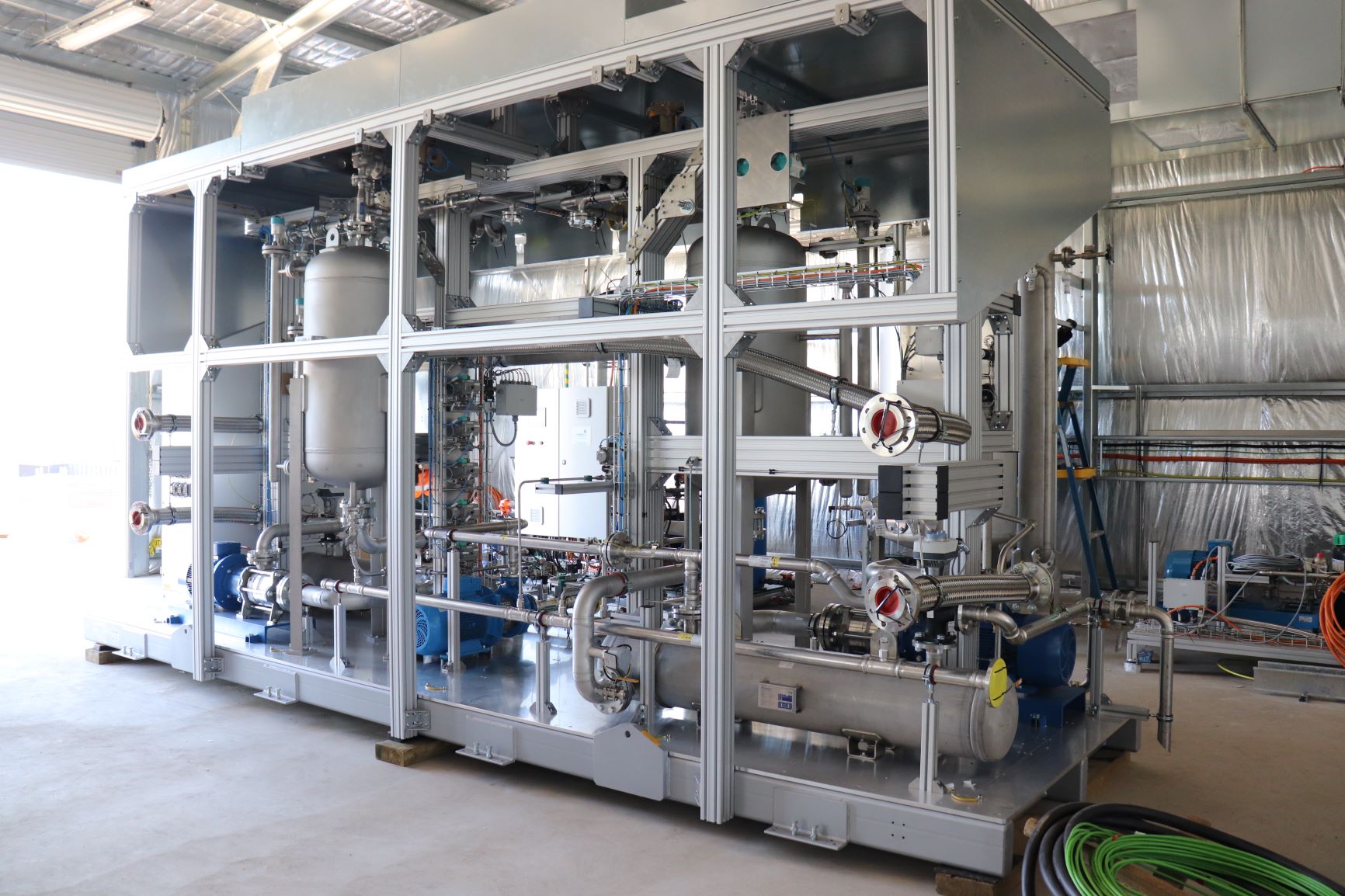
AGN Hydrogen Plant Adelaide
New SA hydrogen plant to supply industry

27/10/2020

IRENA hydrogen
Hydrogen Economy Hints at New Global Power Dynamics

18/01/2022

Show CommentsHide Comments

Become a Member

petroleum exploration society member badge

Join PESA now and enjoy full membership benefits

  • access to fully searchable technical library
  • extensive networking opportunities with industry leaders and peers
  • further professional education and training
  • and more!

VISIT MEMBERSHIP PAGE

View Upcoming Events By Branch

PESA Events by State PESA Events in Western Australia PESA Events in South Australia and Northern Territory PESA Events in Victoria and Tasmania PESA Events in NSW PESA Events in Queensland

(Click on the the map)

Sponsored

PESA MAGAZINE – LATEST EDITION

PESA News Issue 173

Previous Editions

POPULAR POSTS

  • Shell Discovery Map WA Shell makes ‘significant’ gas discovery offshore Australia
  • APPEA CEO Samantha McCulloch Meet Samantha McCulloch, APPEA’s new CEO
  • USA oil exports exceeded imports 2019 How the USA became the world’s largest crude oil exporter in 2019
  • PESA WA Winter warmer at the Museum
  • SA announces successful applicants for acreage in Cooper and Otway Basins
  • CUE Permits NWS Ironbark exploration well delivers a disappointing duster

Norwood Resources

the Norwood resource

PESA members please use this group to help with "social license to operate" issues.

TOPICS

AEP Annual General Meeting Archer AVO AVO inversion Barry Goldstein Award Bowen inversion Branch News Bruce Ainsworth climate change complex seismic wavefield core workshop Dorado Early Triassic eFWI elastic full waveform inversion Energy Geoscience GA Golf Henry Posamentier Industry News Middle Triassic Mungaroo inversion NWS inversion PESA petroleum cores Qld Queensland CSG Queensland gas SA/NT Scholarships seismic inversion sequence boundary Social Surat-Bown Basin systems tracts WA wave influenced deltas WEB-AVO inversion women in energy women leadership women leadership scholarships womens career development women scholarships Zillmere core store

PESA - Energy Geoscience

PESA Energy Geoscience is a non-profit association of individuals involved in the exploration of oil and gas.

Connect with us

Subscribe to our newsletter and stay on the loop of what is happening in the field of Energy Geoscience and events near you.

pesa newsletter
* indicates required

PESA Energy Geoscience will use the information you provide on this form to be in touch with you and to provide updates and marketing. Please confirm you give us permission to contact you via your email address:

You can change your mind at any time by clicking the unsubscribe link in the footer of any email you receive from us. We will treat your information with respect. For more information about our privacy practices please visit our website. By clicking below, you agree that we may process your information in accordance with these terms.

We use Mailchimp as our marketing platform. By clicking below to subscribe, you acknowledge that your information will be transferred to Mailchimp for processing. Learn more about Mailchimp's privacy practices.

Copyright © 2025 PESA - Energy Geoscience. All Rights Reserved.

  • Advertise
  • Contact
  • Policies
  • Privacy
  • Terms & Conditions