
- This event has passed.
PESA WA – The Mungaroo – Brigadier Depositional System, Northwest Shelf Australia: A Fluvial-Deltaic Reservoir Core Workshop
Supported by Santos Ltd.
PESA WA
3rd October 2025, 9:00 – 1600 Carlisle Core Library
The Mungaroo – Brigadier Depositional System, Northwest Shelf Australia: A Fluvial-Deltaic Reservoir Core Workshop
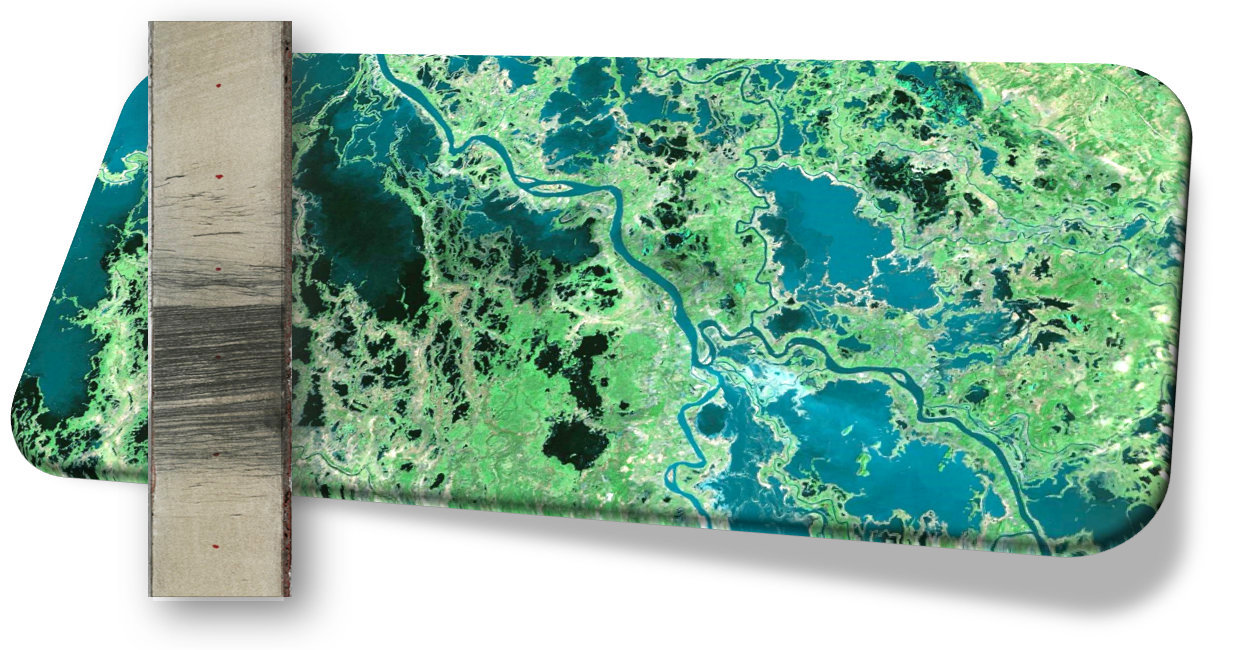
The Late Triassic Mungaroo and Brigadier Formations in the offshore Northern Carnarvon Basin, NWS, Australia, are the deposits of enormous very low-gradient rivers that fed an intracratonic basin. In such a very low gradient setting, the rivers expand across a broad distributive deltaic plain, as sediments spill out of channels into vast interdistributary bays. River distributaries reaching the coast deposit thin, asymmetrical wave-reworked delta sands. Avulsion of rivers laterally over hundreds of kilometres shifts the locus of deposition, allowing weak waves and tides time to rework sediments at bay mouths into shoreface sands with tidal inlets. Sea level variations can cause shorelines to shift long distances across these low-gradient alluvial-deltaic plains.
Standard facies models for fluvial-deltaic systems, which generally focus on higher gradient settings, do not provide a suitable template for predicting subsurface facies variations within the Mungaroo and Brigadier deposits. In higher gradient settings, a river crosses thin delta top deposits to feed a thick, basinward-thickening deltaic wedge, with the bulk of river-sourced sediments spread down steep deltaic clinoforms offshore. In very low-gradient settings, a river loses the competency to carry its sediment load to the coast, and the bulk of the sediment is extracted on the deltaic plains. Deposits in the expanding network of channels, on floodplain splays and brackish bay deltas, and within thin shoreline successions define a unique facies mosaic.
In this workshop, participants can observe the low-gradient fluvial-deltaic facies of the Mungaroo and Brigadier systems in core from the Northwest Shelf of Australia. Brief presentations will introduce conceptual models, set the stage, and provide a seismic-scale view of this system. Deposits of the major river in more proximal areas of the system are studied in core from Clio and Saty fields. Lower delta plain and river-dominated bay delta deposits are examined in core from Chandon field. Wave-reworked shoreline deposits will be visible in core from Wheatstone field. Together, these cores provide a sampling of the facies mosaic deposited by these low-gradient systems. By the end of the workshop, participants will have gained a better understanding of facies models for low-gradient fluvial-deltaic systems. Mungaroo and Brigadier deposits host world-class hydrocarbon reserves, which require advanced facies predictions to support subsurface modelling and development predictions. Low-gradient fluvial-deltaic facies are essential components of most shallow marine clastic wedges, particularly during the early highstand when deltaic systems prograde on top of transgressive shelf deposits. The workshop offers participants a broader perspective on fluvial-deltaic facies models, extending beyond the standard textbook examples.
Schedule
9:00 ─ Safety & Introductions
9:20 ─ Topic #1: Fluvial deposit architecture defined by process models and concepts (Willis: 20 min)
9:40 ─ Topic #2: Mungaroo-Brigadier System (Lang: 20 min)
10:00 ─ Topic #3: Mungaroo fluvial hierarchy and down-basin variations (Payenberg: 20 min)
10:30 ─ Tea break
10:45 ─ Start Core #1: Mungaroo fluvial (Clio 2 and Satyr 3)
11:45 ─ Discussion (core review)
12:00 ─ Lunch
12:45 ─ Short topic #1 (20 min plus Q&A) High- vs low-slope systems & asymmetric deltas
13:10 ─ Start core #2: Chandon 2 (Mungaroo lower delta plain and delta front)
14:00 ─ 14:15 ─ Tea break
14:30 ─ Start core #3: Wheatstone 2 BCH1ST1 (Brigadier asymmetric wave-influenced delta)
15:30 ─ Wrap-up discussion
15:45 ─ Finish
16:00 ─ Core store closes
Organisers: Dr. Brian Willis (Consultant) Dr. Tobi Payenberg (Chevron) & Prof. Simon Lang (UWA)
Hard limit of 30 attendees.
Cost:
PESA Members: $250
PESA Student Members $100
This event is for PESA WA members only. This is for insurance purposes. Please do not book on behalf of non-members. Please do not attend if you do not have a ticket.
If there are any questions, please don’t hesitate to contact: wa-secretary@pesa.com.au
Related Events
-
Thursday, 19 February @ 12:00 pm - 2:00 pm (Australia/Perth time)
 WA
WA -
Monday, 18 May - Thursday, 21 May (Australia/Perth time)
 SA/NT
SA/NT -
Monday, 18 May @ 12:15 pm - 6:00 pm (Australia/Brisbane time)