

• Member Login
  • |
  • Join Now
PESA - Energy Geoscience

Promoting Professional and Technical Excellence in Energy Geoscience – Networking, On-going Professional Education, Monthly Technical Meetings

  • Home
  • About
    • About PESA
    • Objectives
    • PESA History
    • PESA Affiliates
    • Constitution and Rules
    • Strategic Plan
  • Events
    • Online
    • NSW / ACT
    • QLD
    • SA / NT
    • VIC / TAS
    • WA
    • Industry
    • Social
    • Past Events
  • Membership
    • Join Us
    • APPEA Conference Discounts
    • AEGC 2025 Travel Bursaries
    • PESA Membership Awards
  • Latest News
    • All News
    • Feature Articles
    • Industry
    • Company Updates
    • Tech Talk (public)
    • PESA Branch Activities
  • Library
    • Technical Library
    • PESA Gazette
    • Webinars
    • PESA News Magazine
    • Knowledgette Recordings
  • Scholarships
  • Employment
    • View Job Opportunities
    • Submit Job
  • Contact

Structural Framework and Depositional History of the Bedout and Rowley Sub-basins

17/12/1994 by Sharperedge

Structural Framework and Depositional History of the Bedout and Rowley Sub-basins


Download Section

Please log in to download this file.

Alternatively, you can search for this item and individually purchase it from the PESA collection at AAPG DataPages

PESA collection at AAPG DataPages

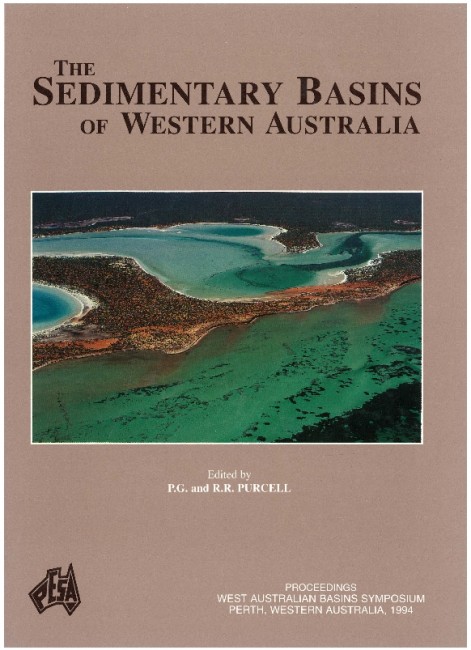
Publication Name: The Sedimentary Basins of WA

Authors: Paul Lipski

Publication Volume: 1

Date Published: July 1994

Number of Pages: 20

Reference Type: Book Section

Abstract:

The Bedout and Rowley sub-basins are Mesozoic sub-basins that occupy the central North West Shelf between the Carnarvon and Browse basins. To the southeast, the sub-basins onlap the older Pilbara Shelf, Canning Basin
sequence and Leveque Platform. The Bed out and Rowley sub-basins are separated by the Bedout High trend,
which is partially volcanic in nature. To the southwest, the sub-basins are separated from the Beagle Sub-basin
by the North Turtle Hinge Zone. To the northeast, the Rowley Sub-basin is separated from the Browse Basin
by the northwest-trending Leveque Ridge. The northwestern margin of the Offshore Canning Basin region is defined by the present-day continental slope.
? During the Triassic, the Bedout and Rowley sub-basins were part of a broad intracratonic downwarp that also encompassed the Carnarvon and Browse basins. A thick sequence of marine claystones, equivalent to the Locker Shale, was deposited and overlain by a thick fluviatile to marginal marine sequence equivalent to the Mungaroo Formation.
? During the Jurassic pre-breakup phase, the Bed out and Rowley sub-basins were subsiding depocentres, but deep marine troughs similar to the Lewis, Cossigny and Beagle troughs did not develop. This was due to relatively gentle pre-breakup structuring in the offshore Canning Basin area. Sedimentation in both sub-basins was dominated by a thick sequence of fluvio-deltaic to marginal marine deposits, equivalent to the Legendre
Formation of the northeastern Carnarvon Basin.
? In the post-breakup phase, from the Callovian to latest Cretaceous, a transgressive regime resulted in open marine conditions with widespread claystone, marl and minor carbonate deposition. Delta sands and turbidites, similar to those found in the Carnarvon Basin Neocomian sequence, are also found in the Bedout and Rowley sub-basins. Through the Tertiary to the present, shallow shelf conditions prevailed and sedimentation was dominated by a thick carbonate wedge.

Tags: Bedout depositional Framework history Rowley structural sub-basins

PESA - Energy Geoscience

PESA Energy Geoscience is a non-profit association of individuals involved in the exploration of oil and gas.

Connect with us

Subscribe to our newsletter and stay on the loop of what is happening in the field of Energy Geoscience and events near you.

pesa newsletter
* indicates required

PESA Energy Geoscience will use the information you provide on this form to be in touch with you and to provide updates and marketing. Please confirm you give us permission to contact you via your email address:

You can change your mind at any time by clicking the unsubscribe link in the footer of any email you receive from us. We will treat your information with respect. For more information about our privacy practices please visit our website. By clicking below, you agree that we may process your information in accordance with these terms.

We use Mailchimp as our marketing platform. By clicking below to subscribe, you acknowledge that your information will be transferred to Mailchimp for processing. Learn more about Mailchimp's privacy practices.

Copyright © 2025 PESA - Energy Geoscience. All Rights Reserved.

  • Advertise
  • Contact
  • Policies
  • Privacy
  • Terms & Conditions