

• Member Login
  • |
  • Join Now
PESA - Energy Geoscience

Promoting Professional and Technical Excellence in Energy Geoscience – Networking, On-going Professional Education, Monthly Technical Meetings

  • Home
  • About
    • About PESA
    • Objectives
    • PESA History
    • PESA Affiliates
    • Constitution and Rules
    • Strategic Plan
  • Events
    • Online
    • NSW / ACT
    • QLD
    • SA / NT
    • VIC / TAS
    • WA
    • Industry
    • Social
    • Past Events
  • Membership
    • Join Us
    • APPEA Conference Discounts
    • AEGC 2025 Travel Bursaries
    • PESA Membership Awards
  • Latest News
    • All News
    • Feature Articles
    • Industry
    • Company Updates
    • Tech Talk (public)
    • PESA Branch Activities
  • Library
    • Technical Library
    • PESA Gazette
    • Webinars
    • PESA News Magazine
    • Knowledgette Recordings
  • Scholarships
  • Employment
    • View Job Opportunities
    • Submit Job
  • Contact

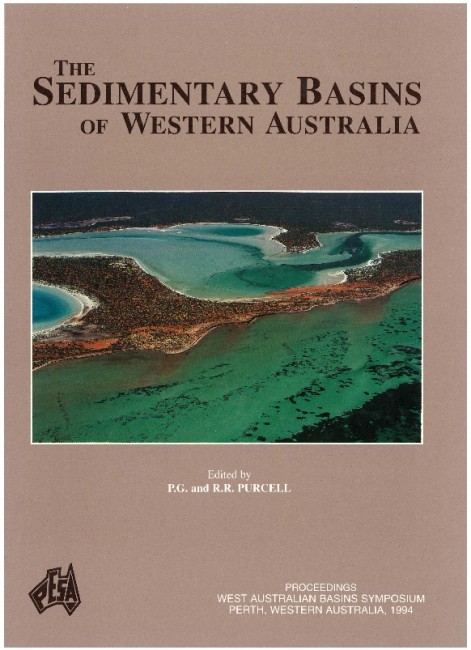
The Sedimentary Basins of Western Australia: An Introduction

17/12/1994 by Sharperedge

The Sedimentary Basins of Western Australia: An Introduction


Download Section

Please log in to download this file.

Alternatively, you can search for this item and individually purchase it from the PESA collection at AAPG DataPages

PESA collection at AAPG DataPages

Publication Name: The Sedimentary Basins of WA

Authors: P.G. and R.R. Purcell

Publication Volume: 1

Date Published: July 1994

Number of Pages: 27

Reference Type: Book Section

Abstract:

Western Australia is one of six federated sovereign States within the Commonwealth of Australia. It covers an onshore area of over 2 500 000 km2, almost one-third of the Australian mainland, and is one of the largest
political units in the world. The Phanerozoic sedimentary basins of Western Australia cover about one million square kilometres of the land area and underlie most of the continental shelf and slope. There are five main basins for petroleum exploration- the Bonaparte, Canning, Carnarvon, Officer and Perth. Oil and gas have been discovered in all except the Officer Basin. Smaller basins, including the Eucla Basin, are not considered prospective for petroleum. The small Collie Basin contains inportant coal deposits.
West Australia's first commercial oil production was in 1967 from the Barrow Island Oil Field in the offshore Carnarvon Basin. Several giant gas fields, including North Rankin, were discovered in the Carnarvon and Browse basins in the early 1970s. Exploration in the 1980s led to major oil and gas discoveries in the Carnarvon and Bonaparte basins, and smaller discoveries in the Perth and Canning basins.
Western Australia is poised to become Australia's premier hydrocarbon-producing State. By the mid 1990s, production will reach 350 000 BOPD and surpass output from Victoria's Gippsland Basin. Western Australia's
sedimentary basins contain an estimated 45 percent of the nation's current oil reserves, 78 percent of the condensate reserves, and 80 percent of the gas reserves. Current gas reserves can sustain current production
levels for 150 years, and will be a major component of the State's welfare and development in the 21st century.
Oil production rates will decline markedly after about 1996 and future discoveries are an imperative for the
nation's self-sufficiency. The best hope for those discoveries are in the Western Australian basins, particularly on the North West Shelf.

Tags: Australia. basin's Introduction sedimentary

PESA - Energy Geoscience

PESA Energy Geoscience is a non-profit association of individuals involved in the exploration of oil and gas.

Connect with us

Subscribe to our newsletter and stay on the loop of what is happening in the field of Energy Geoscience and events near you.

pesa newsletter
* indicates required

PESA Energy Geoscience will use the information you provide on this form to be in touch with you and to provide updates and marketing. Please confirm you give us permission to contact you via your email address:

You can change your mind at any time by clicking the unsubscribe link in the footer of any email you receive from us. We will treat your information with respect. For more information about our privacy practices please visit our website. By clicking below, you agree that we may process your information in accordance with these terms.

We use Mailchimp as our marketing platform. By clicking below to subscribe, you acknowledge that your information will be transferred to Mailchimp for processing. Learn more about Mailchimp's privacy practices.

Copyright © 2025 PESA - Energy Geoscience. All Rights Reserved.

  • Advertise
  • Contact
  • Policies
  • Privacy
  • Terms & Conditions