

• Member Login
  • |
  • Join Now
PESA - Energy Geoscience

Promoting Professional and Technical Excellence in Energy Geoscience – Networking, On-going Professional Education, Monthly Technical Meetings

  • Home
  • About
    • About PESA
    • Objectives
    • PESA History
    • PESA Affiliates
    • Constitution and Rules
    • Strategic Plan
  • Events
    • Online
    • NSW / ACT
    • QLD
    • SA / NT
    • VIC / TAS
    • WA
    • Industry
    • Social
    • Past Events
  • Membership
    • Join Us
    • APPEA Conference Discounts
    • AEGC 2025 Travel Bursaries
    • PESA Membership Awards
  • Latest News
    • All News
    • Feature Articles
    • Industry
    • Company Updates
    • Tech Talk (public)
    • PESA Branch Activities
  • Library
    • Technical Library
    • PESA Gazette
    • Webinars
    • PESA News Magazine
    • Knowledgette Recordings
  • Scholarships
  • Employment
    • View Job Opportunities
    • Submit Job
  • Contact

Tertiary foundations and Quaternary evolution of coral reef systems of Australia’s North West Shelf

18/12/2002 by Sharperedge

Tertiary foundations and Quaternary evolution of coral reef systems of Australia’s North West Shelf


Download Section

Please log in to download this file.

Alternatively, you can search for this item and individually purchase it from the PESA collection at AAPG DataPages

PESA collection at AAPG DataPages

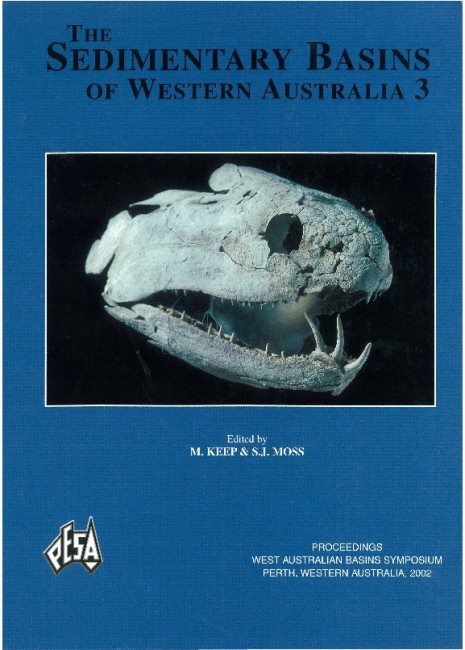
Publication Name: The Sedimentary Basins of WA

Authors: L.B. Collins

Publication Volume: 3

Date Published: December 2002

Number of Pages: 41

Reference Type: Book Section

Abstract:

The North West Shelf is a modem tropical ramp, which is underlain by Cretaceous-Tertiary carbonates, with clastic reservoirs at depth. Coral reef systems, discontinuously developed during the Late Tertiary-Quaternary, vary from fringing reefs to isolated reefs which rise from deep-ramp settings. Quaternary evolution of the reef systems is being documented using regional mapping, seismic imaging, coring and U-series dating. The well-constrained sea level data from the Houtman Abrolhos carbonate platforms {at 28-29?S) have also been applied to the North West Shelf reefs. The Ningaloo fringing reef at 20-2rS, records Holocene and Last Interglacial phases of reef growth in a tectonically stable environment. It overlies Tertiary carbonates of the Cape Range, which is flanked by uplifted Plio-Pleistocene terraces and reefs. Scott Reef {at 14?S) is a macrotidal, isolated reef which overlies a carbonate platform and a major gas discovery. Seismic profiles reveal a Last Interglacial {ca. 125,000 year) reef system, but reefs which apparendy grew to sea level are 30 m below present sea level, indicating significant subsidence in the Late Quaternary. Contemporary reefs grew during the Holocene in the accommodation space provided by subsidence and are up to 35 m thick. The Rowley Shoals (15-l7?S) comprise one of the most perfect morphological series of reefs known, and these emergent, annular reefs rise from depths of 200-400 m. Seismic profiles suggest Late Quaternary subsidence has been an important control on reef growth, while differential subsidence has influenced reef morphology.
The spatial association between reef systems and hydrocarbon seeps and the reservoir potential of the Tertiary section are now receiving attention. As further exploration and development occur in and around coral reefs, and the level of management intensity increases, there is a need for better understanding of human and natural impacts (cyclones and coral bleaching), biological processes, and the geological controls on reef growth and
development, as part of management plans.

Tags: Australia's coral evolution foundations North Quaternary reef shelf. systems Tertiary

PESA - Energy Geoscience

PESA Energy Geoscience is a non-profit association of individuals involved in the exploration of oil and gas.

Connect with us

Subscribe to our newsletter and stay on the loop of what is happening in the field of Energy Geoscience and events near you.

pesa newsletter
* indicates required

PESA Energy Geoscience will use the information you provide on this form to be in touch with you and to provide updates and marketing. Please confirm you give us permission to contact you via your email address:

You can change your mind at any time by clicking the unsubscribe link in the footer of any email you receive from us. We will treat your information with respect. For more information about our privacy practices please visit our website. By clicking below, you agree that we may process your information in accordance with these terms.

We use Mailchimp as our marketing platform. By clicking below to subscribe, you acknowledge that your information will be transferred to Mailchimp for processing. Learn more about Mailchimp's privacy practices.

Copyright © 2025 PESA - Energy Geoscience. All Rights Reserved.

  • Advertise
  • Contact
  • Policies
  • Privacy
  • Terms & Conditions