

• Member Login
  • |
  • Join Now
PESA - Energy Geoscience

Promoting Professional and Technical Excellence in Energy Geoscience – Networking, On-going Professional Education, Monthly Technical Meetings

  • Home
  • About
    • About PESA
    • Objectives
    • PESA History
    • PESA Affiliates
    • Constitution and Rules
    • Strategic Plan
  • Events
    • Online
    • NSW / ACT
    • QLD
    • SA / NT
    • VIC / TAS
    • WA
    • Industry
    • Social
    • Past Events
  • Membership
    • Join Us
    • APPEA Conference Discounts
    • AEGC 2025 Travel Bursaries
    • PESA Membership Awards
  • Latest News
    • All News
    • Feature Articles
    • Industry
    • Company Updates
    • Tech Talk (public)
    • PESA Branch Activities
  • Library
    • Technical Library
    • PESA Gazette
    • Webinars
    • PESA News Magazine
    • Knowledgette Recordings
  • Scholarships
  • Employment
    • View Job Opportunities
    • Submit Job
  • Contact

A New Kinematic Model for the Formation and Evolution of the West and Northwest Australian Margin

17/12/1998 by Sharperedge

A New Kinematic Model for the Formation and Evolution of the West and Northwest Australian Margin


Download Section

Please log in to download this file.

Alternatively, you can search for this item and individually purchase it from the PESA collection at AAPG DataPages

PESA collection at AAPG DataPages

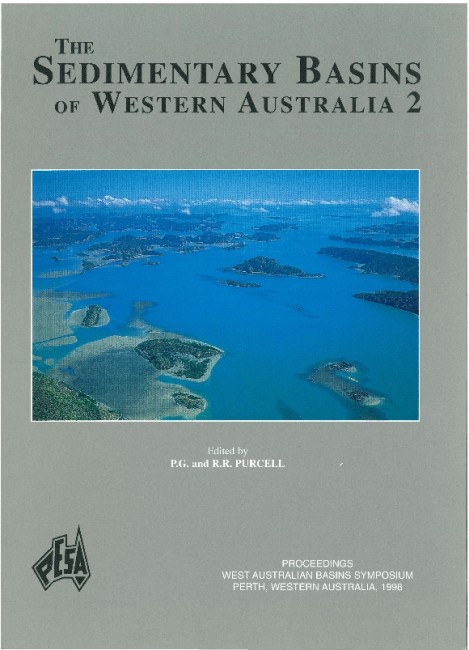
Publication Name: The Sedimentary Basins of WA

Authors: R. Dietmar M?ller, Dona Mihut and Stephanie Baldwin

Publication Volume: 2

Date Published: December 1998

Number of Pages: 29

Reference Type: Book Section

Abstract:

Satellite altimetry has revolutionised our knowledge of the tectonic structure of the ocean floor and the continental shelves where ship data are sparse. We have used existing and new ship magnetic, bathymetric and seismic data with satellite derived gravity data to develop a revised model of Mesozoic continental breakup and sea-floor spreading in the Perth, Cuvier, Gascoyne and Argo abyssal plains. Based on this data set, we identified the boundary between continental and oceanic crust (COB), fracture zones, and traces of propagating rifts. In our model sea-floor spreading in the Gascoyne and Cuvier abyssal plains starts in the Lower Valanginian (136.2 Ma), 3.7 My earlier than previously interpreted. Combined with a model for the dispersal of Gondwanaland, our results imply that a shear zone between the southern and the northern part of Greater India is required to accommodate their relative motion between 136 and 99 Ma. A major plate tectonic event occurred at the Albian/Cenomanian boundary ( -99 Ma), when the spreading direction between India and Australia changed from northwestsoutheast to north-south. An event at about 61 Ma (magnetic anomaly 27) in the Early Paleocene is
recorded in the Tasman Sea and in the southeast Indian and Pacific oceans as a change in spreading direction. Analysis of the tectonic history of 108 wells shows widespread anomalous subsidence or uplift on the North West Shelf at both times. The magnitude and location of the anomalous subsidence and uplift indicate that the 99 Ma event locally resulted in renewed lithospheric extension, whereas the 61 Ma event may reflect elastic buckling of the lithosphere. Both events may have originated from the stepwise subduction of the Neo-Tethyan Ridge, first north of India at 99 Ma and then north of Australia at 61 Ma. In the Miocene/Pliocene almost the entire North West Shelf from the Carnarvon Basin to the Timor Sea underwent accelerated subsidence, which started as early as 20 Ma in some areas, and reached magnitudes of more than 500 m up to 1000 km away from the Timor Trough. These observations cannot be explained by foreland basin loading, but are likely the result of a complex evolution of compressive intraplate stresses following the recent breakup of the Indo-Australian Plate into the Indian, Australian and Capricorn plates.

Tags: Australian evolution formation Kinematic margin model Northwest

PESA - Energy Geoscience

PESA Energy Geoscience is a non-profit association of individuals involved in the exploration of oil and gas.

Connect with us

Subscribe to our newsletter and stay on the loop of what is happening in the field of Energy Geoscience and events near you.

pesa newsletter
* indicates required

PESA Energy Geoscience will use the information you provide on this form to be in touch with you and to provide updates and marketing. Please confirm you give us permission to contact you via your email address:

You can change your mind at any time by clicking the unsubscribe link in the footer of any email you receive from us. We will treat your information with respect. For more information about our privacy practices please visit our website. By clicking below, you agree that we may process your information in accordance with these terms.

We use Mailchimp as our marketing platform. By clicking below to subscribe, you acknowledge that your information will be transferred to Mailchimp for processing. Learn more about Mailchimp's privacy practices.

Copyright © 2025 PESA - Energy Geoscience. All Rights Reserved.

  • Advertise
  • Contact
  • Policies
  • Privacy
  • Terms & Conditions