

• Member Login
  • |
  • Join Now
PESA - Energy Geoscience

Promoting Professional and Technical Excellence in Energy Geoscience – Networking, On-going Professional Education, Monthly Technical Meetings

  • Home
  • About
    • About PESA
    • Objectives
    • PESA History
    • PESA Affiliates
    • Constitution and Rules
    • Strategic Plan
  • Events
    • Online
    • NSW / ACT
    • QLD
    • SA / NT
    • VIC / TAS
    • WA
    • Industry
    • Social
    • Past Events
  • Membership
    • Join Us
    • APPEA Conference Discounts
    • AEGC 2025 Travel Bursaries
    • PESA Membership Awards
  • Latest News
    • All News
    • Feature Articles
    • Industry
    • Company Updates
    • Tech Talk (public)
    • PESA Branch Activities
  • Library
    • Technical Library
    • PESA Gazette
    • Webinars
    • PESA News Magazine
    • Knowledgette Recordings
  • Scholarships
  • Employment
    • View Job Opportunities
    • Submit Job
  • Contact

Cainozoic Depositional History of the North West Shelf

17/12/1988 by Sharperedge

Cainozoic Depositional History of the North West Shelf


Download Section

Please log in to download this file.

Alternatively, you can search for this item and individually purchase it from the PESA collection at AAPG DataPages

PESA collection at AAPG DataPages

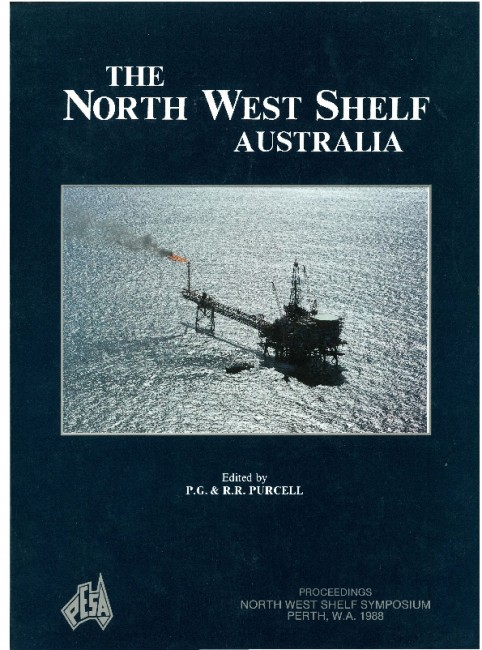
Publication Name: The North West Shelf Australia

Authors: M. Apthorpe

Date Published: July 1988

Number of Pages: 41

Reference Type: Book Section

Abstract:

The depositional history of the North West Shelf is interpreted from a compilation of the palaeontology and stratigraphy of approximately 80 petroleum exploration wells. The Cainozoic sequence consists of four major sedimentary units, or cycles, three of which consist of two subunits. At any one location, facies in Cycles 1 to 3 show a progressive vertical change from deep to shallow water facies, reflecting upward and seaward progradation of the sequence. There is also a progressive change with time from clastic to carbonate facies, related to the northward drift of the Australian plate.
Palaeocene Cycle 1 consists of two clastic sequences, predominantly fine-grained in the south, coarsegrained
in the north, and grading into carbonates along the northern outer margin. In the south, Eocene Cycle 2 begins as a fine clastic sequence, becomes coarsergrained in its central part, and gradually changes to a carbonate sequence by the end of the Eocene. In the north, Cycle 2 is a carbonate sequence, reflecting the palaeolatitude and climate of the area. Cycle 3 commences with mixed carbonate/ quartz silt sediments in the south, and marls in the north, changing to shallow water calcarenites by Miocene time, and terminating with intertidal deposits. Cycle 4 is predominantly a carbonate unit, of moderately deep water facies.
The timing of the cycles is controlled by global(?) sea level fluctuations, but also by the relative positions of wells on the slope or shelf of the time. Diachronism is demonstrable in the basal sediments of some cycles. From Late Oligocene time onward, the eustatic sea level changes are overprinted by the effect of tectonic downwarping along the western margin, as the Australian plate collided with South East Asia. This produced the maximum area of Cainozoic transgression during the Late Miocene-Pleistocene Cycle 4. Some inferences on the climates ofthe adjacent Australian continent can be drawn from the offshore sedimentary record.

Tags: Cainozoic depositional history North shelf.

PESA - Energy Geoscience

PESA Energy Geoscience is a non-profit association of individuals involved in the exploration of oil and gas.

Connect with us

Subscribe to our newsletter and stay on the loop of what is happening in the field of Energy Geoscience and events near you.

pesa newsletter
* indicates required

PESA Energy Geoscience will use the information you provide on this form to be in touch with you and to provide updates and marketing. Please confirm you give us permission to contact you via your email address:

You can change your mind at any time by clicking the unsubscribe link in the footer of any email you receive from us. We will treat your information with respect. For more information about our privacy practices please visit our website. By clicking below, you agree that we may process your information in accordance with these terms.

We use Mailchimp as our marketing platform. By clicking below to subscribe, you acknowledge that your information will be transferred to Mailchimp for processing. Learn more about Mailchimp's privacy practices.

Copyright © 2025 PESA - Energy Geoscience. All Rights Reserved.

  • Advertise
  • Contact
  • Policies
  • Privacy
  • Terms & Conditions