

• Member Login
  • |
  • Join Now
PESA - Energy Geoscience

Promoting Professional and Technical Excellence in Energy Geoscience – Networking, On-going Professional Education, Monthly Technical Meetings

  • Home
  • About
    • About PESA
    • Objectives
    • PESA History
    • PESA Affiliates
    • Constitution and Rules
    • Strategic Plan
  • Events
    • Online
    • NSW / ACT
    • QLD
    • SA / NT
    • VIC / TAS
    • WA
    • Industry
    • Social
    • Past Events
  • Membership
    • Join Us
    • APPEA Conference Discounts
    • AEGC 2025 Travel Bursaries
    • PESA Membership Awards
  • Latest News
    • All News
    • Feature Articles
    • Industry
    • Company Updates
    • Tech Talk (public)
    • PESA Branch Activities
  • Library
    • Technical Library
    • PESA Gazette
    • Webinars
    • PESA News Magazine
    • Knowledgette Recordings
  • Scholarships
  • Employment
    • View Job Opportunities
    • Submit Job
  • Contact

Bonaparte Basin: Evolution and Structural Framework

17/12/1988 by Sharperedge

Bonaparte Basin: Evolution and Structural Framework


Download Section

Please log in to download this file.

Alternatively, you can search for this item and individually purchase it from the PESA collection at AAPG DataPages

PESA collection at AAPG DataPages

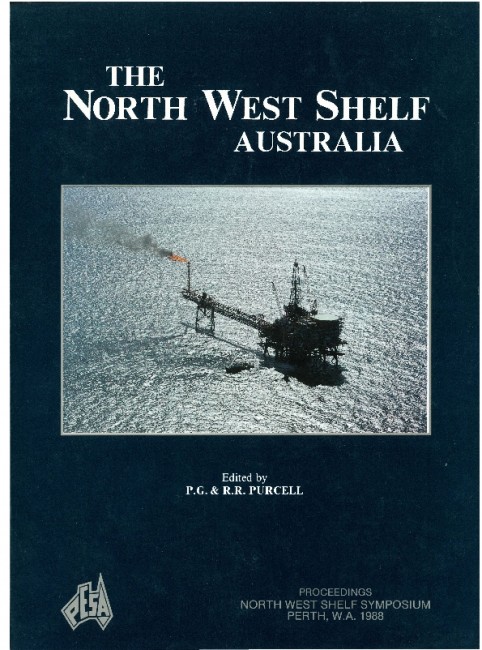
Publication Name: The North West Shelf Australia

Authors: P.J. Gunn

Date Published: July 1988

Number of Pages: 22

Reference Type: Book Section

Abstract:

The Bonaparte Basin of northwestern Australia commenced development as a Devonian rift which underwent a pivot-type opening about a pole at its southern end.
When extension ceased in the Mid Carboniferous the bounding faults at the northern end of the rift were separated by 250+ km and crustal splitting on the floor of the rift had allowed the emplacement of a 100+ km
expanse of oceanic crust. In contrast, the bounding faults at the southern end ofthe rift are only 80 km apart
and the intervening crust is entirely continental.
Transform/transfer fault systems perpendicular to the rift axis accommodated differential crustal spreading rates and separated the rift longitudinally into a series of tilted block systems of differing symmetries.
A key element in the rift development was the intrusion of a large axial dyke of dense, magnetic, upper mantle material; this was an immediate precursor to the crustal splitting process. The dyke reached progressively higher levels as the rift widened over a thinning continental crust. At the northern end of the rift crustal splitting occurred along the axis of the intrusion. Doming of the rift-fill sediments by the axial intrusion, and the subsequent formation of an oceanic depression controlled erosion and sedimentation within the rift during the final stages of its development. With the termination of crustal spreading the Bonaparte Basin underwent a long period of subsidence and associated burial. Bonaparte rift structures were preserved in their attitudes existing at the end of the crustal spreading process, and their geometry is reflected by drapes in the subsidence phase sediments.

Tags: basin Bonaparte evolution Framework structural

PESA - Energy Geoscience

PESA Energy Geoscience is a non-profit association of individuals involved in the exploration of oil and gas.

Connect with us

Subscribe to our newsletter and stay on the loop of what is happening in the field of Energy Geoscience and events near you.

pesa newsletter
* indicates required

PESA Energy Geoscience will use the information you provide on this form to be in touch with you and to provide updates and marketing. Please confirm you give us permission to contact you via your email address:

You can change your mind at any time by clicking the unsubscribe link in the footer of any email you receive from us. We will treat your information with respect. For more information about our privacy practices please visit our website. By clicking below, you agree that we may process your information in accordance with these terms.

We use Mailchimp as our marketing platform. By clicking below to subscribe, you acknowledge that your information will be transferred to Mailchimp for processing. Learn more about Mailchimp's privacy practices.

Copyright © 2025 PESA - Energy Geoscience. All Rights Reserved.

  • Advertise
  • Contact
  • Policies
  • Privacy
  • Terms & Conditions