

• Member Login
  • |
  • Join Now
PESA - Energy Geoscience

Promoting Professional and Technical Excellence in Energy Geoscience – Networking, On-going Professional Education, Monthly Technical Meetings

  • Home
  • About
    • About PESA
    • Objectives
    • PESA History
    • PESA Affiliates
    • Constitution and Rules
    • Strategic Plan
  • Events
    • Online
    • NSW / ACT
    • QLD
    • SA / NT
    • VIC / TAS
    • WA
    • Industry
    • Social
    • Past Events
  • Membership
    • Join Us
    • APPEA Conference Discounts
    • AEGC 2025 Travel Bursaries
    • PESA Membership Awards
  • Latest News
    • All News
    • Feature Articles
    • Industry
    • Company Updates
    • Tech Talk (public)
    • PESA Branch Activities
  • Library
    • Technical Library
    • PESA Gazette
    • Webinars
    • PESA News Magazine
    • Knowledgette Recordings
  • Scholarships
  • Employment
    • View Job Opportunities
    • Submit Job
  • Contact

Sand dune development within the Simpson Desert and its effect on statics calculation

17/12/1989 by Sharperedge

Sand dune development within the Simpson Desert and its effect on statics calculation


Download Section

Please log in to download this file.

Alternatively, you can search for this item and individually purchase it from the PESA collection at AAPG DataPages

PESA collection at AAPG DataPages

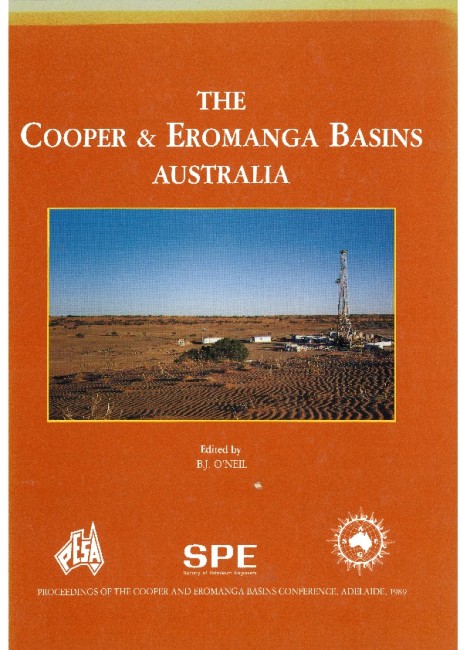
Publication Name: The Cooper & Eromanga Basins Australia

Authors: P. G. Senycia

Date Published: June 1989

Number of Pages: 24

Reference Type: Book Section

Abstract:

Early petroleum exploration in the Simpson Desert region was generally limited because of access problems
imposed by the presence of large and extensive sand dunes. Later detailed seismic field studies required the location of traverse lines in a tight rectilinear grid. Subsequently, seismic was located not only along dune corridors but also perpendicular to the dune field.
Early workers believed that the dunes were simply the product of homogeneous sand development and that a
simple statics model could be utilised to predict their effect on the seismic data. Recent results from uphole velocity proftles conducted in the Northern Territory portion of the Desert indicate dune development to be far more complex. This realisation has led to the reprocessing of significant portions of older data resulting in a major change to the previous interpretation. Research has indicated that a seismically measured geophone static, tied to suitable uphole control, is required to correctly adjust cross-dune data in this region.
The subsequent application of more appropriate weathering statics information during the processing of the
seismic data has provided a superior product for interpretation purposes.

Tags: calculation Desert development Dune sand Simpson statics

PESA - Energy Geoscience

PESA Energy Geoscience is a non-profit association of individuals involved in the exploration of oil and gas.

Connect with us

Subscribe to our newsletter and stay on the loop of what is happening in the field of Energy Geoscience and events near you.

pesa newsletter
* indicates required

PESA Energy Geoscience will use the information you provide on this form to be in touch with you and to provide updates and marketing. Please confirm you give us permission to contact you via your email address:

You can change your mind at any time by clicking the unsubscribe link in the footer of any email you receive from us. We will treat your information with respect. For more information about our privacy practices please visit our website. By clicking below, you agree that we may process your information in accordance with these terms.

We use Mailchimp as our marketing platform. By clicking below to subscribe, you acknowledge that your information will be transferred to Mailchimp for processing. Learn more about Mailchimp's privacy practices.

Copyright © 2025 PESA - Energy Geoscience. All Rights Reserved.

  • Advertise
  • Contact
  • Policies
  • Privacy
  • Terms & Conditions