

• Member Login
  • |
  • Join Now
PESA - Energy Geoscience

Promoting Professional and Technical Excellence in Energy Geoscience – Networking, On-going Professional Education, Monthly Technical Meetings

  • Home
  • About
    • About PESA
    • Objectives
    • PESA History
    • PESA Affiliates
    • Constitution and Rules
    • Strategic Plan
  • Events
    • Online
    • NSW / ACT
    • QLD
    • SA / NT
    • VIC / TAS
    • WA
    • Industry
    • Social
    • Past Events
  • Membership
    • Join Us
    • APPEA Conference Discounts
    • AEGC 2025 Travel Bursaries
    • PESA Membership Awards
  • Latest News
    • All News
    • Feature Articles
    • Industry
    • Company Updates
    • Tech Talk (public)
    • PESA Branch Activities
  • Library
    • Technical Library
    • PESA Gazette
    • Webinars
    • PESA News Magazine
    • Knowledgette Recordings
  • Scholarships
  • Employment
    • View Job Opportunities
    • Submit Job
  • Contact

Petrophysics of oil reservoirs in the Eromanga Basin, South Australia

17/12/1989 by Sharperedge

Petrophysics of oil reservoirs in the Eromanga Basin, South Australia


Download Section

Please log in to download this file.

Alternatively, you can search for this item and individually purchase it from the PESA collection at AAPG DataPages

PESA collection at AAPG DataPages

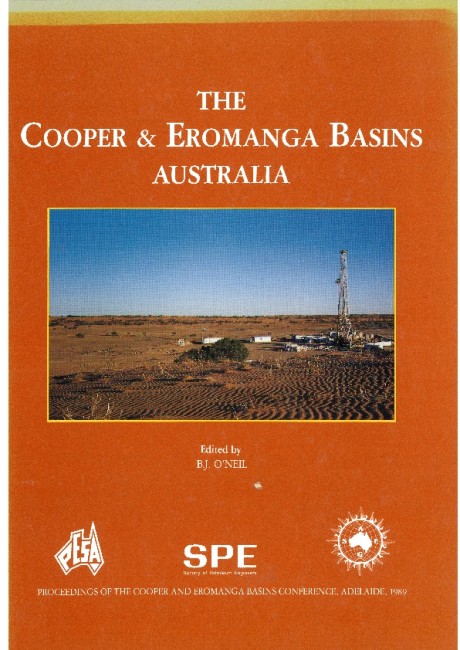
Publication Name: The Cooper & Eromanga Basins Australia

Authors: D.I. Gravestock and E.M. Alexander

Date Published: June 1989

Number of Pages: 25

Reference Type: Book Section

Abstract:

Calculation of water saturation (Sw) in oil reservoirs requires accurate input of porosity, matrix (clay) properties
and formation brine resistivity. Shale volume and cation exchange models have evolved to account for clay volume and conductivity in shaly sands. In the Eromanga Basin, elevated temperature and high formation water resistivity combine to increase the relarive importance of clay conducrivity even in conventionally 'clean' sands, and major correcrion is required for shaly sands. Calculated Sw differs between equations representing each model ('Indonesia', Waxman-Smits) this difference ascribed here to the way in which clay volume is determined from downhole logs. Shaly sand cementation and saturation exponents are close to 2.0, but small departures from this value are minor compared with errors arising from inaccurate measurement of clay volume and brine resistivity. Cation exchange capacity (CEC) in the kaolinite dominated Eromanga reservoirs is an exponential function of the difference between neutron and total porosity, but accuracy of the correlation decreases as core measured total porosity is replaced by porosity from the density and sonic logs. Normalised shale volume cannot be calculated by linear interpolation between maximum and minimum gamma ray values. Furthermore the gamma ray log by itself cannot differentiate 'hot' sands from shaly sands. The gamma ray log requires calibration against other clay indicators (neutron-density, CEC) to be of any use in Eromanga reservoirs. Selection of suitable matrix properties (density, transit time) is the chief factor affecting core-log porosity correlation, with the density method yielding generally better results. A gamma ray-based empirical formula provides fair sonic porosity where poor hole conditions render the preferred density-neutron combination unusable. Investigations of the gamma ray response are continuing.

Tags: Australia. basin Eromanga oil Petrophysics reservoirs South

PESA - Energy Geoscience

PESA Energy Geoscience is a non-profit association of individuals involved in the exploration of oil and gas.

Connect with us

Subscribe to our newsletter and stay on the loop of what is happening in the field of Energy Geoscience and events near you.

pesa newsletter
* indicates required

PESA Energy Geoscience will use the information you provide on this form to be in touch with you and to provide updates and marketing. Please confirm you give us permission to contact you via your email address:

You can change your mind at any time by clicking the unsubscribe link in the footer of any email you receive from us. We will treat your information with respect. For more information about our privacy practices please visit our website. By clicking below, you agree that we may process your information in accordance with these terms.

We use Mailchimp as our marketing platform. By clicking below to subscribe, you acknowledge that your information will be transferred to Mailchimp for processing. Learn more about Mailchimp's privacy practices.

Copyright © 2025 PESA - Energy Geoscience. All Rights Reserved.

  • Advertise
  • Contact
  • Policies
  • Privacy
  • Terms & Conditions