

• Member Login
  • |
  • Join Now
PESA - Energy Geoscience

Promoting Professional and Technical Excellence in Energy Geoscience – Networking, On-going Professional Education, Monthly Technical Meetings

  • Home
  • About
    • About PESA
    • Objectives
    • PESA History
    • PESA Affiliates
    • Constitution and Rules
    • Strategic Plan
  • Events
    • Online
    • NSW / ACT
    • QLD
    • SA / NT
    • VIC / TAS
    • WA
    • Industry
    • Social
    • Past Events
  • Membership
    • Join Us
    • APPEA Conference Discounts
    • AEGC 2025 Travel Bursaries
    • PESA Membership Awards
  • Latest News
    • All News
    • Feature Articles
    • Industry
    • Company Updates
    • Tech Talk (public)
    • PESA Branch Activities
  • Library
    • Technical Library
    • PESA Gazette
    • Webinars
    • PESA News Magazine
    • Knowledgette Recordings
  • Scholarships
  • Employment
    • View Job Opportunities
    • Submit Job
  • Contact

Exploration for Primary Diamond Deposits with Special Emphasis on the Lennard Shelf, W.A.

17/12/1984 by Sharperedge

Exploration for Primary Diamond Deposits with Special Emphasis on the Lennard Shelf, W.A.


Download Section

Please log in to download this file.

Alternatively, you can search for this item and individually purchase it from the PESA collection at AAPG DataPages

PESA collection at AAPG DataPages

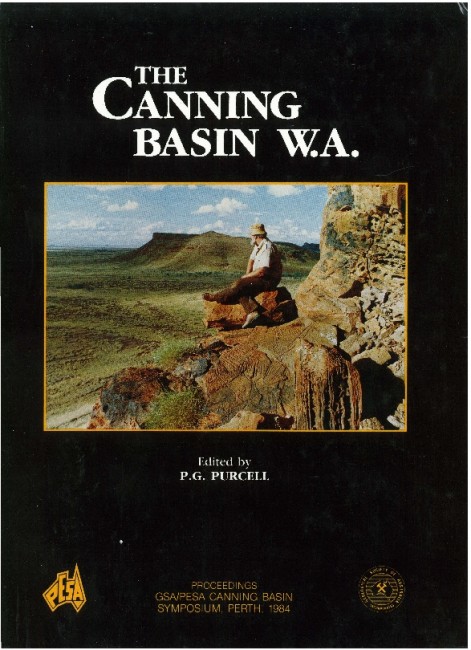
Publication Name: The Canning Basin, W.A.

Authors: G.P. Gregory

Date Published: December 1984

Number of Pages: 21

Reference Type: Book Section

Abstract:

Economic primary deposits of diamond to date have only been found in kimberlite and olivine lamproite. Economic kimberlites are concentrated in areas underlain by cratons older than 2500 m.y. They occur in clusters, whose location is controlled by fundamental fractures that transect the trends of the deepest known basement terrains (Dawson, 1980). Subeconomic/ economic diamond bearing olivine lamproites appear to occur in areas underlain by mobile belts cratonised younger than 2000 m.y. Important deposits of diamonds on the Lennard Shelf occur in olivine lamproites whose location appears to be controlled mainly by NW-SE trending faults, though folding and deep N-S fractures may also be important. Thus tectonic and structural analysis is essential in area selection for economic primary diamond deposits.
Drainage sampling for indicator minerals is the method most widely used to explore for kimberlite. However, this is of limited value on the Lennard Shelf due to the paucity of typical indicators in olivine lamproite and the lack of a well developed drainage network.
High precision aeromagnetics has been found to be a successful cost effective method of reconnaissance exploration for olivine lamproites on the Lennard Shelf. A typical survey would be flown at 50 to 70 metres mean
terrain clearance along lines 250 metres apart with readings every 30 to 40 metres. Data is presented either as contoured total field, stacked profiles or contoured residuals after treatment with a 3/ 31 filter. Aeromagnetic reponses over the Ellendale olivine lamproite bodies range from 0 to 60 nT.
Although landsat and airborne multispectral scanning systems may have a place in kimberlite exploration in the future, they have not yet been successfully applied on the Lennard Shelf. However, many olivine lamproites give marked photofeatures as seen on 1:20,000 scale colour photography and identification and testing of such features by rotary air blast drilling has proved a cost effective exploration method.
There are marked mineralogical and geochemical differences between kimberlite, olivine lamproite and associated leucite lamproite. These differences can be exploited to differentiate between the three rock types.

Tags: Deposits Diamond Emphasis exploration Lennard Primary shelf. Special

PESA - Energy Geoscience

PESA Energy Geoscience is a non-profit association of individuals involved in the exploration of oil and gas.

Connect with us

Subscribe to our newsletter and stay on the loop of what is happening in the field of Energy Geoscience and events near you.

pesa newsletter
* indicates required

PESA Energy Geoscience will use the information you provide on this form to be in touch with you and to provide updates and marketing. Please confirm you give us permission to contact you via your email address:

You can change your mind at any time by clicking the unsubscribe link in the footer of any email you receive from us. We will treat your information with respect. For more information about our privacy practices please visit our website. By clicking below, you agree that we may process your information in accordance with these terms.

We use Mailchimp as our marketing platform. By clicking below to subscribe, you acknowledge that your information will be transferred to Mailchimp for processing. Learn more about Mailchimp's privacy practices.

Copyright © 2025 PESA - Energy Geoscience. All Rights Reserved.

  • Advertise
  • Contact
  • Policies
  • Privacy
  • Terms & Conditions