

• Member Login
  • |
  • Join Now
PESA - Energy Geoscience

Promoting Professional and Technical Excellence in Energy Geoscience – Networking, On-going Professional Education, Monthly Technical Meetings

  • Home
  • About
    • About PESA
    • Objectives
    • PESA History
    • PESA Affiliates
    • Constitution and Rules
    • Strategic Plan
  • Events
    • Online
    • NSW / ACT
    • QLD
    • SA / NT
    • VIC / TAS
    • WA
    • Industry
    • Social
    • Past Events
  • Membership
    • Join Us
    • APPEA Conference Discounts
    • AEGC 2025 Travel Bursaries
    • PESA Membership Awards
  • Latest News
    • All News
    • Feature Articles
    • Industry
    • Company Updates
    • Tech Talk (public)
    • PESA Branch Activities
  • Library
    • Technical Library
    • PESA Gazette
    • Webinars
    • PESA News Magazine
    • Knowledgette Recordings
  • Scholarships
  • Employment
    • View Job Opportunities
    • Submit Job
  • Contact

Hydrological anomalies and hydrocarbon exploration

17/12/1986 by Sharperedge

Hydrological anomalies and hydrocarbon exploration


Download Section

Please log in to download this file.

Alternatively, you can search for this item and individually purchase it from the PESA collection at AAPG DataPages

PESA collection at AAPG DataPages

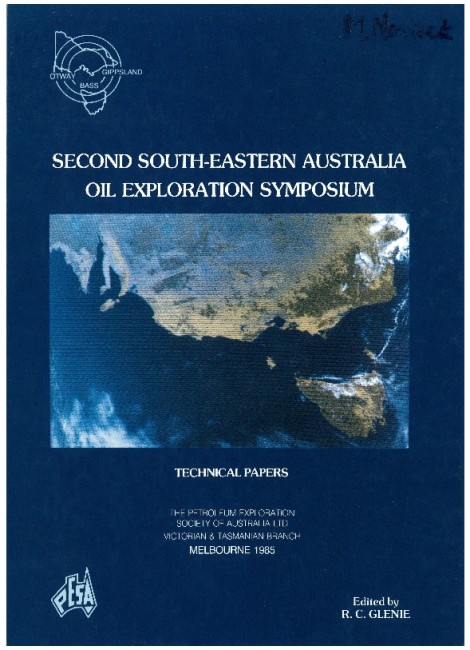
Publication Name: Second South-Eastern Australia Oil Exploration Symposium - Technical Papers

Authors: C.I. Sharpe and R.J.W. McLaughlin

Date Published: December 1986

Number of Pages: 24

Reference Type: Book Section

Abstract:

Hydrocarbons may be present in groundwaters above a hydrocarbon reservoir and several factors have been identified that influence the extent of hydrocarbon seepage through the intervening cap rock. The analysis of trace amounts of heavy fraction hydrocarbons dissolved in an overlying aquifer can be used as a exploration tool. This procedure is discussed in the paper.
Liquid-liquid extraction and XAD-2 (organic polymer resins) were used to extract the trace amounts of hydrocarbons from bore waters. The organics were then concentrated and analysed using a gas-liquid chromatograph (GLC).
A case study was carried out in exploration permit PEL 265 in north-western New South Wales. The permit was subdivided into two areas, 'potentially prospective' and 'barren', principally on the basis of visible hydrocarbons in the bore waters. These two zones were confirmed by the GLC traces of the hydrocarbons
obtained from the waters.
GLC traces from the Moomba gas field and Gidgealpa oil field, used as controls, show the method not only able to distinguish between areas that are prospective for hydrocarbons and those that are not, but also between gas prone and oil prone accumulations. Alkane ratios suggest hydrocarbons in PEL 265 are sourced from mature, terrestrial kerogens deposited under oxidizing conditions.
The method is able to provide an inexpensive and rapid appraisal of a sedimentary basin prior to the high cost of seismic surveys and exploratory drilling.

Tags: Anomalies exploration hydrocarbon Hydrological

PESA - Energy Geoscience

PESA Energy Geoscience is a non-profit association of individuals involved in the exploration of oil and gas.

Connect with us

Subscribe to our newsletter and stay on the loop of what is happening in the field of Energy Geoscience and events near you.

pesa newsletter
* indicates required

PESA Energy Geoscience will use the information you provide on this form to be in touch with you and to provide updates and marketing. Please confirm you give us permission to contact you via your email address:

You can change your mind at any time by clicking the unsubscribe link in the footer of any email you receive from us. We will treat your information with respect. For more information about our privacy practices please visit our website. By clicking below, you agree that we may process your information in accordance with these terms.

We use Mailchimp as our marketing platform. By clicking below to subscribe, you acknowledge that your information will be transferred to Mailchimp for processing. Learn more about Mailchimp's privacy practices.

Copyright © 2025 PESA - Energy Geoscience. All Rights Reserved.

  • Advertise
  • Contact
  • Policies
  • Privacy
  • Terms & Conditions