

• Member Login
  • |
  • Join Now
PESA - Energy Geoscience

Promoting Professional and Technical Excellence in Energy Geoscience – Networking, On-going Professional Education, Monthly Technical Meetings

  • Home
  • About
    • About PESA
    • Objectives
    • PESA History
    • PESA Affiliates
    • Constitution and Rules
    • Strategic Plan
  • Events
    • Online
    • NSW / ACT
    • QLD
    • SA / NT
    • VIC / TAS
    • WA
    • Industry
    • Social
    • Past Events
  • Membership
    • Join Us
    • APPEA Conference Discounts
    • AEGC 2025 Travel Bursaries
    • PESA Membership Awards
  • Latest News
    • All News
    • Feature Articles
    • Industry
    • Company Updates
    • Tech Talk (public)
    • PESA Branch Activities
  • Library
    • Technical Library
    • PESA Gazette
    • Webinars
    • PESA News Magazine
    • Knowledgette Recordings
  • Scholarships
  • Employment
    • View Job Opportunities
    • Submit Job
  • Contact

Tertiary ‘deep lead’ palaeoriver systems and their relationship to basin evolution, Victoria

16/12/2004 by Sharperedge

Tertiary ‘deep lead’ palaeoriver systems and their relationship to basin evolution, Victoria


Download Section

Please log in to download this file.

Alternatively, you can search for this item and individually purchase it from the PESA collection at AAPG DataPages

PESA collection at AAPG DataPages

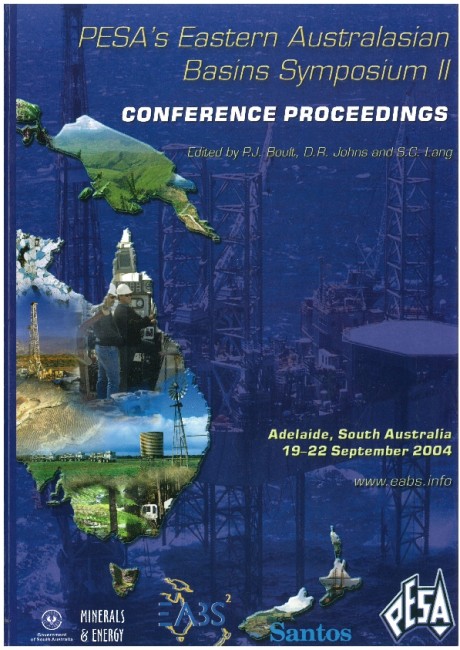
Publication Name: PESA's Eastern Australasian Basin Symposium II

Authors: G.R. Holdgate, K.A. Cunningham, M.W. Wallace, S.J. Gallagher and D.H. Moore

Date Published: December 2004

Number of Pages: 35

Reference Type: Book Section

Abstract:

Basalt flows across the central highlands of Victoria have sealed in-place early to middle Tertiary palaeodrainage systems that once provided clastic sediments to the flanking Otway, Murray and Gippsland basins. Gravels of the palaeorivers were mined in the past for gold. Modern aeromagnetic/radiometric coverage is used to map this palaeodrainage system; water-mineral exploration drilling provides detail of sediment composition.
Palaeodrainage into the basins occurs radially from highland blocks centred on St Arnaud and Bendigo. The rivers
discharged onto late Eocene to Miocene-aged peat swamps (coal) and delta/shoreline systems peripheral to the mainly marine carbonate environments of the Murray, Otway and Gippsland basins. The coal and gravel sub-basins include the Stawell to Horsham deep lead, the Wycheproof and Streatham sub-basins, the Campaspe-Goulbum valleys and the Warragul Sub-basin. Separating the two highlands is a major incised Loddon-Ballarat-Streatham-Port Phillip deep lead system that connects the Murray to the Otway and Port Phillip basins.
Early Tertiary coal and gravel basins formed along the lead systems, sediment isopachs suggest the ancestral Murray River could flow south to the Otway and Port Phillip basins. Radial flow directions off the highlands and a Murray source to the southern basins argue against the current east-west highland divide existing in the early-middle Tertiary, rather, two meridionally-orientated highlands lay parallel to the eastern highlands. The much younger (< 7 Ma) Plio-Pleistocene valley-infilling basalts flow from an east-west divide located up to 20 km south of the present, implying the modern eastwest divide formed as a result of Neotectonic uplift.

Tags: central highlands deep leads Gippsland Basin Murray Basin Otway Basin palaeovalleys uplifthistory. Victoria Basin

PESA - Energy Geoscience

PESA Energy Geoscience is a non-profit association of individuals involved in the exploration of oil and gas.

Connect with us

Subscribe to our newsletter and stay on the loop of what is happening in the field of Energy Geoscience and events near you.

pesa newsletter
* indicates required

PESA Energy Geoscience will use the information you provide on this form to be in touch with you and to provide updates and marketing. Please confirm you give us permission to contact you via your email address:

You can change your mind at any time by clicking the unsubscribe link in the footer of any email you receive from us. We will treat your information with respect. For more information about our privacy practices please visit our website. By clicking below, you agree that we may process your information in accordance with these terms.

We use Mailchimp as our marketing platform. By clicking below to subscribe, you acknowledge that your information will be transferred to Mailchimp for processing. Learn more about Mailchimp's privacy practices.

Copyright © 2025 PESA - Energy Geoscience. All Rights Reserved.

  • Advertise
  • Contact
  • Policies
  • Privacy
  • Terms & Conditions