

• Member Login
  • |
  • Join Now
PESA - Energy Geoscience

Promoting Professional and Technical Excellence in Energy Geoscience – Networking, On-going Professional Education, Monthly Technical Meetings

  • Home
  • About
    • About PESA
    • Objectives
    • PESA History
    • PESA Affiliates
    • Constitution and Rules
    • Strategic Plan
  • Events
    • Online
    • NSW / ACT
    • QLD
    • SA / NT
    • VIC / TAS
    • WA
    • Industry
    • Social
    • Past Events
  • Membership
    • Join Us
    • APPEA Conference Discounts
    • AEGC 2025 Travel Bursaries
    • PESA Membership Awards
  • Latest News
    • All News
    • Feature Articles
    • Industry
    • Company Updates
    • Tech Talk (public)
    • PESA Branch Activities
  • Library
    • Technical Library
    • PESA Gazette
    • Webinars
    • PESA News Magazine
    • Knowledgette Recordings
  • Scholarships
  • Employment
    • View Job Opportunities
    • Submit Job
  • Contact

Leaf biomass – a new paradigm for sourcing the terrestrial oils of Taranaki Basin

16/12/2004 by Sharperedge

Leaf biomass – a new paradigm for sourcing the terrestrial oils of Taranaki Basin


Download Section

Please log in to download this file.

Alternatively, you can search for this item and individually purchase it from the PESA collection at AAPG DataPages

PESA collection at AAPG DataPages

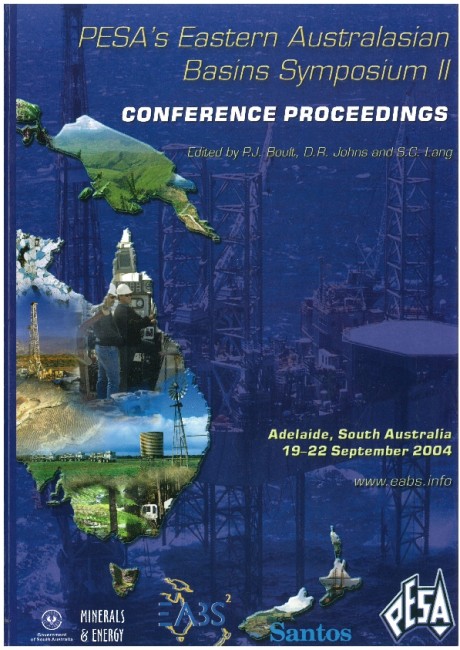
Publication Name: PESA's Eastern Australasian Basin Symposium II

Authors: R. Sykes, L.R. Snowdon and P.E. Johansen

Date Published: December 2004

Number of Pages: 39

Reference Type: Book Section

Abstract:

Late Cretaceous-Eocene coal measures have sourced waxy, paraffinic crude oils in the otherwise gas-rich Taranaki Basin, but incomplete understanding of organofacies controls on the generation and expulsion of non-volatile oil has hindered prediction of phase distribution. Multivariate analysis of the bulk chemistry, petrography and pyrolysis-gas chromatography of coals and coaly mudstones within the onshore, marginally mature, Late Cretaceous Rakopi Formation, has shown their paraffinic oil potentials to be controlled primarily by the abundance of leaf-derived liptinites-cutinite and liptodetrinite. Total liptinite content (7 .3-22. 7%) shows strong positive correlations with volatile and non-volatile paraffinic oil yields and the total paraffinic oil fraction, despite all samples being vitrinite-rich (74.1-91.0%). Hydrogen index, atomic H/C and volatile matter can be reliable indicators of paraffinic oil potential for humic coals that are not unduly affected by rank variation, marine influence or resin. Leaf-derived liptinite also influences modelled temperatures for initial oil generation, with high-liptinite samples commencing generation as much as l7?C lower than low-liptinite samples at a uniform heating rate of 3oC/my. Examples of solid bitumen expulsion from cutinite provide corroborating
evidence for early oil generation. The sampled coals seams are thin, typical of the Rakopi Formation, and formed in planar, rheotrophic mires rich in leafy, herbaceous vegetation. Comparison of pyrolysate compositions with those of other Cretaceous-Tertiary New Zealand and Indonesian coals indicates that thin, planar mire facies coals are more likely to produce waxy crude oils than are thick, raised mire facies coals, owing to better preservation of leaf biomass.

Tags: coal cutinite kinetics. Late Cretaceous liptinite New Zealand oil potential pyrolysis Rakopi Formation Taranaki Basin

PESA - Energy Geoscience

PESA Energy Geoscience is a non-profit association of individuals involved in the exploration of oil and gas.

Connect with us

Subscribe to our newsletter and stay on the loop of what is happening in the field of Energy Geoscience and events near you.

pesa newsletter
* indicates required

PESA Energy Geoscience will use the information you provide on this form to be in touch with you and to provide updates and marketing. Please confirm you give us permission to contact you via your email address:

You can change your mind at any time by clicking the unsubscribe link in the footer of any email you receive from us. We will treat your information with respect. For more information about our privacy practices please visit our website. By clicking below, you agree that we may process your information in accordance with these terms.

We use Mailchimp as our marketing platform. By clicking below to subscribe, you acknowledge that your information will be transferred to Mailchimp for processing. Learn more about Mailchimp's privacy practices.

Copyright © 2025 PESA - Energy Geoscience. All Rights Reserved.

  • Advertise
  • Contact
  • Policies
  • Privacy
  • Terms & Conditions