

• Member Login
  • |
  • Join Now
PESA - Energy Geoscience

Promoting Professional and Technical Excellence in Energy Geoscience – Networking, On-going Professional Education, Monthly Technical Meetings

  • Home
  • About
    • About PESA
    • Objectives
    • PESA History
    • PESA Affiliates
    • Constitution and Rules
    • Strategic Plan
  • Events
    • Online
    • NSW / ACT
    • QLD
    • SA / NT
    • VIC / TAS
    • WA
    • Industry
    • Social
    • Past Events
  • Membership
    • Join Us
    • APPEA Conference Discounts
    • AEGC 2025 Travel Bursaries
    • PESA Membership Awards
  • Latest News
    • All News
    • Feature Articles
    • Industry
    • Company Updates
    • Tech Talk (public)
    • PESA Branch Activities
  • Library
    • Technical Library
    • PESA Gazette
    • Webinars
    • PESA News Magazine
    • Knowledgette Recordings
  • Scholarships
  • Employment
    • View Job Opportunities
    • Submit Job
  • Contact

The Eromanga Basin Within The Great Artesian Basin

18/12/1982 by Sharperedge

The Eromanga Basin Within The Great Artesian Basin


Download Section

Please log in to download this file.

Alternatively, you can search for this item and individually purchase it from the PESA collection at AAPG DataPages

PESA collection at AAPG DataPages

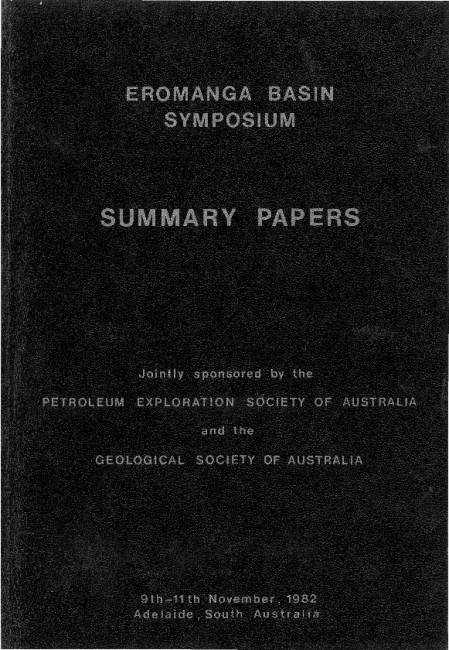
Publication Name: Eromanga Basin Symposium, Summary Papers

Authors: M A HABERMEHL

Publication Volume: Adelaide, 9 - 11 November 1982

Date Published: December 1982

Number of Pages: 27

Reference Type: Conference Proceedings

Abstract:

The Eromanga Basin is a constituent sedimentary basin of the hydrogeological
Great Artesian Basin. A multi-layered confined aquifer system occurs in the
basin, with aquifers being present in Jurassic and Cretaceous quartzose
sandstones of continental origin . Intervening siltstones and mudstones,
partly of marine origin, form the confining beds. Recharge to the basin
occurs mainly in the eastern margin, with minor recharge originating from the
western margin. Large-scale groundwater movement is generally towards the
southwestern, southern and northwestern margins, where natural discharge occurs
from springs.
Development of the basin's artesian groundwater resources by flowing and nonflowing
artesian waterwells since about 1880 has lowered the potentiometric
surfaces of some aquifers in most areas of the basin, though a new steadystate
condition has been reached, in which total basin discharge is again
roughly balanced by recharge.
The hydrodynamics of the basin has an influence on hydrocarbon migration.
Groundwater chemistry and isotope hydrology results confirm the groundwater
movement patterns derived from hydraulic data.

Tags: Great Artesian Symposium

PESA - Energy Geoscience

PESA Energy Geoscience is a non-profit association of individuals involved in the exploration of oil and gas.

Connect with us

Subscribe to our newsletter and stay on the loop of what is happening in the field of Energy Geoscience and events near you.

pesa newsletter
* indicates required

PESA Energy Geoscience will use the information you provide on this form to be in touch with you and to provide updates and marketing. Please confirm you give us permission to contact you via your email address:

You can change your mind at any time by clicking the unsubscribe link in the footer of any email you receive from us. We will treat your information with respect. For more information about our privacy practices please visit our website. By clicking below, you agree that we may process your information in accordance with these terms.

We use Mailchimp as our marketing platform. By clicking below to subscribe, you acknowledge that your information will be transferred to Mailchimp for processing. Learn more about Mailchimp's privacy practices.

Copyright © 2025 PESA - Energy Geoscience. All Rights Reserved.

  • Advertise
  • Contact
  • Policies
  • Privacy
  • Terms & Conditions